National Engineer’s Day 2026: Who Was Visvesvaraya? Know All About Father of Modern Engineering


National Engineer’s Day is celebrated in India on September 15 to mark the birth anniversary of Sir Mokshagundam Visvesvaraya, one of the country’s most celebrated engineers. From flood management to irrigation and dam construction, his work played an important role in India’s development.
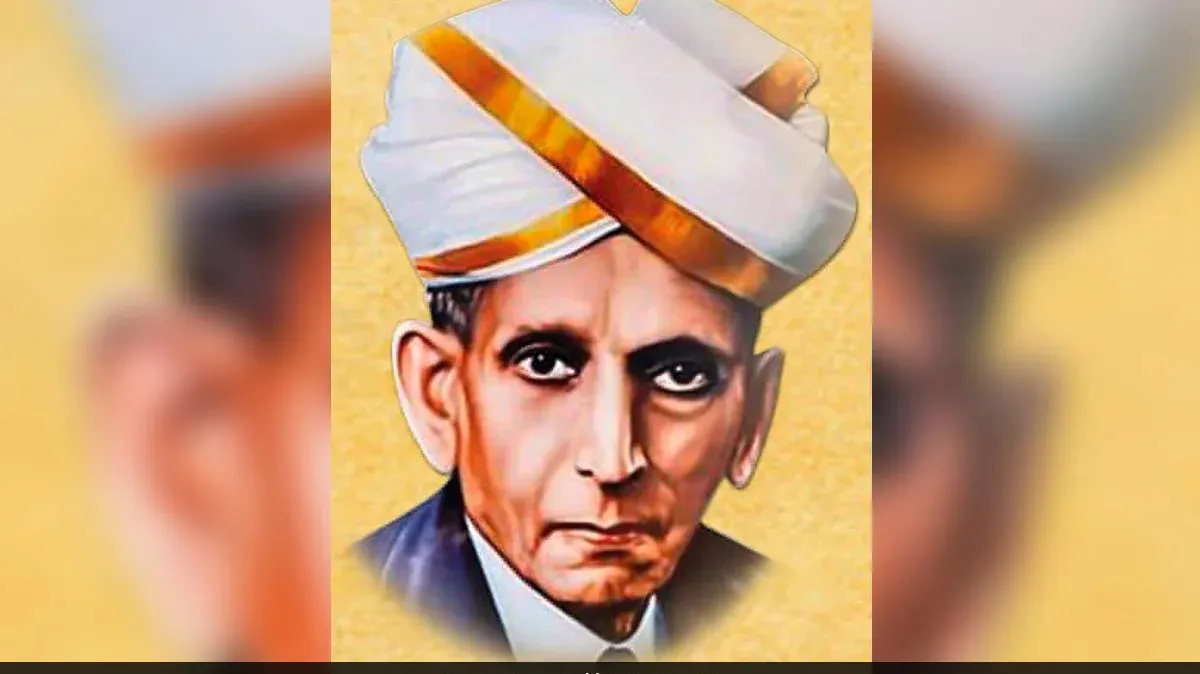
Ever wondered why National Engineer’s Day is celebrated on September 15? The day honours one of India’s greatest engineers, Sir Mokshagundam Visvesvaraya. He made significant contributions through engineering projects involving flood management, reservoirs and irrigation systems, with several of his principles continuing to remain relevant even today. He was awarded the Bharat Ratna in 1955 and also served as the Diwan of Mysore and President of the All-India Manufacturers’ Organisation.
Visvesvaraya is widely regarded as the father of modern Indian engineering. To recognise his contribution to the country’s infrastructure and development, his birth anniversary is observed as National Engineer’s Day every year.
Who Was Visvesvaraya? Know His Engineering Marvels And Contributions
Born on September 15, 1861, Visvesvaraya went on to become one of the most influential engineers and nation-builders in India. His work was not limited to designing structures. He focused on finding practical solutions to problems related to water management, irrigation, agriculture and urban development.
One of his notable contributions came after the devastating floods in Hyderabad in 1908. He worked on systematic flood-control measures for the city and was associated with the planning of reservoirs that later helped regulate the flow of water. His expertise was also used in protecting Visakhapatnam port from sea erosion.
Visvesvaraya was also known for his innovative approach to water management. His work included the use of automatic sluice gates and irrigation systems that allowed water to be regulated more efficiently. His engineering methods were particularly important at a time when India was still developing large-scale infrastructure.
Visvesvaraya's Innovative Flood Management Systems
The 1908 Musi River floods in Hyderabad highlighted the need for a stronger and more systematic approach to flood management. Visvesvaraya played an important role in developing solutions aimed at controlling floodwaters and improving the city’s protection against similar disasters.
The reservoirs associated with the flood-control plan, including Osman Sagar and Himayat Sagar, later became important parts of Hyderabad’s water infrastructure. His work also extended to Visakhapatnam, where measures were taken to protect the port from sea erosion.
The basic idea behind using reservoirs and planned water-control systems remains relevant today, particularly in urban flood management and disaster preparedness.
Pioneering Dam Construction And Irrigation
Visvesvaraya’s contribution to dam construction and irrigation is another major part of his legacy. As Chief Engineer of Mysore, he was closely associated with the development of the Krishna Raja Sagara (KRS) Dam across the Cauvery River.
The project transformed water availability in the region and supported agriculture, particularly in the Mandya area. His work with automatic sluice gates also helped improve the regulation and distribution of water.
Beyond dams, he contributed to irrigation and hydroelectric projects and promoted the use of engineering for wider economic development. His approach showed how water infrastructure could be used not only for immediate needs but also to support agriculture and regional growth.
Visvesvaraya As A Writer And Nation-Builder
Engineering was only one part of Visvesvaraya’s contribution. He also wrote extensively about India’s economic and industrial development.
His book Planned Economy for India discussed the need for planned industrialisation and stronger infrastructure. In Reconstructing India, he focused on development, education, governance and the steps needed to strengthen the country.
His Memoirs of My Working Life offers insights into his career and experiences as an engineer and administrator. Through his writings, Visvesvaraya highlighted the importance of education, industrial growth, efficient administration and long-term planning.
His contribution to India’s development was recognised with the Bharat Ratna in 1955, the country’s highest civilian honour.
Even decades after his major engineering projects were completed, Visvesvaraya continues to be remembered for combining technical expertise with a broader vision for national development. This is why September 15 is not only a day to remember an eminent engineer but also an occasion to recognise the contribution of engineers to India’s growth.