

Show Key Points
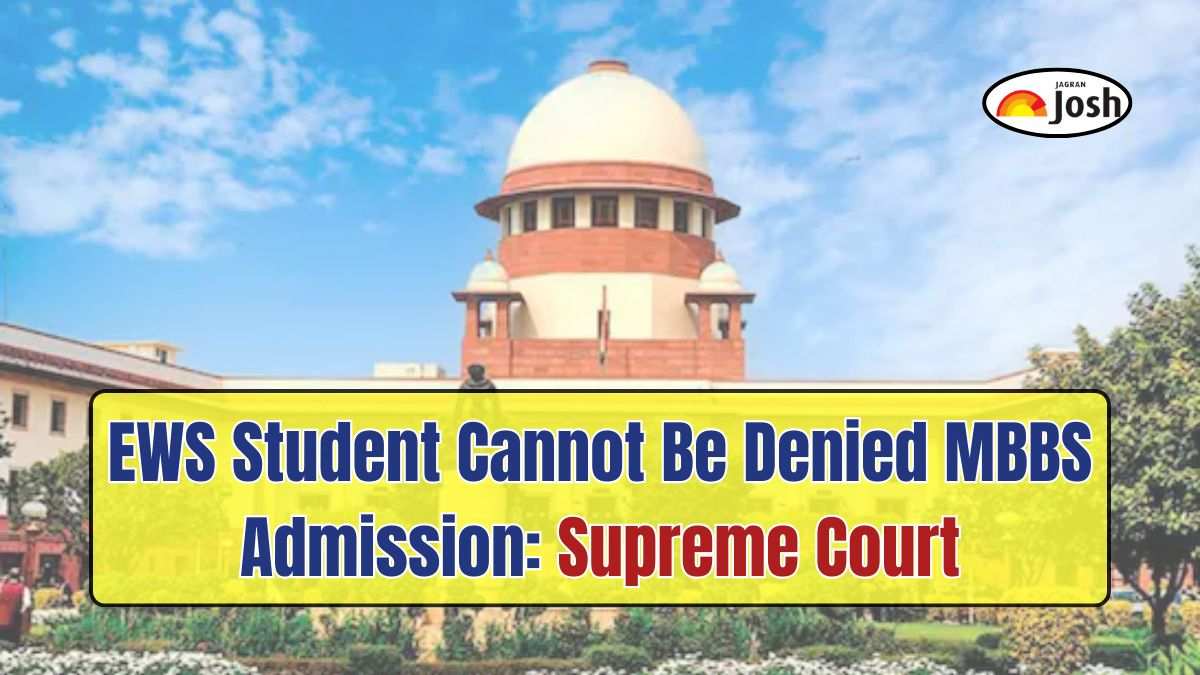
In a significant judgment, the Supreme Court of India ruled that an Economically Weaker Section (EWS) candidate cannot be denied admission to an MBBS course in a private medical college due to lapses in implementing reservation policies. Granting relief to a NEET-qualified student from Madhya Pradesh, the Court exercised its extraordinary powers under Article 142 of the Constitution of India and directed authorities to allot him a medical seat, observing that a student’s future cannot suffer because of administrative delays.
Background of the Case
The case involved a student who had successfully cleared the National Eligibility cum Entrance Test (NEET-UG) but failed to secure admission in the 2024 counselling process. The issue arose because the state government’s notification did not provide reservation for EWS candidates in private medical colleges during that admission cycle.
Despite meeting the eligibility criteria and performing well in the entrance exam, the student was unable to obtain a seat under the EWS category due to the absence of the reservation policy in private institutions.
Supreme Court’s Observations
A bench of the Supreme Court of India observed that the petitioner had been placed at a disadvantage due to circumstances beyond his control. The Court noted that the student had cleared NEET twice and had made continuous efforts to secure a medical seat.
The bench stressed that administrative lapses or delays in implementing reservation policies should not result in the loss of educational opportunities for deserving candidates.
Admission Granted Under Article 142
To ensure complete justice, the Court invoked Article 142 of the Constitution of India and directed authorities to grant the petitioner admission to an MBBS course in a private medical college. The Court stated that the admission should be based on the candidate’s EWS rank in NEET and subject to the applicable EWS fee structure.
The ruling reinforces that delays in implementing reservation policies cannot be used as grounds to deny eligible candidates their rightful admission. By granting relief under Article 142, the Supreme Court of India reaffirmed its commitment to ensuring fairness and protecting students’ rights in the medical admission process.


-1772860794753.png)
Comments
All Comments (0)
Join the conversation