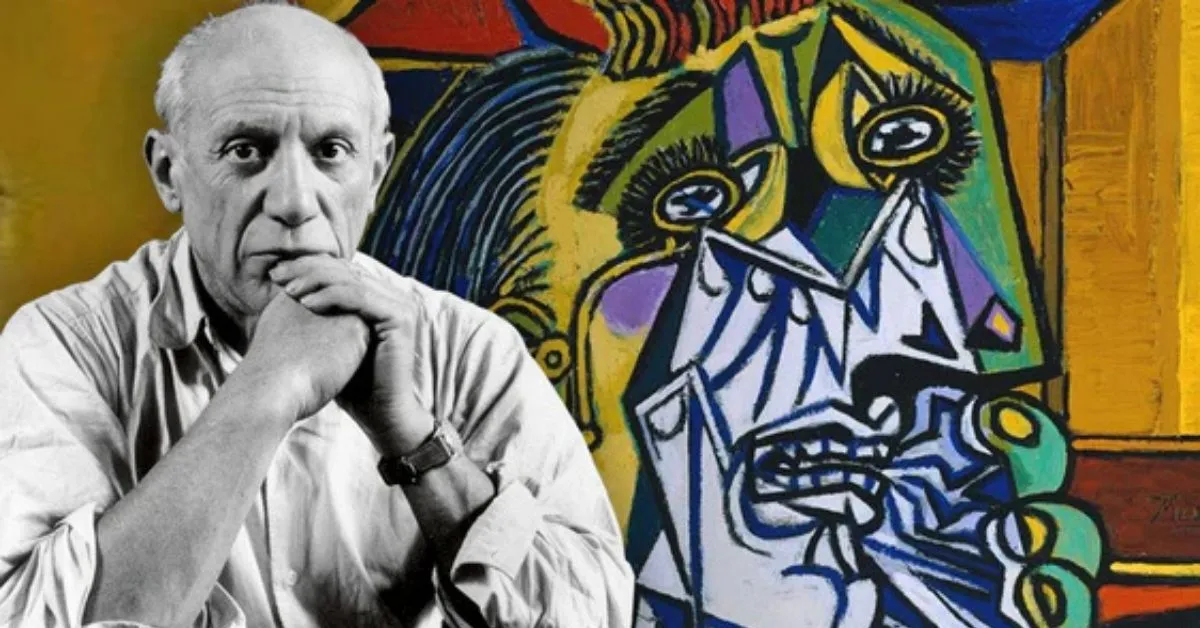
The Personality of the Day series focuses on influential figures whose work has shaped history, culture, and ideas across the world. In today’s feature, we explore the life and legacy of Pablo Picasso, one of the most important and revolutionary artists of the 20th century.
Here is a clear and detailed overview of who Picasso was, why he became world famous, and how his ideas transformed modern art. It explains his major artistic movements.
Personality of the Day: Who Was Pablo Picasso?
Pablo Picasso was born on 25 October 1881 in Málaga, Spain. His full name was Pablo Diego José Francisco de Paula Juan Nepomuceno María de los Remedios Cipriano de la Santísima Trinidad Ruiz y Picasso.
His father was an art teacher, and Picasso showed artistic talent at a very young age.
According to Encyclopaedia Britannica, Picasso became one of the founders of Cubism and is widely regarded as one of the most influential artists of the 20th century.
Over his long career, he created more than 20,000 artworks, including paintings, drawings, sculptures, ceramics, and prints.
Why Is This Personality Famous? His Major Contributions?
One of Picasso’s most important contributions was the creation of Cubism along with French artist Georges Braque. Around 1907–1908, they began breaking objects into geometric shapes and showing multiple viewpoints in a single painting.
This new style changed traditional painting, which had focused on realistic representation. Museums like Tate explain that Cubism opened the door for modern abstract art and influenced generations of artists.
What Was the Importance of the Blue Period and Rose Period?
Between 1901 and 1904, Picasso went through what is known as the Blue Period. During this time, he painted in shades of blue and focused on themes of poverty, loneliness, and sadness.
From 1904 to 1906, he entered the Rose Period, where warmer tones like pink and orange appeared in his work. These phases show how his emotions and experiences shaped his art, as described by major art history sources.
Why Is Les Demoiselles d’Avignon Considered Revolutionary?
In 1907, Picasso painted Les Demoiselles d'Avignon, a work that shocked viewers because of its sharp angles and distorted human figures. Many historians consider this painting a starting point for Cubism.
The painting is now housed at the Museum of Modern Art in New York and is regarded as one of the most important works in modern art history.
What Made Guernica a Powerful Political Statement?
In 1937, Picasso created Guernica, inspired by the bombing of the Spanish town of Guernica during the Spanish Civil War. The large black-and-white painting shows suffering, chaos, and destruction.
Art historians describe Guernica as one of the strongest anti-war artworks ever created. It remains a symbol of peace and protest against violence.
What Do We Know About His Life, Career, and Family?
Picasso studied art formally in Barcelona and later moved to Paris, which was the center of the art world at that time. Living in France allowed him to experiment freely and connect with other modern artists.
What Was Picasso’s Career Like Over the Years?
Picasso’s career lasted more than seven decades. He did not limit himself to painting but also worked in sculpture, ceramics, printmaking, and stage design. According to Britannica, his ability to constantly change styles kept him relevant throughout his life.
Picasso’s Family and Personal Life
Picasso had several relationships and four children. He was married twice, first to Olga Khokhlova and later to Jacqueline Roque. His personal life was often discussed alongside his art because many of his partners became subjects in his paintings.
He passed away on 8 April 1973 in Mougins, France, leaving behind a massive artistic legacy.
Quotes by Pablo Picasso
Here are five well-known quotes attributed to Picasso:
-
“Every child is an artist. The problem is how to remain an artist once we grow up.”
-
“Art washes away from the soul the dust of everyday life.”
-
“Everything you can imagine is real.”
-
“Learn the rules like a pro, so you can break them like an artist.”
-
“The purpose of art is washing the dust of daily life off our souls.”
In conclusion, Pablo Picasso changed the direction of modern art. By co-founding Cubism, experimenting with new forms, and using art to comment on political events, he helped artists move beyond traditional styles.



Comments
All Comments (0)
Join the conversation