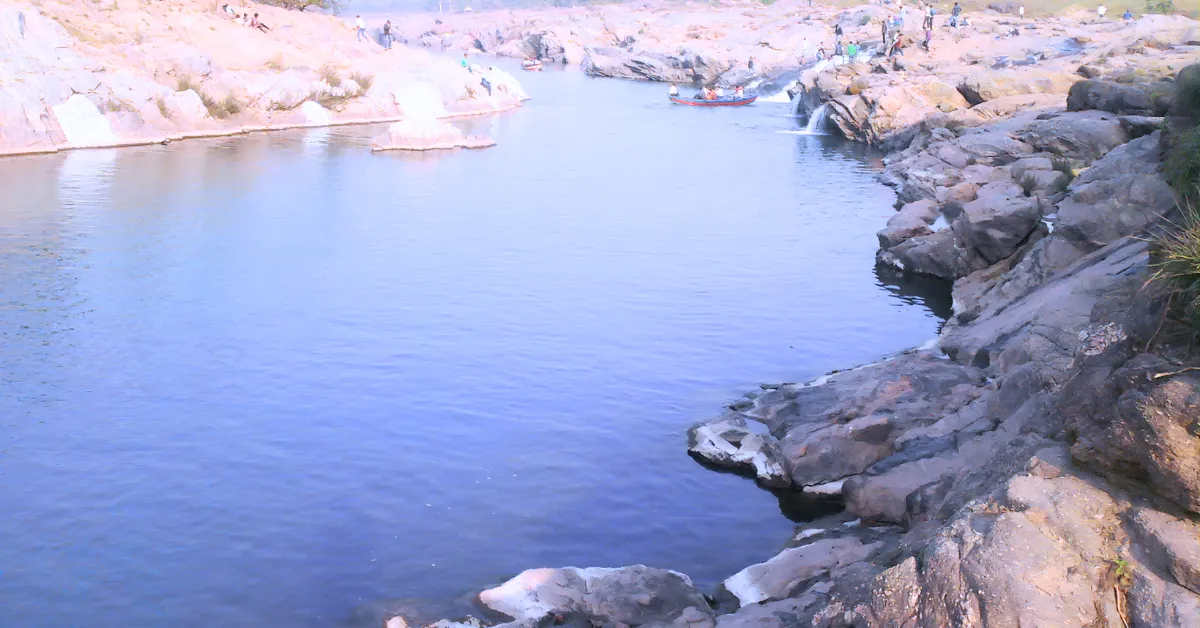
The Ruhr River is a famous waterway located in western Germany. It flows through one of the world's most important industrial regions. This area is packed with coal mines and massive steel factories. Because of its rich resources, the Ruhr Valley became the backbone of Germany's economy. It represents power, industry, and natural wealth.
Many countries have their own industrial heartlands. In India, there is a river similar to the Ruhr because it has large coal deposits and many factories along its banks. Can you guess which river is called the Ruhr of India? In this article, we will explore the history, importance, and future of this important Indian river.
ALSO READ| Which River is known as the Moon River of India?
Quick Fact At a Glance
| Feature | Ruhr River (Germany) | Damodar River (India) |
| Length | ~219 km | ~592 km |
| Starts From | Winterberg (Sauerland hills) | Khamarpat Hill (Chota Nagpur Plateau) |
| Ends In | Rhine River (at Duisburg) | Hooghly River (near Kolkata) |
| States/Regions | North Rhine-Westphalia | Jharkhand and West Bengal |
| Main Tributaries | Lenne, Volme, Möhne | Barakar, Konar, Bokaro, Jamunia |
| Key Cities | Essen, Dortmund, Duisburg | Dhanbad, Durgapur, Bokaro, Asansol |
| Primary Resource | High-quality Bituminous Coal | Largest Coking Coal deposits in India |
Which River is known as the Ruhr of India?

Source: Wikipedia (Damodar River, India)
The Damodar River is often called the Ruhr of India. This nickname comes from its similarity to Germany's Ruhr Valley, as the Damodar Valley is also rich in minerals, especially coal, and is a major industrial centre in India.
The Journey of the Damodar River
- The Damodar River starts in the Chota Nagpur Plateau. Its source is at Chandwa, located in the Latehar district of Jharkhand.
- The river flows east through a rift valley, a deep valley created by shifts in the Earth's crust. Along the way, it collects water from tributaries such as the Barakar and Konar rivers.
- The Damodar River mainly flows through the states of Jharkhand and West Bengal.
- After travelling about 592 kilometres, the Damodar empties into the Hooghly River, a branch of the Ganges, near Kolkata. From there, the water eventually reaches the Bay of Bengal.
IN CASE YOU MISSED| Which River is known as the Black River of India?
5 Lesser-Known Facts About the Damodar River

Source: wateractionhub.org
Here are a few interesting facts about the Damodar River:
1. Unique Geological Rift
The Damodar passes through one of India's rare rift valleys. This deep valley formed millions of years ago due to tectonic activity, which trapped large amounts of organic material that later turned into coal.
2. Multipurpose Pioneer
The Damodar Valley Corporation (DVC), established in 1948, was the first multipurpose river valley project in independent India. It was modelled after the Tennessee Valley Authority in the United States to manage power and irrigation.
3. Taming the "Sorrow"
In the past, people called the Damodar the “Sorrow of Bengal” because of its severe floods. Now, large dams such as Maithon and Panchet help control the river’s flow and prevent these disasters.
4. Heavy Mineral Concentration
The Damodar basin hosts Gondwana coal deposits, which account for almost 80% of India’s metallurgical coal. This type of coal is crucial for producing steel from iron.
5. Bioremediation Potential
Even with industrial pollution, scientists have found certain microbes in the river's sediment that can break down heavy metals. These natural bacteria are being studied for their potential to clean the water using biological methods.
IN CASE YOU MISSED | Which River Is Known As The Lifeline Of Russia?
Why is the Damodar Valley known as the Ruhr of India?
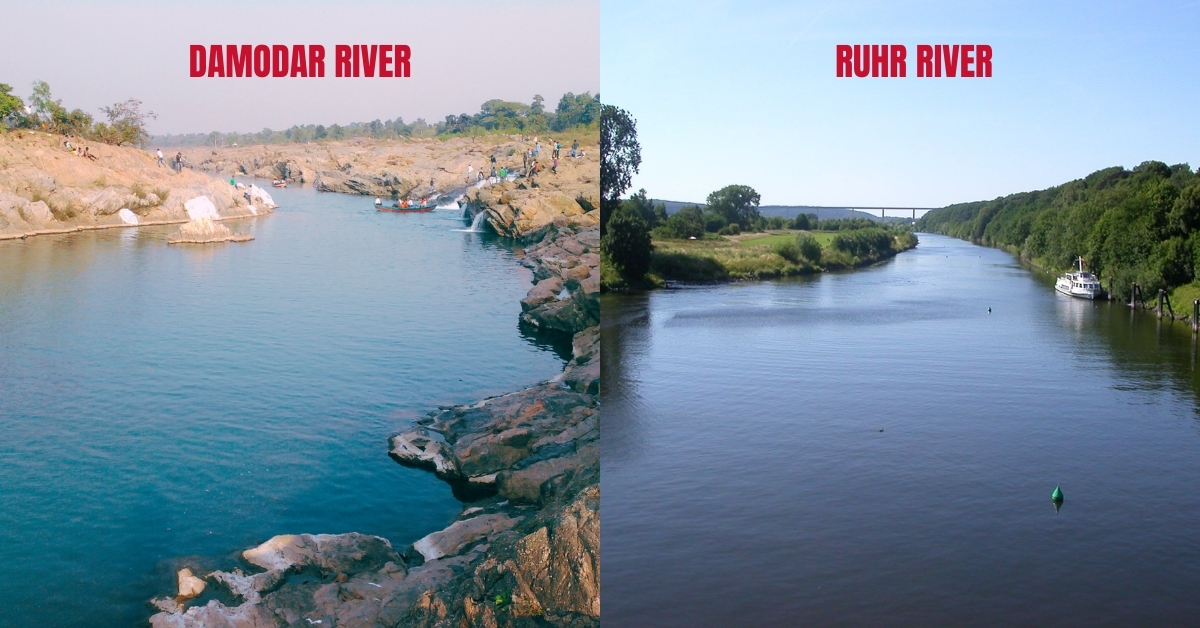
The name "Ruhr of India" is more than just a poetic phrase. It is a technical comparison based on the region's geography, geology, and economy. To see why the Damodar River has this title, we need to look at how it changed India’s industrial landscape.
#1. The Foundation of Industrial Power
The Ruhr Valley in Germany became famous during the Industrial Revolution. In this region, the river supplied water and the land provided coal, both essential for running large steel furnaces.
In India, the Damodar Valley serves a similar purpose. It runs through Jharkhand and West Bengal and lies above the Gondwana coalfields, which host the country's largest and best coking coal deposits. Like Germany used the Ruhr for its growth, India relies on the Damodar for its modern development.
#2. Three Reasons for the Comparison
- The “Black Gold” Connection: The nickname stems from coal. The Damodar Valley has major mining centres, including Jharia, Raniganj, and Giridih. These mines supply fuel for several industries:
- Thermal Power Plants: Generating electricity for millions of homes.
- Smelting Plants: Providing the intense heat required to turn iron ore into steel.
#3. The Steel Belt of India
A river by itself is not enough to be called a "Ruhr"; factories are also needed. Along the Damodar and its branches, there are major industrial cities like Durgapur, Asansol, and Bokaro.
These cities make up the “Steel Belt". The river gives a constant supply of water for cooling machines and processing minerals, so these large factories can run all day and night. This cluster of heavy industry is very similar to what you see in western Germany.
#4. Transport and Infrastructure
In the past, the Damodar was an important route for transporting goods. Now, the Damodar Valley Corporation (DVC) operates a system of dams that generate hydroelectric power and provide irrigation. This careful use of the river's resources to support industry is a key feature of the Ruhr model.
Comparing the Two Industrial Giants
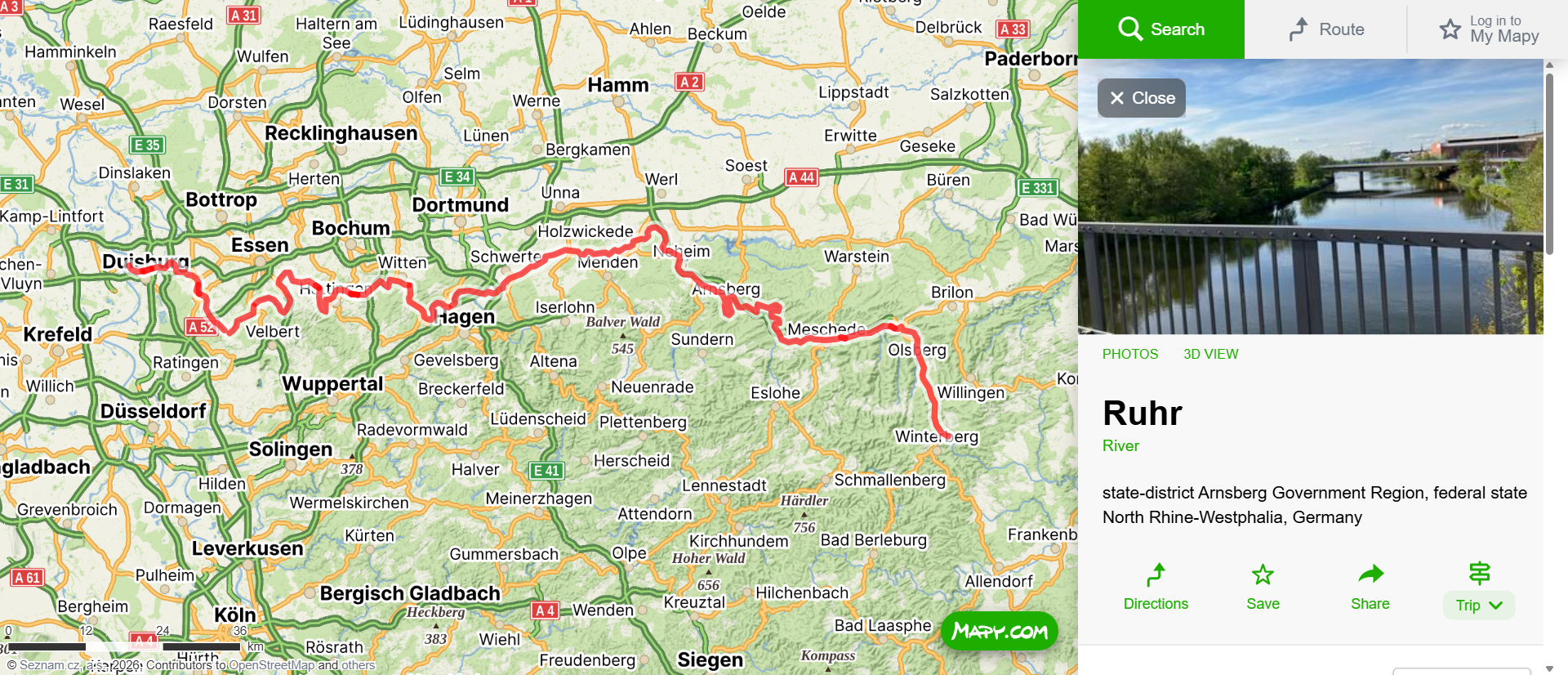
Source: Mapy.com
This comparison goes beyond the rivers themselves and looks at the infrastructure around them. Both rivers helped their countries shift from mainly farming to heavy manufacturing. In recent years, the German Ruhr has moved toward green technology and tourism.
Meanwhile, the Damodar Valley is still India's main source of energy for lighting cities and running large steel plants.
| Feature | The Ruhr (Germany) | Damodar River (India) |
| Primary Mineral | High-grade Coal | Bituminous/Gondwana Coal |
| Main Industries | Steel, Chemical, and Energy | Steel, Thermal Power, and Mining |
| Key Cities | Dortmund, Essen, Duisburg | Dhanbad, Durgapur, Asansol |
| Water Source | Rhine and Ruhr Rivers | Damodar and Barakar Rivers |
| Economic Role | Industrial heart of Europe | Industrial backbone of Eastern India |
Conclusion: A Story of Transformation
Before the mid-1900s, the Damodar was a wild and unpredictable river, known for its floods. But with engineering and planning, people managed to control it and turn it into a source of wealth. While the Ruhr in Germany is now shifting to cleaner energy and new technologies, the Damodar River remains central to India’s heavy industry. Here, the earth’s raw materials and the river’s power come together to help build the country’s infrastructure.
WHAT'S NEXT| Which River is Known as The English Channel of India?



Comments
All Comments (0)
Join the conversation