Show Key Points
India has some of the most diverse water bodies in the world. From the icy Himalayas to the warm backwaters in the south, lakes are at the centre of our landscape.
The Wular Lake is the largest freshwater lake, and the Sambhar Lake is the saltiest inland lake in India. Some lakes are so beautiful that they are called the "Jewel in the Crown".
Do you know which lake is known as the Jewel of Udaipur? In this article, we will explore the history and charm of the "Jewel of Udaipur".
ALSO READ| Which Lake Is Called the Mystical Moon Lake?
Which Lake is known as the Jewel of Udaipur?

Source: Incredible India
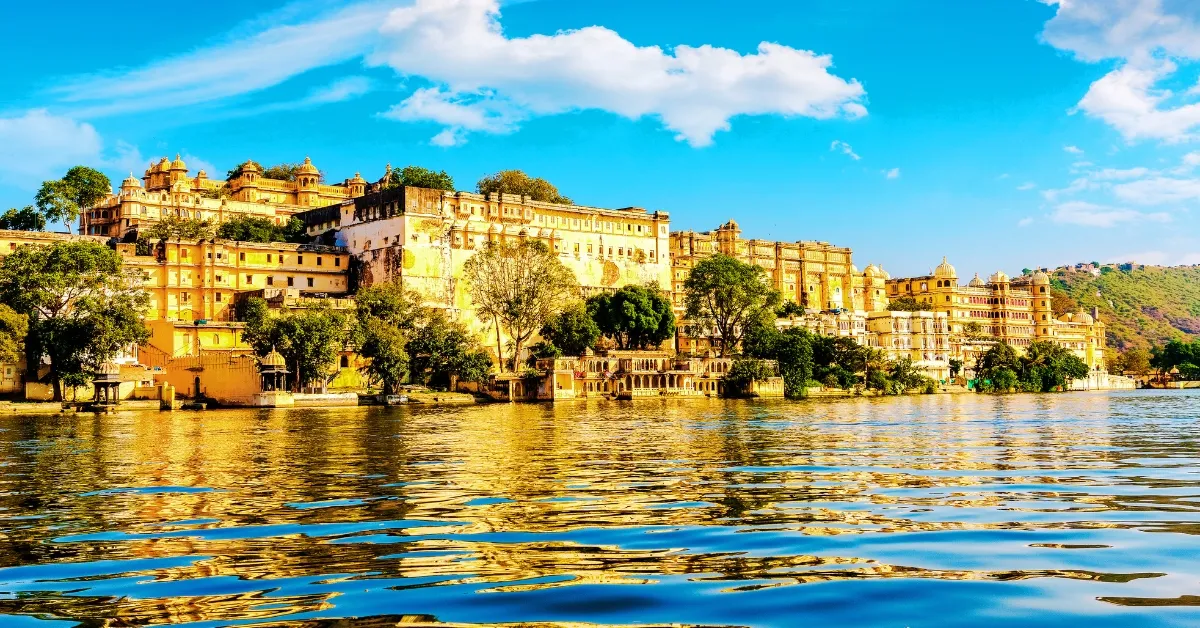
Lake Pichola is often called the "Jewel of Udaipur" for its beauty and the way its golden waters reflect the city's royal skyline.
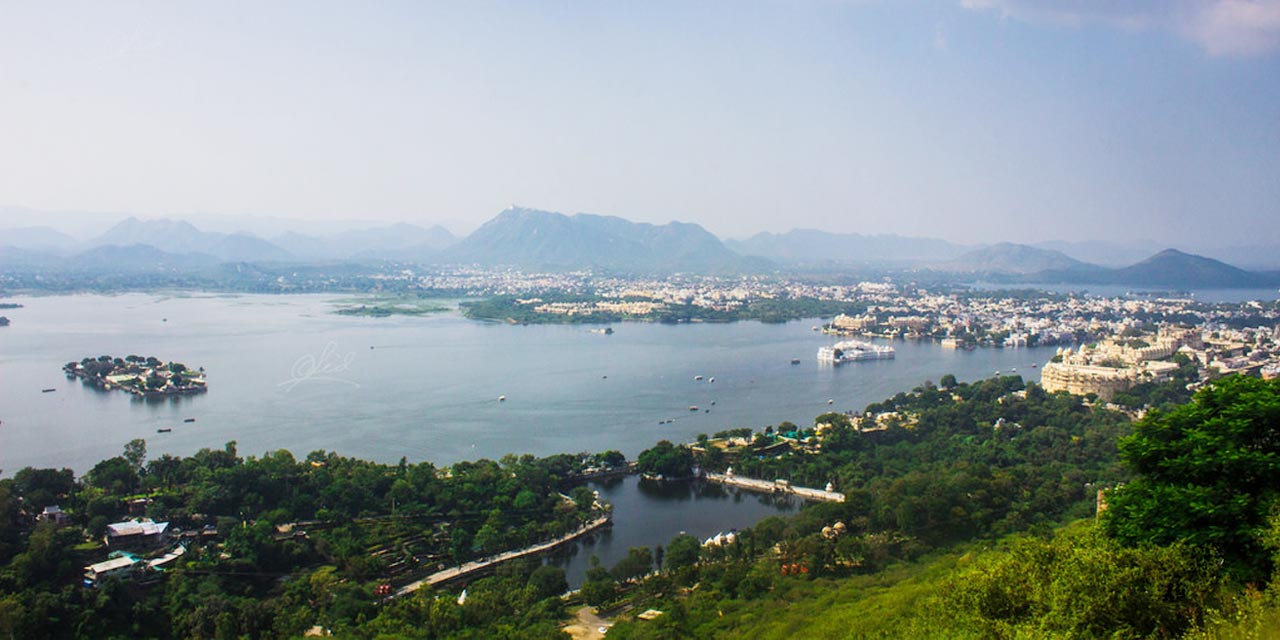
Lake Pichola sits in the centre of Rajasthan's "City of Lakes". It was built in 1362 AD by Pichhu Banjara, a nomadic tribesman, to facilitate the transport of grain.
In 1560, Maharana Udai Singh II expanded the lake and founded the city of Udaipur along its banks. The lake was first made for drinking water and irrigation.
Today, it is famous for its four island palaces, especially the white-marble Lake Palace, and for the sunset views that make it stand out against the Aravalli hills.
# 5+ Lesser-known facts about Lake Pichola
- Built in the 14th century, it is one of the oldest and largest man-made lakes in India, predating the city of Udaipur itself.
- The Sisarma River feeds the lake. A traditional filtering system lets silt settle in smaller upstream basins before the water flows into the main lake.
- The surrounding Aravalli Range consists of rocks that are over two billion years old, providing a stable, non-porous geological basin for the lake.
- Lake Pichola is part of a connected water system. It links to Fateh Sagar Lake via a canal that helps manage overflow during heavy monsoons.
- While it looks vast, the lake is relatively shallow with an average depth of 8.5 metres (28 feet), though it can reach 11 metres during peak seasons.
- The lake's large surface area helps regulate the city's temperature, keeping the immediate vicinity up to 2°C cooler through evaporative cooling.
MUST READ| Which Lake Is Known as the Jewel of Kashmir?
What is the History of Lake Pichola? Who Built this Man-made Freshwater Lake?
Source: Udaipur Tourism
- Unlike most royal lakes, Lake Pichola was not built by a king.
- In 1362 AD, a Banjara tribesman named Pichhu Banjara made this artificial freshwater lake.
- He was part of a group of grain merchants who travelled throughout the country.
- To help his grain carts cross the Sisarma River during the monsoon, he built a dam.
- This practical solution later became the starting point for one of India’s most romantic cities.
- Many years later, Maharana Udai Singh II, who founded Udaipur, was drawn to the lake’s beauty and the safety of the nearby Aravalli Hills.
- He chose this spot for his new capital. In 1559 AD, he enlarged the lake by building a large stone dam called Badipol.
- The lake gave his kingdom a steady water supply and natural protection.
- Over time, royal families built impressive palaces like Jag Niwas and Jag Mandir on the lake’s islands.
> Quick Timeline of Lake Pichola
| Year | Event | Key Figure |
| 1362 AD | Original Construction | Pichhu Banjara |
| 1559 AD | Expansion & City Foundation | Maharana Udai Singh II |
| 1620s AD | Construction of Jag Mandir | Maharana Karan Singh |
| 1740s AD | Construction of Lake Palace | Maharana Jagat Singh II |
Conclusion
Lake Pichola is more than a lake. It is central to Udaipur's royal history. It started as a simple crossing for merchants and grew into the world-famous "Jewel of Udaipur". Today, it stands as a blend of human skill and natural beauty.
WHAT'S NEXT| Which Lake Is Known as the Five Flower Lake?



Comments
All Comments (0)
Join the conversation