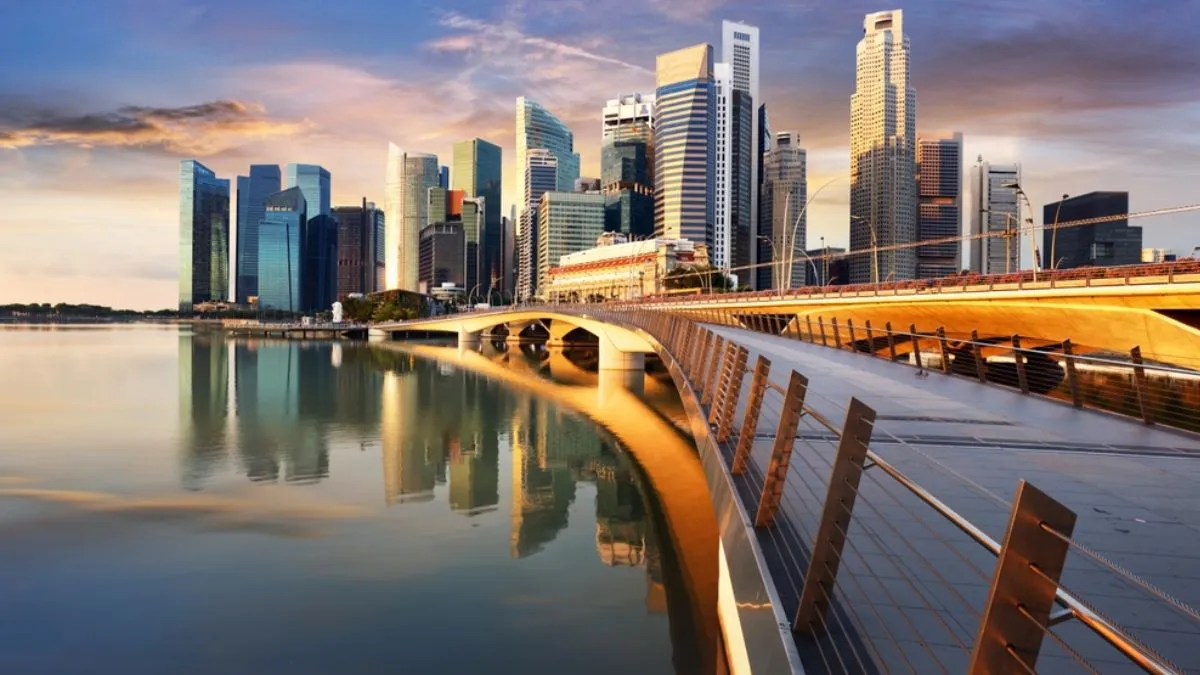
Have you ever wondered whether there is such a country in the world that has no village? Big and small countries have cities, towns and villages. But there is a wonderful country in which there has never been a village in the modern world, and in which each citizen is in an entirely urban setting. The answer to this "Which country does not have a single village?" is Singapore. This is a very common question, but make confuse a lot of people. It is the world's only island city-state — a country that is, in its entirety, one single city with no rural land, no agricultural settlements, and absolutely zero villages. So, let’s explore this article in detail.
Which Country Has No Villages?
Singapore is a tropical, sunny island in the south of the Malay Peninsula in Southeast Asia. The city-state measures 710 square kilometres and is home to five million residents of four major communities: Chinese (majority), Malay, Indian and Eurasian. Singapore, officially the Republic of Singapore, is an island country and city-state in Southeast Asia. It includes a core island, more than 60 islands and satellites, and an outlying islet.
Since Singapore is a city-state, the whole nation constitutes a single city. It has no countryside, no farmlands, no distant countryside, and no villages at all. The CIA World Factbook verifies the 100% urban population of the total population in Singapore; the rural population is N/A, which in this case means that there is no rural in Singapore. According to The Economist, Singapore is the only full-fledged city-state in the world. Singapore is the only island city-state in the world as well.
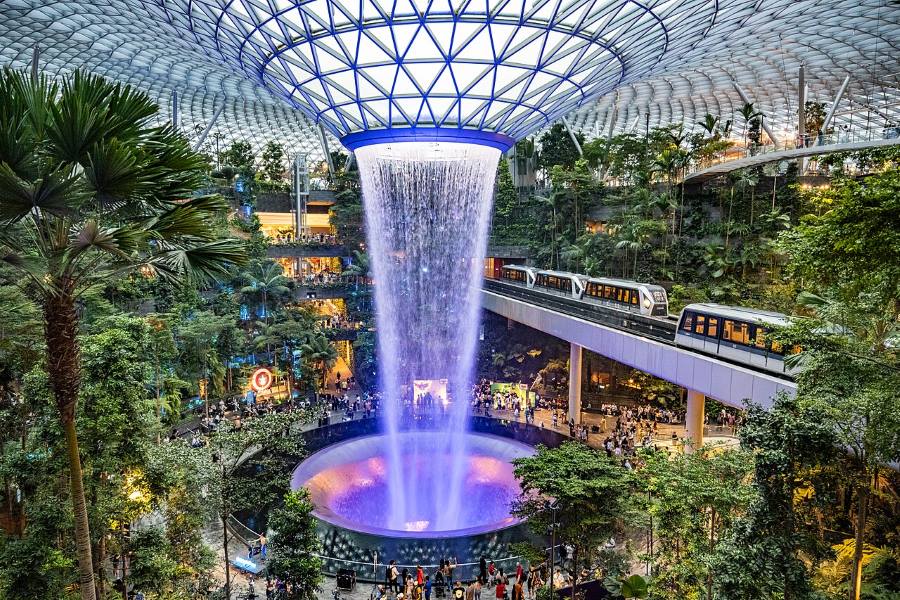
Source: wikimedia
About Singapore
Singapore is one of the most outstanding countries of the world. It grew out of a fishing village to a world economic giant within several decades - all on a small island without natural resources.
Singapore is a city-state that is situated at the southern end of the Malay Peninsula, approximately 85 miles (137 kilometres) north of the Equator. It is made up of the diamond-shaped Singapore Island and a few 60 small islets. The country has been practising a parliamentary system of democracy since its independence on 9 August 1965. Today, Prime Minister Lawrence Wong is in charge of the government and the cabinet, and the Head of State is President Tharman Shanmugaratnan. Singapore became a member of the United Nations on 21 September 1965, a few weeks after it obtained independence on 9 August 1965.
Why Does Singapore Have No Village?
This is the greatest portion of the answer, and it entails both geography and history.
1. Singapore is a City-State in Nature
Singapore is only a little bit bigger than a big city in India, with an area of only about 734 square kilometres. Since the dawn of its modernisation, all the available land was intended, created and constructed as urban infrastructure roads, housing estates, ports, airports, and industrial areas. There could never be room or reason to have a village.
2. Rapid Urban Growth Post Independence.
Since 1960, over 80 per cent of the dwellings of Singaporeans have been provided by public housing. The fast urbanisation implied that the population of the villages was transferred to Housing and Development Board (HDB) apartments.
The independence of Singapore in 1965 was a turning point in the urban development of Singapore. The new government saw the need to have a unified urban strategy with the challenges such as scarcity of resources, high unemployment, and social unrest. Led by pioneers such as Lee Kuan Yew, Singapore has been transformed in a spectacular way that has restructured its cityscape.
3. No Agricultural Land
Singapore has no farmland to speak of, like in most countries, and thus, there was never any necessity to have the farming villages that are common in rural regions. The government turned all the available lands into high-density urban areas.
4. The Kampong Story — Villages Are Purposely Kicked Out.
Singapore was a small fishing village. The metamorphosis of Singapore's housing environment, slums and kampongs (villages) to contemporary, self-sufficient towns, is not only a change in living conditions but also a renewal of city life. The public housing estates in Singapore today are well equipped with good facilities, gardens and good accessibility, unlike the situation at the time of independence.
In brief, Singapore used to have kampungs (traditional Malay villages). However, with careful, planned city development, all the remaining villages were substituted with contemporary houses. There is no village left today.
Location of Singapore
Singapore is located in Southeast Asia. The country is about one degree of latitude (137 kilometres) north of the Equator, off the southern tip of the Malay Peninsula. It borders the Strait of Malacca to the west, the Singapore Strait to the south, the South China Sea to the east, and the Straits of Johor, along with the State of Johor in Malaysia to the north.
It sits at one of the world's most strategically important maritime crossroads, making it a major global hub for trade, finance, and aviation.
Quick GK Table: Which Country Has No Villages? Singapore
| Fact | Detail |
| Official Name | Republic of Singapore |
| Type of Country | Sovereign Island City-State |
| Location | Southern tip of the Malay Peninsula, Southeast Asia |
| Area | ~734 km² |
| Population | ~6.11 million (June 2025) |
| Urban Population | 100% |
| Rural Population | 0% (N/A) |
| Agricultural Land | Negligible / 0% productive farmland |
| Number of Villages | ZERO |
| Administrative Units | 5 Districts / Planning Regions (no villages) |
| Head of Government | Prime Minister Lawrence Wong |
| Head of State | President Tharman Shanmugaratnam |
| Official Languages | English, Malay, Mandarin, Tamil |
| Currency | Singapore Dollar (SGD / S$) |
| Independence Day | 9 August 1965 |
| UN Member Since | 21 September 1965 |
| Type of Government | Parliamentary Republic |
| Known As | "Lion City" / "Garden City" / Only Island City-State |
Sources: Ministry of Foreign Affairs Singapore (mfa.gov.sg), Population.gov.sg, CIA World Factbook, Encyclopaedia Britannica
Interesting Facts About Singapore
1. The GDP per capita of Fishing Village to Global City Singapore under founding Prime Minister Lee Kuan Yew has soared to one of the highest in the world, making a nation whose economic activity was manufacturing during independence one of the most powerful financial centres in the world.
2. 100% Urban Country Singapore is among the few nations in the world whereby the urban population is officially at 100 percent- which is confirmed by the CIA World factbook. There is no rural category in Singapore's census.
3. More than 60 Islands Singapore is an area that has one outlying island, more than 60 satellite islands and islets. But they are all urban or controlled land-none of them villages.
4. Multicultural Population Singapore is a multicultural country with four official languages: English, Malay, Mandarin and Tamil. The popular language in the public services is English.
5. Population Over 6 Million The total population of Singapore was 6.11 million in June 2025, a 1.2% increase over June 2024.
6. World-Class Port and Airport Singapore: The largest port in Southeast Asia and one of the busiest ports in the world. Changi Airport has continuously been rated as one of the best airports in the world.
7. became a member of the UN. Singapore became a member of the UN on 21 September 1965, only 43 days after attaining independence on 9 August 1965.
8. 80% Reside in Government-Built Flats Since 1960, over 80 percent of the homes of Singaporeans have been comprised of public housing. This huge success of the public housing is the responsibility of the Housing and Development Board (HDB).
9. No Natural Resources - Yet So Rich Singapore is a country that has no oil, no minerals, no forests - but it became one of the richest countries in the world thanks to trade, education and intelligent governance.
10. The Name Means Lion City Singapore is named after the Sanskrit word Simha (lion) and pura (city) - literally, Lion City. This heritage is represented by its national symbol, the Merlion (half-lion, half-fish).