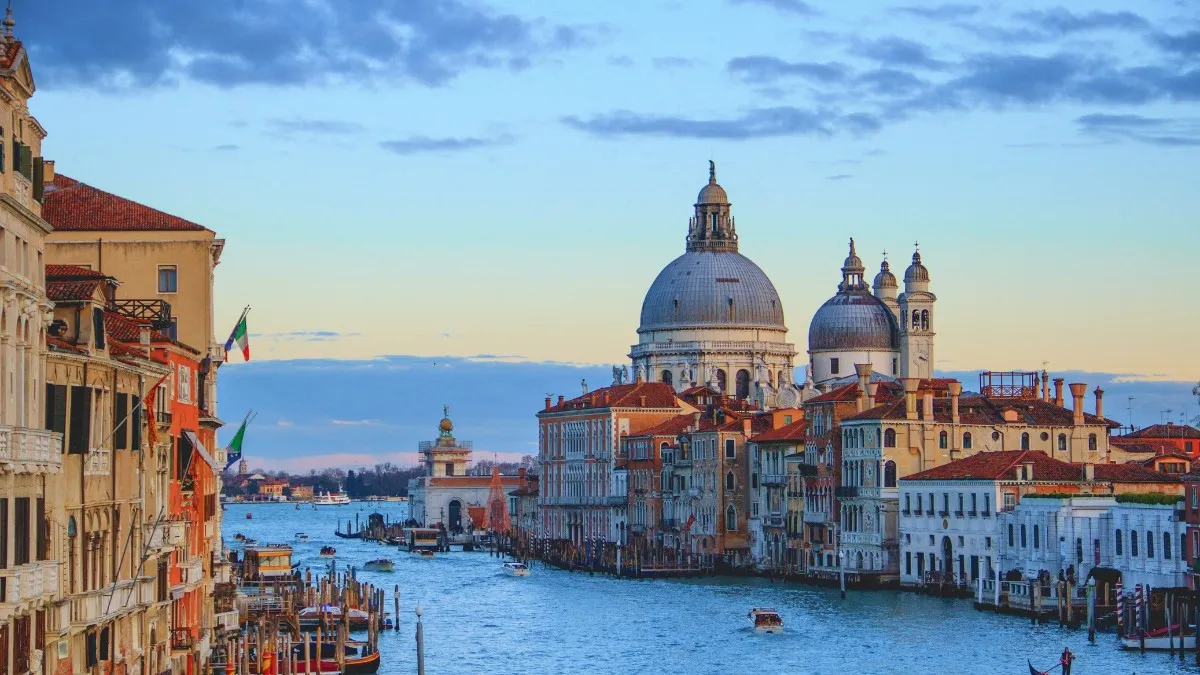
Venice, Italy, is referred to as the City of Canals. The historic city is situated in northeastern Italy in the Venetian Lagoon, and is constructed on an archipelago of 118 small islands. The city is separated by 150 canals. There are more than 400 bridges around the city and waterways are the main means of transportation in this city.
Although numerous other cities in the world have extensive waterways, Venice remains the most historically significant city to be known as the City of Canals.
Why Venice is Known as the City of Canals?
The establishment of Venice (Venezia in Italian) was necessitated by practicality and not for beauty. In the 5th century, the Roman Empire was also invaded by Germanic and Hunnic tribes, and refugees fled to the marshy Venetian Lagoon. The shallow waters formed the natural defense.
The settlers pushed millions of wooden pilings into the settled mud and sand to form natural foundations across centuries. On these wood platforms they constructed their homes, palaces, and their churches. Since the city had been built on the water itself, the gulfs between the islands automatically transformed into the complex network of canals of the city. Venice and its lagoon is a distinctive geographical and architectural landmark that gained a UNESCO world heritage site in 1987.
Venetian Transportation and the Grand Canal
The role of canals in Venice is identical to roads in contemporary cities. The city is completely car-free and pedestrianized.
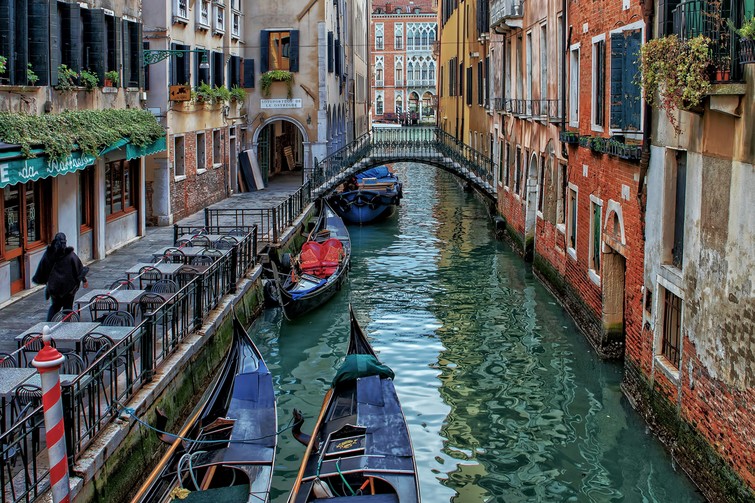
The Grand Canal (Canale Grande) forms the main artery of the city encircling Venice in a grand S-form, the Grand Canal measures about 3.8 kilometers (2.4 miles) in length and 30 to 90 meters in breadth. Residents and tourists travel around the city by waterbuses (vaporetti), water taxis and the classic, traditional, bottom-flat boats called gondolas.
Source: Ricardo Gomez Angel/ Unsplash
5 Fascinating Facts about Venice
The following are 5 interesting facts about the city of canals, Venice:
1. Venice is not placed on solid ground. Millions of petrified logs are used to construct the city. In order to construct on the swampy lagoon, pioneers pounded millions of pieces of wood (alder wood in the majority of cases) further into the clay. The submergence of the wood in salt water, and the absence of oxygen, caused its decomposition to be permanent, so that it was ultimately turned into a petrified, stone like mass.
2. The gondolas should be black in color. Even nowadays when you arrive at Venice you see every gondola is black in colour. This is because a decree issued in the 16th century was aimed at preventing the rich nobles who were quite often engaged in overdoing each other by wearing gaudy, brightly painted and jewel-decorated boats.
3. It provided the world with the word, quarantine. When the Black Death struck in the 14th and 15th centuries, Venice imposed the rule that any ships that came there would have to anchor at sea and wait 40 days before the crew and cargo were allowed to offload. Forty in Italian is called quaranta which later gave the modern word quarantine to the world.
4. Venice can be described as a maze of narrow streets (or called calli), though the smallest one is Calletta Varisco. It is only 53 centimeters (approximately 21 inches) in diameter, making it necessary for the majority of people to stroll sideways!
5. The city is slowly sinking. The land in Venice is also subsiding that is to say, it is slowly sinking into the lagoon, at an average rate of 1 to 2 millimeters in every year. This coupled with the increasing world sea levels, renders the city very vulnerable to the Acqua Alta (high water) flooding in the winter.
Check out some more interesting articles from the general knowledge section to boost your knowledge of national and international topics. Stay connected with Jagran Josh for more topics like this.
ALSO READ:



Comments
All Comments (0)
Join the conversation