India’s internet comes from the high-capacity undersea fibre-optic cables laid down at the bottom of the ocean floor. About 60 per cent of India’s internet traffic relies on these undersea cables that pass through geopolitical regions such as the Red Sea and the Strait of Hormuz and other key marine chokepoints. According to the International Telecommunication Union, about 99 per cent of the international internet traffic goes through submarine cables.
After the LPG crisis and fuel shortage fears, media reports cite potential concerns over disruption to undersea fibre-optic cables amid the rising tensions in West Asia. However, there are no official reports on any damage to the cables as of March 2026. However, the Red Sea has often experienced cable cuts. One such instance was cited back in September 2025, when the internet services across parts of Asia and the Middle East were disrupted due to cuts in undersea cables running through the Red Sea.
Internet in India was officially launched on 15 August 1995 by the government-owned Videsh Sanchar Nigam Limited (VSNL). Before the public could access the internet, the Educational Research Network (ERNET) provided restricted access to the internet for research and educational purposes. As per the IAMAI report, internet users in India have crossed 950 million in 2025, nearing the 1 billion mark. Uttar Pradesh has the highest number of internet users in India, surpassing 131 million users.
In this article, you will learn where India gets its internet from, the key internet cable routes, the number of submarine cable systems, and key cable landing systems in India.
Where does India get its internet from?
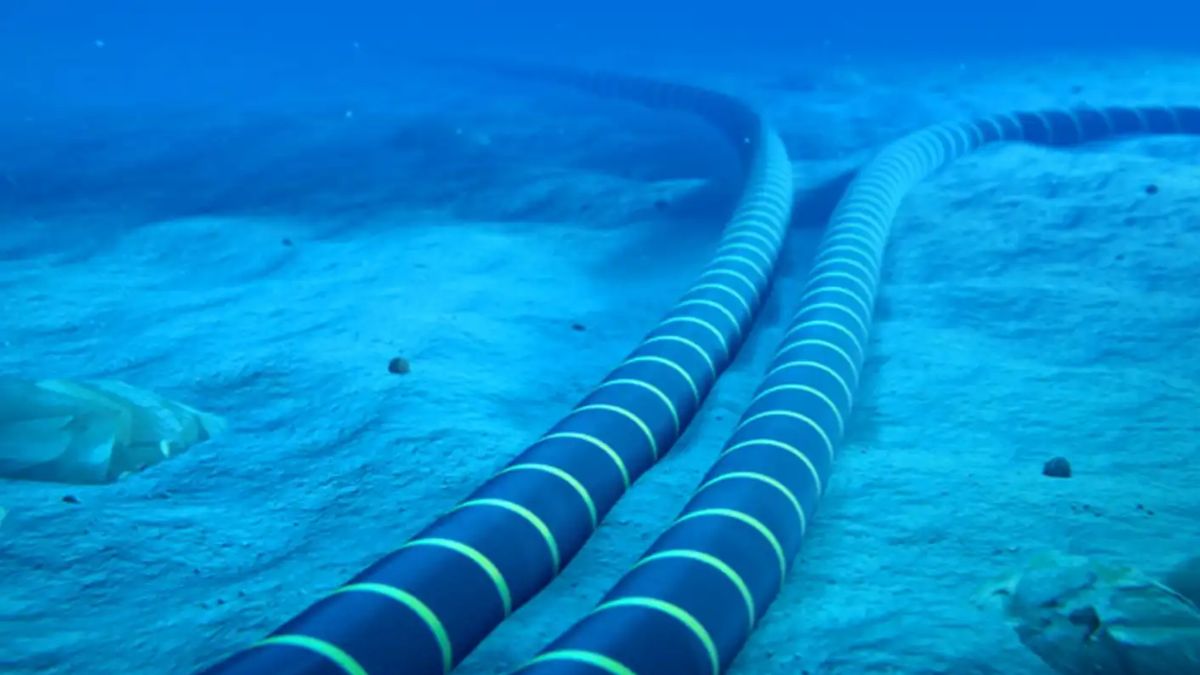
India’s internet comes through high-capacity undersea fibre-optic cables laid down at the bottom of the ocean floor, connecting to global networks.
The internet in India is delivered mainly by 17 international submarine cables that land at 14 distinct Cable Landing Stations (CLS),
The Cable Landing Stations are located across five major coastal cities: Mumbai, Chennai, Cochin, Tuticorin, and Trivandrum.
The primary hubs of India’s internet cable routes are Mumbai (main Western route to Europe) and Chennai (main Eastern route to Singapore/Pacific). These hubs handle the majority of internet traffic.
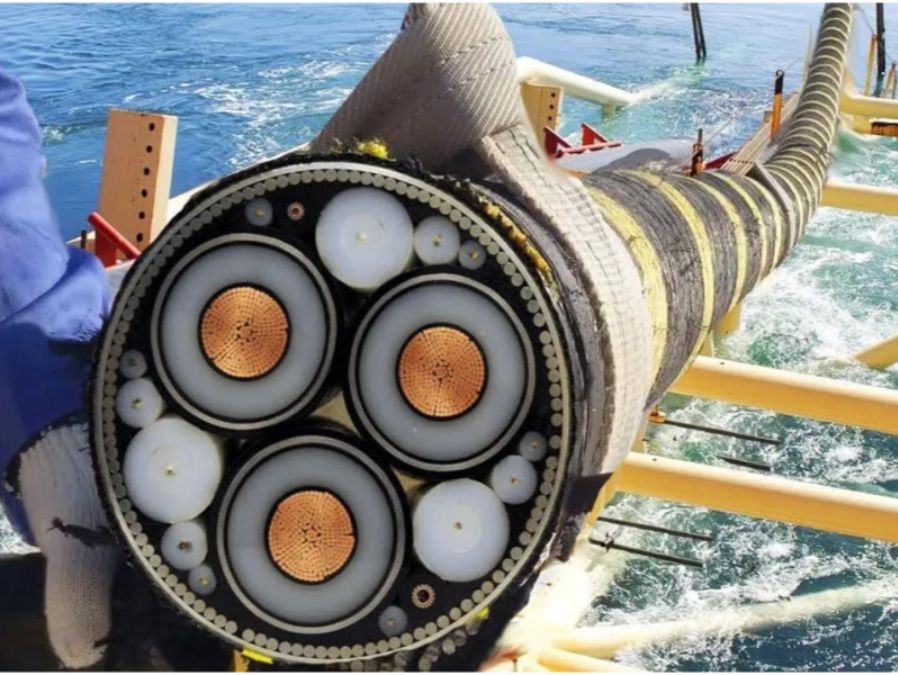
India’s key internet cable routes include SEA-ME-WE-4 (SMW4), SEA-ME-WE-5 (SMW5), I-ME-WE, and Falcon, which connect India to Europe and Asia.
SEA-ME-WE-4 (SMW4): Connects Singapore to France via the Indian subcontinent and the Middle East.
SEA-ME-WE-5 (SMW5): Connects Singapore, Thailand, Malaysia, Bangladesh, Sri Lanka, India, Pakistan, the UAE, Saudi Arabia, Italy, Algeria, Tunisia, and France.
I-ME-WE (India-Middle East-Western Europe): Connects India and Europe via the Middle East.
Falcon: Connects India to several countries in the Persian Gulf and onwards to Egypt.
Also read: Where does India get Salt from?



Comments
All Comments (0)
Join the conversation