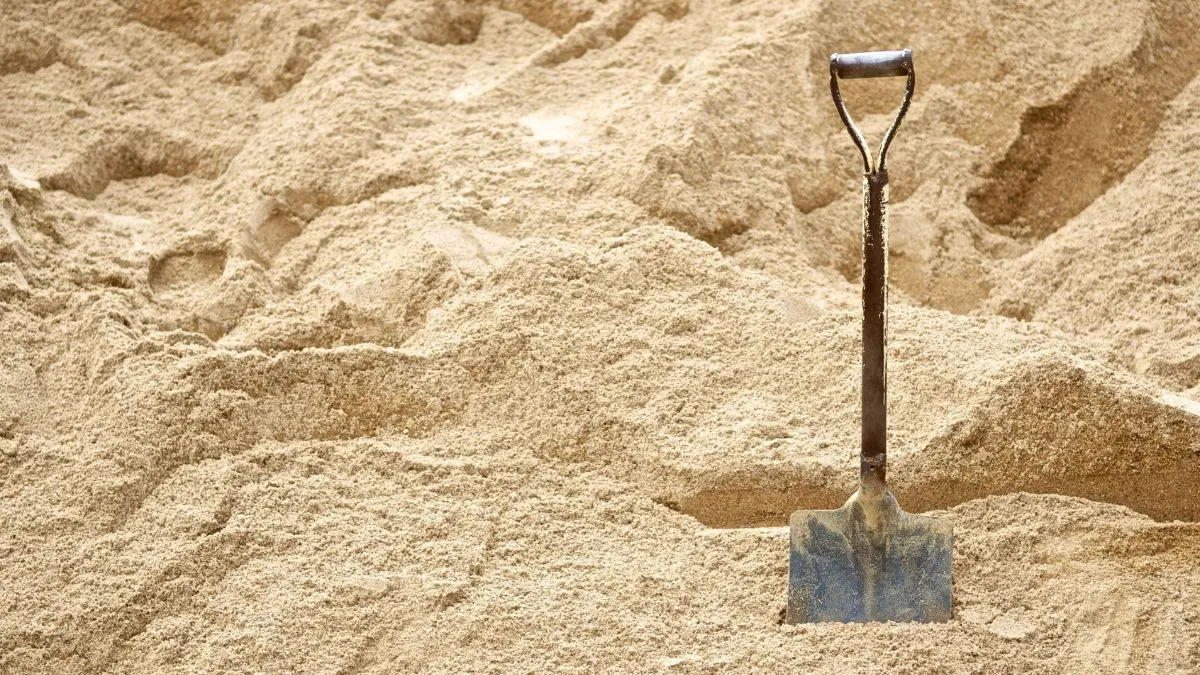
Sand is a granular material composed of fine mineral particles. Sand comes from different sources, locations, and environments. Sand is formed when rocks break down from weathering and erosion over millions of years. They erode further from being constantly washed by waves.
Sand is a heterogeneous mixture, not a pure compound. Why? It is a combination of various small particles like feldspar, mica, quartz, shell fragments, and organic matter. These particles are not chemically bonded; hence, they can be physically separated.
In previous articles, we have learnt that we may know the substances and compounds by their commonly known names, but scientifically speaking, these compounds are referred to by chemical names and formulas that are established by the International Union of Pure and Applied Chemistry (IUPAC).
The chemical name is a unique nomenclature for the compound, so the scientific community does not get confused with other names. The chemical name also hints at the composition or ionic nature of the compound. The chemical formula shows which elements are in the compound.
Previously, we learnt the chemical names and formulas of salt, vinegar, bleaching powder, chalk, and many more. Today, in this article, we will learn the chemical name of sand.
What is the chemical name and formula for sand?

The chemical name for sand is silicon dioxide.
The chemical formula for sand is SiO₂ (one silicon atom bonded to two oxygen atoms).
Properties of Silicon Dioxide
Silicon dioxide is commonly found in nature as quartz. Silica is a major constituent of sand. Silicon dioxide is also a common fundamental constituent of glass. Let us quickly understand the physical and chemical properties of silicon dioxide.
Physical Properties
Appearance: Colourless, hard solid, can be crystalline (quartz) or amorphous (glass, silica gel)
Density: Varies by form (e.g., -2.65 g/cm³ and -2.2 g/cm³ for amorphous)
Melting Point: Very high, ~1710-1713 degrees Celsius.
Boiling Point: High, ~2950 degrees Celsius
Solubility: Insoluble in water and most acids, but dissolves in hydrofluoric acid (HF)
Conductivity: Poor conductor of electricity (good insulator)
Hardness: Hard, similar to diamond
Chemical Properties
Composition: Silicon Dioxide
Stability: Extremely stable and chemically inert due to strong Si-O bonds and tetrahedral structure
Reactivity: Unreactive with most acids (but dissolves in hydrofluoric acid), reacts with strong bases and alkalis to form silicates
Uses of Sand
Sand is widely used in a variety of applications, ranging from construction materials to electronics, agriculture, and environmental activities. Below, we have a look at the uses of sand:
Construction and infrastructure: An essential filler and binder in concrete, mortar, and plaster. It is used in asphalt mixes for road construction. It is also used in bricks, roofing shingles, and pipes.
Industrial and manufacturing: High-quality sand is melted to form glass. It is used for silicon chips in computers, phones, and cards. It is used for making abrasives like sandpaper to clean or smooth surfaces.
Environmental and recreational: It is used as a natural filter for water treatment and drainage systems. It is used for beach nourishment and the construction of artificial reefs. It is used in aquariums.
Agricultural: It is used to improve drainage in soils for crops like watermelon, peanuts, and peaches.



-1768322786819.jpg)


Comments
All Comments (0)
Join the conversation