April 30 is remembered for the reshaping of nations and scientific developments that changed the way humans perceived the universe. This day marks the oath-taking of the first United States President and the birth of the "Father of Indian Cinema." This day in history is filled with the discovery of subatomic particles and the fall of major cities; let us explore the events chronologically.
What Happened on This Day in History: April 30
The following are some of the events that took place on this day in history.
George Washington became the First US President (1789)
On this day in 1789, George Washington took the oath as the First President of the United States. This event took place on the balcony of Federal Hall in New York. He was in office for two terms until 1797.
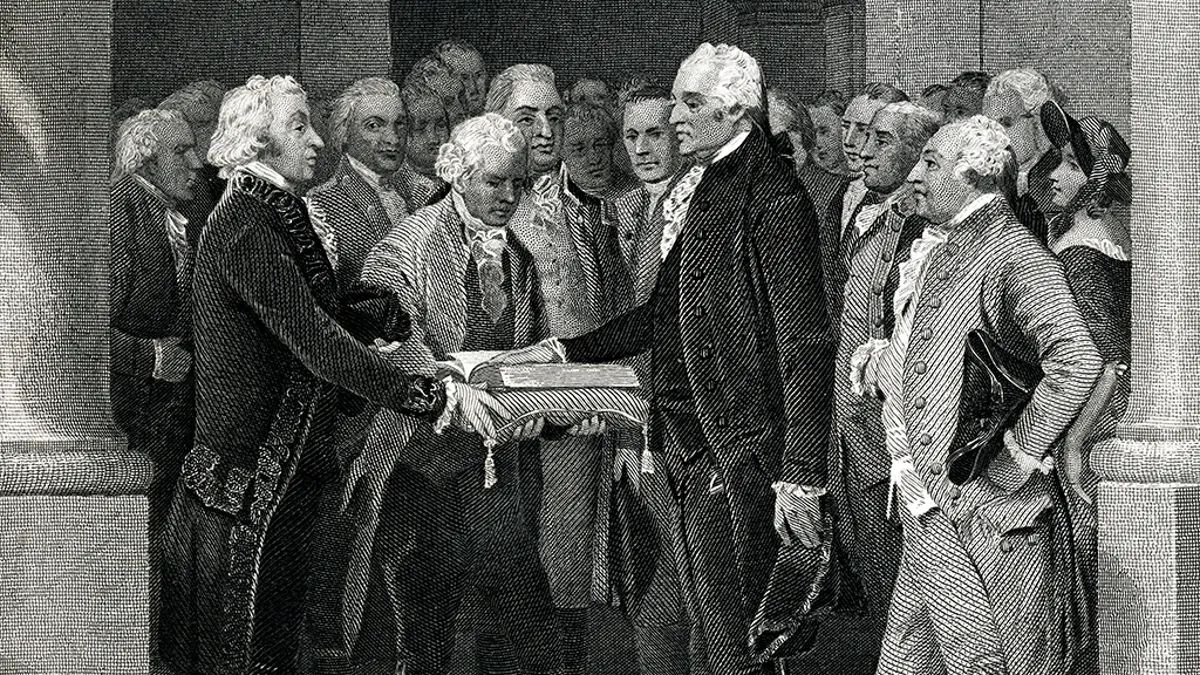
Source: Painting by Alonzo Chappel
The United States Buys Louisiana from France (1803)
The Louisiana Purchase Treaty was signed in Paris. In this land deal, the US paid France $15 million for 828,000 square miles of land. US President Thomas Jefferson wanted to gain control of the Mississippi River. It was sold by Napoleon Bonaparte to finance European wars. The purchase doubled the size of America and opened up the West. Today, this sale is known as one of the largest real estate deals in history.
Birth of Dadasaheb Phalke (1870)
Dhundiraj Govind Phalke, popularly known as Dadasaheb Phalke, was born in Maharashtra on 30th April 1870. He is known as the "Father of Indian Cinema". He directed and produced the first Indian feature film, Raja Harishchandra, in 1913. India's highest award in cinema, the Dadasaheb Phalke Award, is named after him.
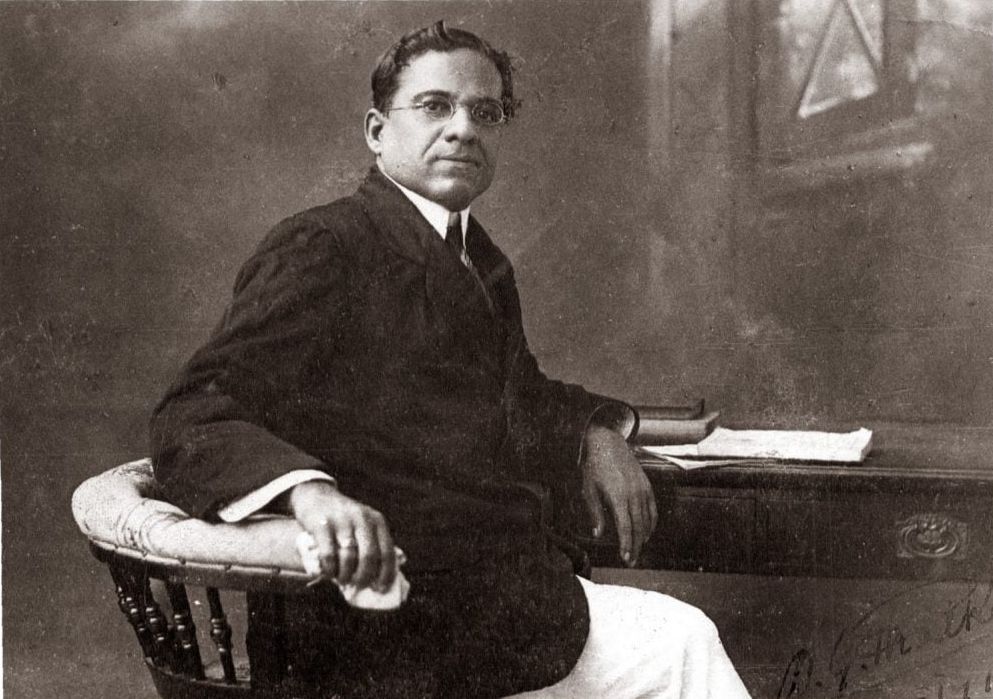
Source: X
J.J. Thomson Discovers the Electron (1897)
British physicist J.J. Thomson discovered the "corpuscle", which was later known as the electron. He worked with cathode ray tubes at the Cavendish Laboratory in Cambridge, UK. At the time, atoms were thought to be the smallest indivisible particles of matter. Thomson demonstrated that atoms were made up of smaller, negatively charged particles. This discovery changed physics and chemistry forever.
Did You Know?
The Louisiana Territory was sold to the United States for less than three cents an acre in 1803. This land became part of 15 different US states.
New York World's Fair Begins (1939)
The New York World's Fair of 1939 opened. The theme of the fair was the "World of Tomorrow," and it displayed new technology. Television broadcasting was introduced to the public in the US for the first time. US President Franklin D. Roosevelt was the first president to be broadcast on television.
Adolf Hitler Dies in Berlin (1945)
Adolf Hitler committed suicide in a Berlin bunker. The Russians were at the doorstep of the capital, which was on the verge of collapse under the Allied onslaught. His suicide signaled the end of the Third Reich and the end of the war in Europe.
Vietnam War Ends (1975)
The capital of South Vietnam, Saigon, was captured by the North Vietnamese communists. This marked the conclusion of the Vietnam War. This was after a massive evacuation of Americans and South Vietnamese. The North Vietnamese forces breached the Presidential Palace with tanks, completing a decisive victory. The city is now known as Ho Chi Minh City.
Kolkata's Bijon Setu Massacre (1982)
16 sadhus (monks) and one sadhvi (nun) of the Ananda Marga group were killed in a gruesome incident in West Bengal, India, on the Bijon Setu Bridge. A mob assaulted the group while they were traveling to an educational conference.
The World Wide Web was released into the public domain by CERN (1993)
The European Organization for Nuclear Research (CERN) released the source code for the World Wide Web. The web's creator, Tim Berners-Lee, supported this decision to keep the web free. CERN's decision to waive royalty fees enabled the unregulated growth of the internet. This paved the way for the way we communicate, learn, and conduct business.
Check out some more interesting articles from the general knowledge section to boost your knowledge of national and international topics. Stay connected with Jagran Josh for more topics like this.
ALSO READ