Jagannath Rath Yatra 2026: Check Theme, Key Facts, Significance and Grand Festival Celebrations
The Jagannath Rath Yatra begins on July 16, 2026. It is the grand chariot journey of Lord Jagannath, Lord Balabhadra and Goddess Subhadra to Gundicha Temple. This iconic festival is symbolic of universal accessibility, spiritual liberation and total devotion for millions of devotees across the globe.

The Jagannath Rath Yatra is a spiritual and religious festival that is held every year in the months of June and July. In terms of the Hindu calendar, the ‘Chariot Festival’ is held on the second day (Dwitiya) of the bright fortnight (Shukla Paksha) of the Hindu month of Ashadha (which occurs in June or July).
This year, the Jagannath Yatra 2026 commences on Thursday, July 16, 2026. During this festival, Lord Jagannath (Lord of the Universe) goes from his main temple (the Jagannath Temple) to the Gundicha Temple, which is believed to be the abode of His maternal aunt.
If you were to Google it, why is the Jagannath Rath Yatra celebrated widely across India, you will find numerous mythological stories behind this festival.
One example of such a legend is that the temple is considered to be the place of birth of these deities (Janmaedi). It is in this temple where all the sacred trees were first shaped into the idols of Lord Jagannath, His elder brother Lord Balabhadra, and His sister Goddess Subhadra.
However, in the latter case, traditionally speaking, only Hindus, not non-Hindus or foreigners, were allowed access to the inner chambers of the main Puri temple. But during the Rath Yatra, Lord Jagannath leaves his palace to appear on the streets. In this way, all can witness His presence and pull His chariot irrespective of their caste, creed, religion, and nationality.
There is another legend in which the Goddess Subhadra had wished to visit the city of Puri. In order to satisfy his sister’s wish, Lord Jagannath and Lord Balabhadra took her for a chariot ride around the city.
In the Gaudiya Vaishnavism tradition, the festival has a metaphorical significance signifying the extreme devotion of the milkmaids (Gopis) of Vrindavan, who brought back Lord Krishna (incarnation of Jagannath) from Dwarka to Vrindavan.
When is Jagannath Yatra 2026?
Jagannath Rath Yatra begins on Thursday, 16th July 2026. The major festival is held on the second day (Dwitiya Tithi) of Shukla Paksha in the month of Ashadha according to the Hindu calendar. Some of the most significant and symbolic dates in the long list of the festival are as follows:
- July 15, 2026 – Nabajaubana Darshan: This is the first appearance of the Gods after spending two weeks in ritual seclusion called Anavasara.
- July 16, 2026 – Rath Yatra: The Main Chariot Festival starts.
- July 20, 2026 - Hera Panchami: This ritual symbolises the wrath of Goddess Mahalaxmi.
- July 24, 2026 – Bahuda Yatra: It marks the journey back of the Gods to the main temple.
- July 25, 2026 - Suna Besha: Ornaments made up of pure gold are put on the deities.
What are the Core Themes and Significance of the Jagannath Rath Yatra?
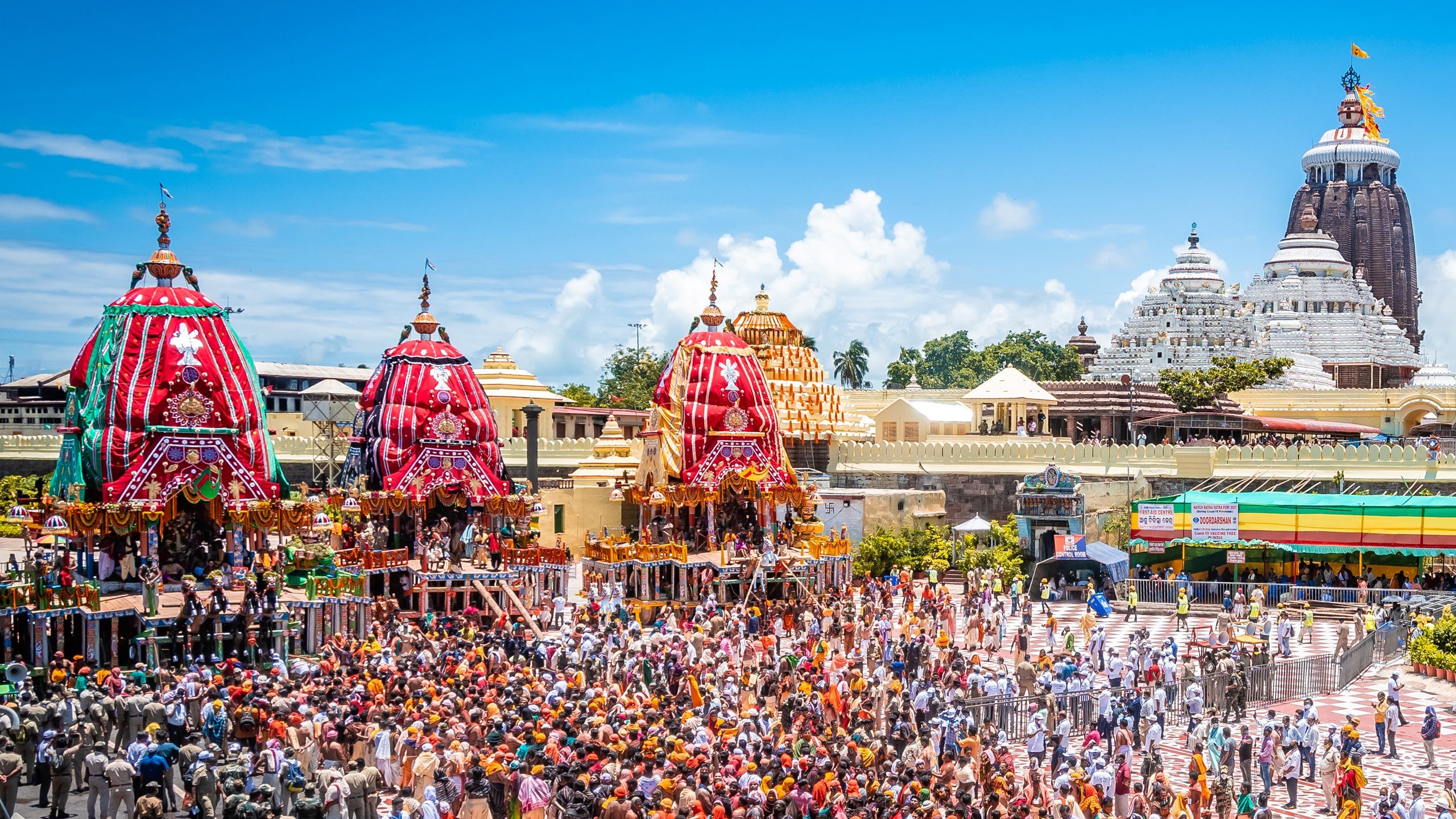
Popularly known as the “Festival of Chariots", the Yatra involves the yearly movement of Lord Jagannath (Lord of the Universe), together with his elder brother, Lord Balabhadra, and his sister, Goddess Subhadra, from their abode to the Gundicha Temple, which is believed to be their maternal aunt’s house.
- Universal Inclusivity: While non-Hindus are not allowed to enter the main sanctum of the temple, the uniqueness of the Rath Yatra is that the deities come out and meet mankind. People of any religion, caste, race, nationality or even anyone who wishes can see the deities and pull the ropes of the chariots.
- Radical Equality: Another aspect of the Rath Yatra is that it stresses the point that all human beings are equal before God. To emphasise this belief, the Gajapati King of Puri performs the Chhera Pahanra ritual, where he sweeps the chariots as well as the road with the help of a golden broomstick.
- Sacred Significance: According to Skanda Purana, just seeing the processional or participating in pulling the heavy ropes results in huge blessings.
What are the Key Facts About the Festival of Chariots?
Three large chariots made out of wood are an architectural wonder of traditional engineering that need to be entirely rebuilt every year, beginning with the Akshaya Tritiya day, using only new wood. None of the previous year’s elements is used.
- Nandighosha (Chariot of Lord Jagannath): The tallest one is 45 feet tall, has 16 large wheels, and has red and yellow canopies covering it.
- Taladhwaja (Chariot of Lord Balabhadra): The 44-foot-tall chariot with 14 wheels has red and green canopies, and the palm tree flag decorates the chariot.
- Darpadalana (Chariot of Goddess Subhadra): The shortest one, 43 feet tall with 12 wheels, uses red and black canopies.
(Note: When the festival ends, the chariots are taken apart, and the sacred wood is distributed among the worshippers as prasad.)
What are the Grand Festival Celebrations during Jagannath Rath Yatra?
The focal point of all the festivities takes place at Puri in the state of Odisha on a stretch 3 kilometres long, famously called Bada Danda (Grand Road).
- Pahandi Vidhi: The celebrations commence with a spirited and enthusiastic clamour as the hefty idols are rhythmically taken out of the temples by swinging them and placing them in their respective chariots.
- Chariot Pulling: Millions of devotees join hands to pull the chariots manually through the ropes. The entire ambience buzzes with high devotional fervour and chanting of bhajans, drumbeats, and cymbals.
- Processions & Pageantry: Besides the chariots, this spectacular carnival also comprises decorated elephants, camels, and culturally themed tableaux depicting the spiritual legacy of India.
Although the biggest gathering takes place in Puri, there is another equally vibrant parallel event taking place in places such as Ahmedabad, Gujarat.

Kriti Barua is a skilled digital journalist and communications professional with 4+ years of experience, currently writing for the General Knowledge section at Jagran New Media. She has established herself as a subject matter expert in History, Geography, Trending National and International News, Sports, Science, and Defence, producing clear, reliable, and search-optimised content that connects with readers worldwide.
Kriti holds a BA degree from Delhi University and a one-year diploma in TV Production and Journalism, an academic background that adds research depth and strong storytelling instincts to her writing. Her experience spans brand writing, content marketing, and digital media, giving her a sharp understanding of what makes content both helpful to readers and visible in search.
At Jagran New Media, she applies this expertise to national and international news coverage, query-based articles, and in-depth pieces across her specialist subject areas. Her content is defined by easy language, factual accuracy, strong keyword strategy, and reader-friendly storytelling.


-1784194861561_t.webp)