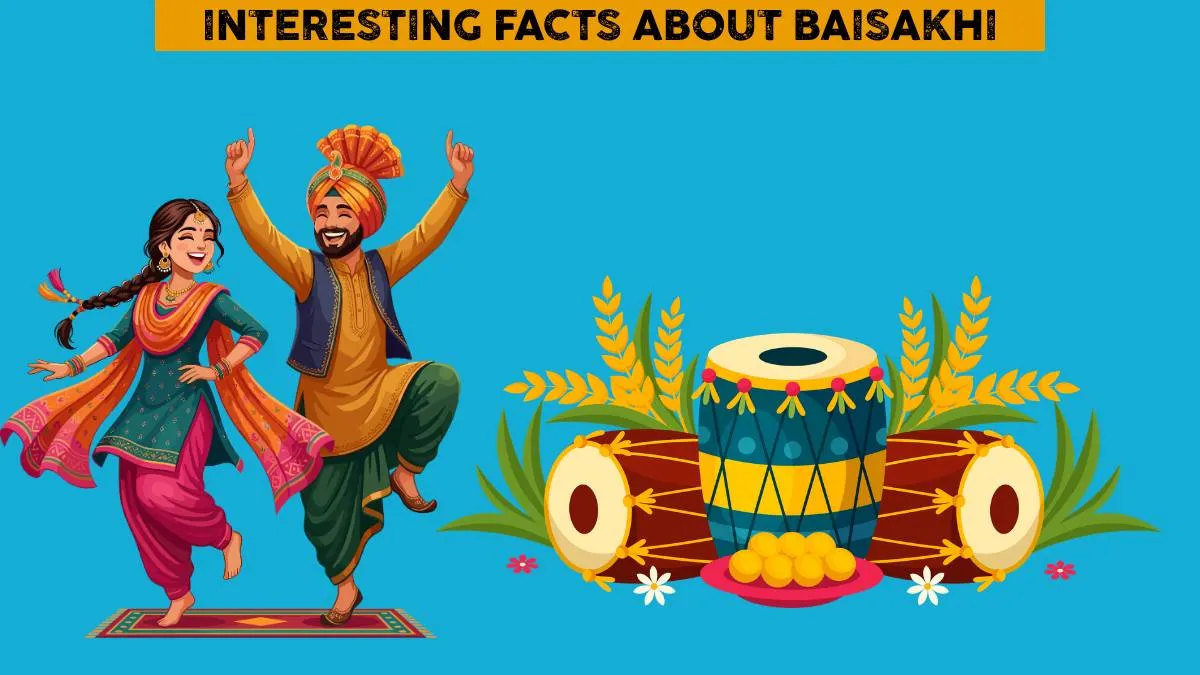
Baisakhi is one of the most colorful and historical Indian festivals. It is celebrated mainly in Punjab and Haryana, it marks the beginning of Sikh New Year and solar New Year of Hindus. Let us explore some interesting facts about Baisakhi that makes it both a harvest and spiritual festival for Sikhs.
What is Baisakhi?
Baisakhi is a historical and religious celebration in North India to especially Punjab and Haryana signify the spring harvest and Sikh New Year. This is important from a religious perspective because of the year 1699 when Guru Gobind Singh formed Khalsa Panth. It is also the day when the Sun gets into the Mesha Rashi (Aries), which is the solar New Year in the Indian cultures.
Why is Baisakhi a harvest festival?
Baisakhi is the occasion when winter crops are harvested by farmers in North India. It is called Rabi harvest. Farmers thank God to have a good harvest and hope that they will be prosperous in their future. This day is the first day of the active wheat harvest in rural Punjab. The celebration includes the "Aawat Pauni" tradition. During this ceremony, they take a group of people to the farm to collect crops accompanied by singing and drumming.
9 Interesting Facts about Baisakhi
The following are 9 interesting facts about Baisakhi:
1. Guru Gobind Singh summoned a huge number of people on Baisakhi 1699, at Anandpur Sahib, in present-day Punjab. He invited all those who are ready to sacrifice their lives for faith. Five men volunteered to sacrifice their lives. They were named Panj Pyare, that is, the Five Beloved ones. They were Daya Ram, Dharam Das, Himmat Rai, Mohkam Chand and Sahib Chand.
2. The five marks (Panj Kakar or Five Ks) of Sikh identity were also given to the Khalsa on the same day; these included Kesh (uncut hair), Kara (steel bracelet), Kachera (cotton undergarment), Kanga (wooden comb), and Kirpan (steel dagger).
3. Baisakhi is not just a Punjabi festival or a Sikh festival. Various Indian states also observing the solar new year around the same month in April with different names.
The festival in Assam is known as Rongali Bihu or Bohag Bihu. In Kerala, it is Vishu. Tamil Nadu celebrates it as Puthandu. In West Bengal it is called Poila Baisakh, a Bengali New Year. These festivals are all celebrations of a new solar year.
4. Baisakhi of 1919 is a sad day in Indian history because of the Jallianwala Bagh Massacre in Amritsar where thousands of people assembled to conduct peaceful protests. General Dyer gave orders to the British soldiers to open fire on the unarmed mob. This tragedy was one of the biggest in triggering the Indian independence movement.
5. Ranjit Singh was declared Maharaja of Punjab, on April 12, 1801, on the same day as Baisakhi. He consolidated the different Sikh misls to form a strong empire.
6. Amrit Sanchar or the initiation ceremony of baptism, was held during Baisakhi. Amrit (holy water) was made in a steel bowl by Guru Gobind Singh. He recited prayers stirring it with a two-edged sword known as Khanda.
7. Baisakhi is the end of the winter crop season (rabi) in North India. This time of the year is around when the rabi crop, which mainly consists of wheat, is harvested in Punjab and Haryana. After a good harvest, farmers rejoice and the next farming season starts.
This is the reason why Baisakhi festivals are very lively in rural Punjab due to this agricultural relationship. Communities also flock to fields and Bhangra (men folk dance) and Gidda (women folk dance), and attend gurdwaras to share to enjoy langar which is given free to all visitors irrespective of background.
8. Changing of the Nishan Sahib is a special tradition of Gurdwaras during the festival of Baisakhi. The Nishan Sahib is the triangular saffron flag that is flown at the outside of every Gurdwana. This day the flagpole gets lowered. The flag is taken off and the pole is bathed in the milk and water. This ceremony is called Chola Sahib Ki Sewa. Then a new flag is raised to represent the undying nature of the Khalsa. It is a well esteemed ritual, which includes the whole local community.
9. Worshipers go to Gurdwaras in the morning to pray. Kar Seva is another activity that involves physical work in the community on a voluntary basis by many people. The holy book, Guru Granth Sahib is symbolically bathed in milk and water in most places.
Check out some more interesting articles from the general knowledge section to boost your knowledge of national and international topics. Stay connected with Jagran Josh for more topics like this.




Comments
All Comments (0)
Join the conversation