INS Mangrol Joins Indian Navy: Key Features, Capabilities and Strategic Importance
INS Mangrol has joined the Indian Navy, strengthening India’s anti-submarine warfare capabilities. Learn about its key features, advanced weapons, indigenous technology, and strategic importance for maritime security.
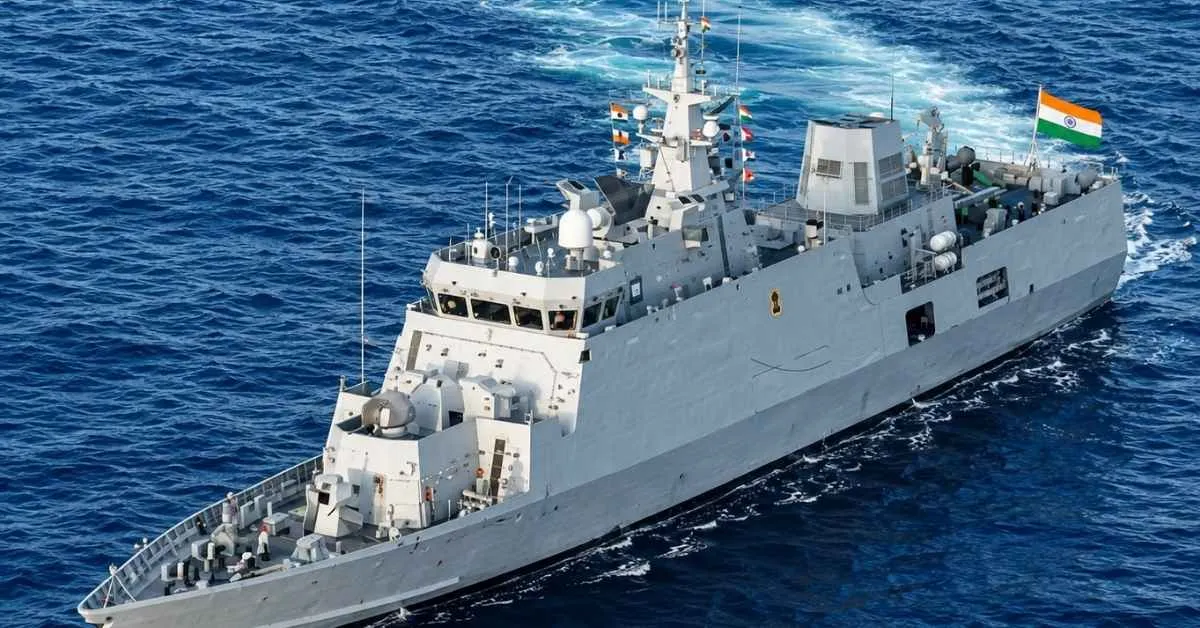
The Indian Navy has welcomed INS Mangrol, the third indigenous Anti-Submarine Warfare Shallow Water Craft (ASW-SWC) created by Cochin Shipyard Limited. Featuring more than 80% indigenous materials, it has the ability to conduct underwater surveillance, anti-submarine exercises, mine operations, and coastal security missions.
The commissioning of this vessel is a crucial step in India's quest to enhance its maritime defense capabilities as well as advance the agenda of self-reliance in defense manufacturing promoted by the Aatmanirbhar Bharat initiative.
The Indian Navy has welcomed INS Mangrol, the third indigenous Anti-Submarine Warfare Shallow Water Craft (ASW-SWC) created by Cochin Shipyard Limited. Featuring more than 80% indigenous materials, it has the ability to conduct underwater surveillance, anti-submarine exercises, mine operations, and coastal security missions.
The commissioning of this vessel is a crucial step in India's quest to enhance its maritime defense capabilities as well as advance the agenda of self-reliance in defense manufacturing promoted by the Aatmanirbhar Bharat initiative.
Features of INS Mangrol
This ship is built according to the standards of Det Norske Veritas (DNV) classification, which gives the vessel remarkable maneuverability and very low acoustic signatures.
-
Displacement: 896 to 1,100 tonnes
-
Specifications: Length of 78, beam of 11.26 and draft of 2.7m
-
Speed: Maximum speed of 25 knots (approx. 46 km/hour)
-
Range of Operation: 1,800 nautical miles at a cruising speed of 14 knots
-
Endurance: 14 days
-
Crew Size: Can accommodate 57 people (including 7 officers and 50 sailors)
-
Propulsion System: Operates on three marine diesel engines, which are connected to three advanced waterjet propulsors with a total output of 6 MW.
Capabilities and Weapons Suite
The INS Mangrol was specifically designed not only for coastal warfare, but also for low-intensity maritime operations (LIMO), underwater reconnaissance, and mine-laying activities.
1. Water Jet Technology: The old propellers were replaced by a water jet system that draws the water through the bottom of the ship and releases it at accelerated speed, lessening the underwater noise level and therefore making the ship less susceptible to enemy submarines.
2. Advanced Anti-Submarine Warfare (ASW):
-
Sensors: Uses DRDO’s Abhay Compact Hull–Mounted Sonar and a Low Frequency Variable Depth Sonar that can detect submarines at different depths.
-
Rocket Launcher: 1 × RBU–6000 forward-mounted rocket launcher.
-
Torpedoes: 2 × triple lightweight torpedo launchers with advanced lightweight torpedoes.
-
Mine Warfare: Capable of laying mines with integrated rails.
-
Defensive Countermeasures: Integrated anti-submarine warfare defence suite containing Mahindra’s torpedo decoy launching systems.
3. Surface Weaponry:
-
1 × 30 mm naval surface gun.
-
2 × 12.7 mm stabilized remote-controlled guns.
-
Automated command systems including Integrated Platform Management System and Battle Damage Control System.
Strategic Relevance for India
-
Dominance in Littoral Marine Zones: Large combat ships have to contend with acoustic reflections and limited underwater depth in the shallow waters of the coast.
-
The INS Mangrol is effectively covering this important gap by conducting coastal patrols for the purpose of surveilling coastal activities against small and diesel submarines.
-
Aatmanirbhar Bharat: More than 80% of the technologies including sonars developed by the Defence Research and Development Organisation (DRDO), Indian missiles and hull manufacturing technologies of Cochin Shipyard Limited were used for the production of this vessel.
-
Thus, it will benefit local MSMEs and decrease dependency on international military value chain players.
-
Indian Ocean Region (IOR) Security: The vessel contributes to the enhancement of coastal monitoring systems in the vicinity of vital commercial and strategic ports.
-
Thus, it facilitates protection of Sea Lines of Communication (SLOC) from underwater threats.
-
Multi-purpose Capability: Besides anti-submarine operations, the vessel is capable of performing a whole set of other functions including search and rescue and coastal duties, minelaying, and counter-maritime piracy.

Manisha Waldia is a distinguished content strategist with 5 years of experience crafting premium educational content for UPSC and State PCS, with a focus on deep conceptual analysis across Polity, Geography, History, and Environment. She currently brings this expertise to Jagran Josh, where she covers major national and international events, current affairs, and static general knowledge. Over her career, Manisha's specialized insights have led her to curate high-impact materials and serve as a UPSC Mains answer-evaluator for India’s top institutes—including Drishti IAS, Shubhra Ranjan IAS, Study IQ, GS Score, and PWonlyIAS. She has also worked alongside leading NGOs like Oxfam India and Avani Kumaon.
Contact: manisha.waldia@jagrannewmedia.com






![[लिंक] Rajasthan Computer Instructor Admit Card 2026 LIVE: बेसिक और वरिष्ठ कंप्यूटर अनुदेशक एडमिट कार्ड जारी, SSO ID से डाउनलोड करें हॉल टिकट](https://img.jagranjosh.com/images/2026/August/1982026/Computer-instructor-admit-card-2026.jpg)