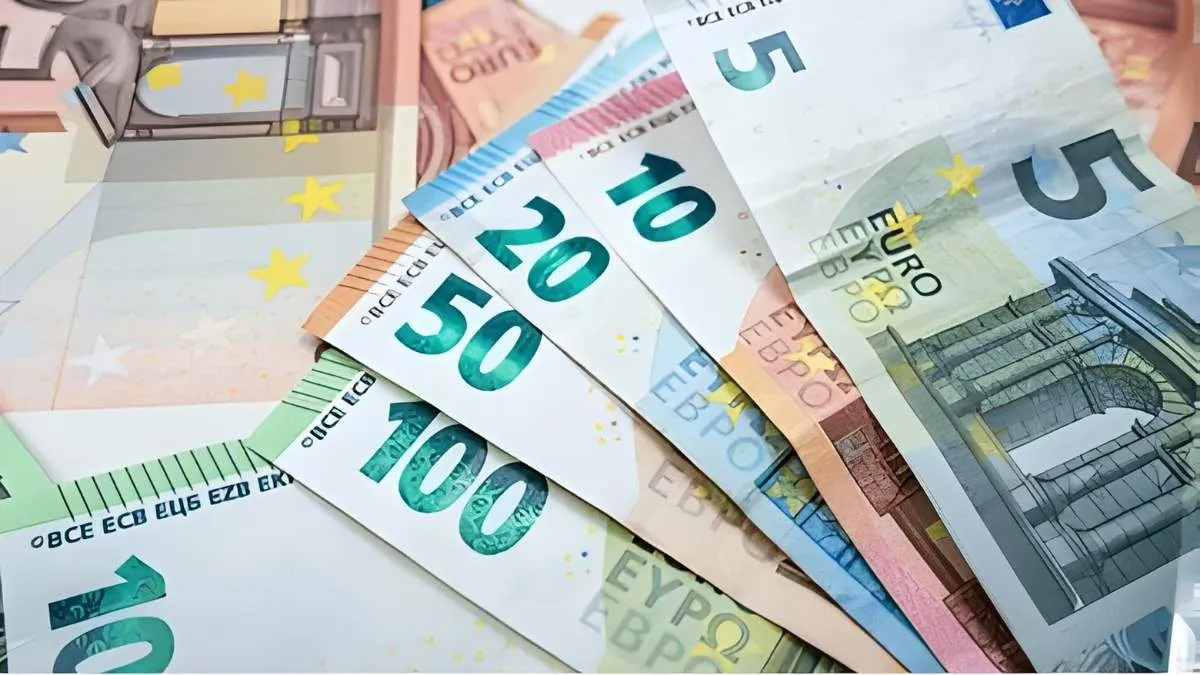
The Euro currency is commonly used within European Union countries, but euro has reached beyond the European’s political borders.
Many non-EU countries with other islands, which are officially separated from European territories, often use the Euro currency as the official currency in their region because they are either linked to EU member states or due to any special monetary agreement.
What are the criteria for using the Euro currency for an outsider to the European Union?
Although the euro was created for EU member states, it is also the legal or de facto currency in several regions outside the EU. These places fall into three broad categories:
-
EU-linked territories located outside Europe
-
Non-EU territories with formal euro agreements
-
Independent non-EU countries using the euro without issuing their own currency
Also Read: Which River Is Known As the Queen of Europe's Rivers?
How many European Territories Located Outside Europe still use the Euro Currency?
These regions are politically part of EU countries, so the euro applies even though they are geographically outside mainland Europe.
-
Canary Islands (Spain) – Located in the Atlantic Ocean, but legally part of Spain and the euro area.
-
Ceuta and Melilla (Spain) – Spanish cities on the North African coast that use the euro.
-
Azores and Madeira (Portugal) – Autonomous island regions in the Atlantic using the euro.
-
Mayotte and Réunion (France) – French overseas departments in the Indian Ocean, where the euro is the standard currency.
-
French Guiana – A French overseas department in South America using the euro.
-
Guadeloupe and Martinique – French Caribbean islands that are part of the EU and euro area.
-
Saint Martin – A French overseas collectivity that remains within the EU and uses the euro.
Also Read: Which Countries Lie In Both Europe And Asia? List of Transcontinental Countries in the World
How many Non-European Territories uses Euro Currency officially?
These territories are not part of the EU, but legally use the euro through agreements with European authorities.
-
Saint Pierre and Miquelon – A French overseas collectivity near Canada that uses the euro under a monetary agreement.
-
Saint-Barthélemy – A French overseas collectivity outside the EU that officially uses the euro.
European Microstates Using the Euro (Non-European Countries)
These small independent countries are not EU members, but they have formal agreements allowing euro usage and limited coin minting.
-
Andorra
-
Monaco
-
San Marino
-
Vatican City
Each of these states uses the euro as its official currency.
How many Non-European Balkan Countries Use the Euro Unilaterally?
There are two Non-European Balkan Countries that uses the euro without a formal EU agreement and do not issue their own national currency.
-
Kosovo
-
Montenegro
They adopted the euro in 2002 after previously using the German Deutsche Mark.
How Many Non-European Countries Use the Euro?
So, there are 6 Non-European sovereign countries use the euro officially, which are:
-
Andorra
-
Monaco
-
San Marino
-
Vatican City
-
Kosovo
-
Montenegro
In addition, multiple overseas territories outside Europe also use the euro due to their political ties with EU member states.
Conclusion
The euro is far more global than many people realise. While designed for the European Union, it functions as an official currency in six non-EU countries and several overseas territories worldwide. This widespread adoption highlights the euro’s stability and international trust.




Comments
All Comments (0)
Join the conversation