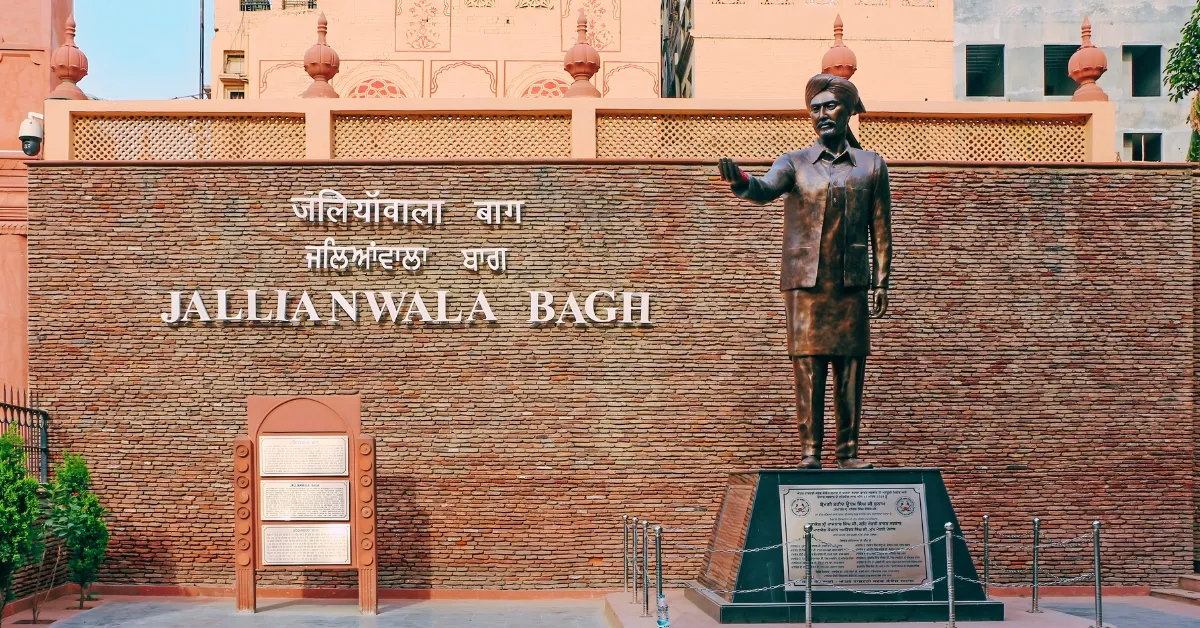
GK Quiz on Jallianwala Bagh: The Jallianwala Bagh Massacre took place on April 13, 1919, in Amritsar. On that day, thousands of people gathered peacefully to celebrate Baisakhi and protest against unfair laws. This tragedy is remembered as one of the darkest moments in history. It revealed the harshness of colonial rule and inspired many Indian revolutionaries. But can you guess the dates and incidents about the Jallianwala Bagh massacre? Do you know the British officer who ordered the firing? What festival were people celebrating that day? Take this quiz to see how much you remember about this important event.
50+ GK Quiz With Answers on Jallianwala Bagh
The Jallianwala Bagh Massacre in 1919 marked a tragic turning point in India's fight for independence. This article looks at the event, when peaceful protesters were shot at, and how it sparked a movement that helped end British rule.
Q1. In which city did the Jallianwala Bagh Massacre take place?
a) Delhi
b) Amritsar
c) Lahore
d) Mumbai
Ans.: b)
Explanation: The incident occurred at Jallianwala Bagh in Amritsar, Punjab, on April 13, 1919.
Q2. Who was the British officer who ordered the firing on the crowd?
a) Lord Curzon
b) General Dyer
c) Lord Mountbatten
d) General Dalhousie
Ans.: b)
Explanation: Acting Brigadier-General Reginald Dyer ordered his troops to fire on the peaceful gathering without warning.
Q3. On which Punjabi festival did the massacre occur?
a) Diwali
b) Holi
c) Baisakhi
d) Lohri
Ans.: c)
Explanation: People had gathered to celebrate Baisakhi, which also coincided with a protest against the Rowlatt Act.
Q4. Against which act were the people protesting at Jallianwala Bagh?
a) Rowlatt Act
b) Salt Act
c) Arms Act
d) Vernacular Press Act
Ans.: a)
Explanation: The Rowlatt Act allowed the British government to imprison people without trial, leading to widespread protests.
Q5. Who renounced his Knighthood in protest against the massacre?
a) Mahatma Gandhi
b) Rabindranath Tagore
c) Jawaharlal Nehru
d) Bal Gangadhar Tilak
Ans.: b)
Explanation: Rabindranath Tagore returned his Knighthood to express his pain and protest against the British brutality.
Q6. What was the name of the commission appointed to investigate the massacre?
a) Simon Commission
b) Hunter Commission
c) Butler Commission
d) Welby Commission
Ans.: b)
Explanation: The British government formed the Hunter Commission (Disorders Inquiry Committee) to investigate the events in Punjab.
Q7. How many exits did the Jallianwala Bagh have?
a) Five
b) Three
c) One
d) None
Ans.: c)
Explanation: The park had only one narrow exit, which was blocked by the soldiers, making it impossible for people to escape.
Q8. Who was the Lieutenant Governor of Punjab at the time of the massacre?
a) Michael O'Dwyer
b) Lord Irwin
c) Warren Hastings
d) Lord Canning
Ans.: a)
Explanation: Michael O'Dwyer was the Lieutenant Governor who supported General Dyer's actions.
Q9. Which Indian revolutionary killed Michael O'Dwyer in London as revenge?
a) Bhagat Singh
b) Udham Singh
c) Chandrashekhar Azad
d) Rajguru
Ans.: b)
Explanation: Udham Singh assassinated Michael O'Dwyer in 1940 to avenge the Jallianwala Bagh victims.
Q10. Approximately how long did the firing last?
a) 2 minutes
b) 10 minutes
c) 1 hour
d) 5 minutes
Ans.: b)
Explanation: The firing lasted for about 10 minutes, until the soldiers ran out of ammunition.
Q11. What did Mahatma Gandhi return as a mark of protest?
a) Nobel Prize
b) Kaisar-i-Hind Medal
c) Bharat Ratna
d) Victoria Cross
Ans.: b)
Explanation: Gandhi returned the Kaisar-i-Hind gold medal awarded to him for his work during the Boer War.
Q12. What was the purpose of the Rowlatt Act?
a) To promote trade
b) To curb political activities and dissent
c) To improve education
d) To build railways
Ans.: b)
Explanation: It was designed to suppress the growing nationalist movement by allowing detention without trial.
Q13. Who were the two local leaders whose arrest led to protests in Amritsar?
a) Gandhi and Nehru
b) Dr. Saifuddin Kitchlew and Dr. Satyapal
c) Bhagat Singh and Rajguru
d) Tilak and Gokhale
Ans.: b)
Explanation: Their arrest under the Rowlatt Act sparked the initial unrest in the city.
Q14. What is the Jallianwala Bagh site used for today?
a) A shopping mall
b) A national memorial
c) A government office
d) A school
Ans.: b)
Explanation: It was turned into a national memorial in 1951 to honor those who lost their lives.
Q15. In which year did the massacre take place?
a) 1917
b) 1918
c) 1919
d) 1920
Ans.: c)
Explanation: The event took place on April 13, 1919.
Q16. What was the reaction of the British House of Lords to General Dyer's actions?
a) They condemned him
b) They praised him as a hero
c) They arrested him
d) They ignored him
Ans.: b)
Explanation: While the House of Commons criticized him, many in the House of Lords supported him and even raised funds for him.
Q17. Which famous well is located inside Jallianwala Bagh?
a) The Life Well
b) The Martyrs' Well
c) The Freedom Well
d) The Peace Well
Ans.: b)
Explanation: Many people jumped into the "Martyrs' Well" to escape the bullets and drowned.
Q18. What can still be seen on the walls of Jallianwala Bagh today?
a) Paintings
b) Bullet marks
c) Flowers
d) Advertisements
Ans.: b)
Explanation: The bullet holes are still preserved on the walls of the compound.
Q19. Who was the Viceroy of India during the massacre?
a) Lord Chelmsford
b) Lord Reading
c) Lord Minto
d) Lord Hardinge
Ans.: a)
Explanation: Lord Chelmsford served as the Viceroy of India from 1916 to 1921.
Q20. What was General Dyer's stated goal for the firing?
a) To disperse the crowd
b) To produce a "moral effect" and punish rebels
c) To protect his soldiers
d) To end the festival
Ans.: b)
Explanation: Dyer later stated he wanted to create a feeling of fear to prevent future strikes.
Q21. How many rounds were fired by the British troops?
a) 500
b) 1000
c) 1650
d) 2000
Ans.: c)
Explanation: A total of 1,650 rounds were fired during the 10-minute duration.
Q22. Which movement was launched by Gandhi soon after this incident?
a) Quit India Movement
b) Non-Cooperation Movement
c) Civil Disobedience Movement
d) Swadeshi Movement
Ans.: b)
Explanation: The brutality of the massacre led Gandhi to launch the Non-Cooperation Movement in 1920.
Q23. Did General Dyer give any warning to the crowd to disperse?
a) Yes, three times
b) Yes, once
c) No warning was given
d) Only a whistle was blown
Ans.: c)
Explanation: Dyer admitted he gave no warning before ordering his troops to open fire.
Q24. Who was the Secretary of State for India at that time?
a) Winston Churchill
b) Edwin Montagu
c) Clement Attlee
d) Ramsay MacDonald
Ans.: b)
Explanation: Edwin Montagu was the Secretary of State, known for the Montagu-Chelmsford Reforms.
Q25. Which Indian political party condemned the massacre and demanded an inquiry?
a) Muslim League
b) Indian National Congress
c) Hindu Mahasabha
d) Communist Party
Ans.: b)
Explanation: The Indian National Congress led the protest against the massacre and formed its own inquiry committee.
The Jallianwala Bagh Massacre took place on April 13, 1919, in Amritsar. On that day, thousands of people gathered peacefully to celebrate Baisakhi and protest against unfair laws. This tragedy is remembered as one of the darkest moments in history. It revealed the harshness of colonial rule and inspired many Indian revolutionaries. Because the park had a narrow entrance, people could not escape the gunfire. Today, the site stands as a memorial to those who sacrificed their lives for independence.
But can you guess the dates and incidents about the Jallianwala Bagh massacre? Do you know the British officer who ordered the firing? What festival were people celebrating that day? Take this quiz to see how much you remember about this important event.
50+ GK Quiz With Answers
The Jallianwala Bagh Massacre of 1919 was a tragic turning point in India's freedom struggle. This article explores the horrific event where peaceful protesters were fired upon, sparking a nationwide movement that eventually led to the end of British rule.
Q1. In which city did the Jallianwala Bagh Massacre take place?
a) Delhi
b) Amritsar
c) Lahore
d) Mumbai
Ans.: b)
Explanation: The incident occurred at Jallianwala Bagh in Amritsar, Punjab, on April 13, 1919.
Q2. Who was the British officer who ordered the firing on the crowd?
a) Lord Curzon
b) General Dyer
c) Lord Mountbatten
d) General Dalhousie
Ans.: b)
Explanation: Acting Brigadier-General Reginald Dyer ordered his troops to fire on the peaceful gathering without warning.
Q3. On which Punjabi festival did the massacre occur?
a) Diwali
b) Holi
c) Baisakhi
d) Lohri
Ans.: c)
Explanation: People had gathered to celebrate Baisakhi, which also coincided with a protest against the Rowlatt Act.
Q4. Against which act were the people protesting at Jallianwala Bagh?
a) Rowlatt Act
b) Salt Act
c) Arms Act
d) Vernacular Press Act
Ans.: a)
Explanation: The Rowlatt Act allowed the British government to imprison people without trial, leading to widespread protests.
Q5. Who renounced his Knighthood in protest against the massacre?
a) Mahatma Gandhi
b) Rabindranath Tagore
c) Jawaharlal Nehru
d) Bal Gangadhar Tilak
Ans.: b)
Explanation: Rabindranath Tagore returned his Knighthood to express his pain and protest against the British brutality.
Q6. What was the name of the commission appointed to investigate the massacre?
a) Simon Commission
b) Hunter Commission
c) Butler Commission
d) Welby Commission
Ans.: b)
Explanation: The British government formed the Hunter Commission (Disorders Inquiry Committee) to investigate the events in Punjab.
Q7. How many exits did the Jallianwala Bagh have?
a) Five
b) Three
c) One
d) None
Ans.: c)
Explanation: The park had only one narrow exit, which was blocked by the soldiers, making it impossible for people to escape.
Q8. Who was the Lieutenant Governor of Punjab at the time of the massacre?
a) Michael O'Dwyer
b) Lord Irwin
c) Warren Hastings
d) Lord Canning
Ans.: a)
Explanation: Michael O'Dwyer was the Lieutenant Governor who supported General Dyer's actions.
Q9. Which Indian revolutionary killed Michael O'Dwyer in London as revenge?
a) Bhagat Singh
b) Udham Singh
c) Chandrashekhar Azad
d) Rajguru
Ans.: b)
Explanation: Udham Singh assassinated Michael O'Dwyer in 1940 to avenge the Jallianwala Bagh victims.
Q10. Approximately how long did the firing last?
a) 2 minutes
b) 10 minutes
c) 1 hour
d) 5 minutes
Ans.: b)
Explanation: The firing lasted for about 10 minutes, until the soldiers ran out of ammunition.
Q11. What did Mahatma Gandhi return as a mark of protest?
a) Nobel Prize
b) Kaisar-i-Hind Medal
c) Bharat Ratna
d) Victoria Cross
Ans.: b)
Explanation: Gandhi returned the Kaisar-i-Hind gold medal awarded to him for his work during the Boer War.
Q12. What was the purpose of the Rowlatt Act?
a) To promote trade
b) To curb political activities and dissent
c) To improve education
d) To build railways
Ans.: b)
Explanation: It was designed to suppress the growing nationalist movement by allowing detention without trial.
Q13. Who were the two local leaders whose arrest led to protests in Amritsar?
a) Gandhi and Nehru
b) Dr. Saifuddin Kitchlew and Dr. Satyapal
c) Bhagat Singh and Rajguru
d) Tilak and Gokhale
Ans.: b)
Explanation: Their arrest under the Rowlatt Act sparked the initial unrest in the city.
Q14. What is the Jallianwala Bagh site used for today?
a) A shopping mall
b) A national memorial
c) A government office
d) A school
Ans.: b)
Explanation: It was turned into a national memorial in 1951 to honor those who lost their lives.
Q15. In which year did the massacre take place?
a) 1917
b) 1918
c) 1919
d) 1920
Ans.: c)
Explanation: The event took place on April 13, 1919.
Q16. What was the reaction of the British House of Lords to General Dyer's actions?
a) They condemned him
b) They praised him as a hero
c) They arrested him
d) They ignored him
Ans.: b)
Explanation: While the House of Commons criticized him, many in the House of Lords supported him and even raised funds for him.
Q17. Which famous well is located inside Jallianwala Bagh?
a) The Life Well
b) The Martyrs' Well
c) The Freedom Well
d) The Peace Well
Ans.: b)
Explanation: Many people jumped into the "Martyrs' Well" to escape the bullets and drowned.
Q18. What can still be seen on the walls of Jallianwala Bagh today?
a) Paintings
b) Bullet marks
c) Flowers
d) Advertisements
Ans.: b)
Explanation: The bullet holes are still preserved on the walls of the compound.
Q19. Who was the Viceroy of India during the massacre?
a) Lord Chelmsford
b) Lord Reading
c) Lord Minto
d) Lord Hardinge
Ans.: a)
Explanation: Lord Chelmsford served as the Viceroy of India from 1916 to 1921.
Q20. What was General Dyer's stated goal for the firing?
a) To disperse the crowd
b) To produce a "moral effect" and punish rebels
c) To protect his soldiers
d) To end the festival
Ans.: b)
Explanation: Dyer later stated he wanted to create a feeling of fear to prevent future strikes.
Q21. How many rounds were fired by the British troops?
a) 500
b) 1000
c) 1650
d) 2000
Ans.: c)
Explanation: A total of 1,650 rounds were fired during the 10-minute duration.
Q22. Which movement was launched by Gandhi soon after this incident?
a) Quit India Movement
b) Non-Cooperation Movement
c) Civil Disobedience Movement
d) Swadeshi Movement
Ans.: b)
Explanation: The brutality of the massacre led Gandhi to launch the Non-Cooperation Movement in 1920.
Q23. Did General Dyer give any warning to the crowd to disperse?
a) Yes, three times
b) Yes, once
c) No warning was given
d) Only a whistle was blown
Ans.: c)
Explanation: Dyer admitted he gave no warning before ordering his troops to open fire.
Q24. Who was the Secretary of State for India at that time?
a) Winston Churchill
b) Edwin Montagu
c) Clement Attlee
d) Ramsay MacDonald
Ans.: b)
Explanation: Edwin Montagu was the Secretary of State, known for the Montagu-Chelmsford Reforms.
Q25. Which Indian political party condemned the massacre and demanded an inquiry?
a) Muslim League
b) Indian National Congress
c) Hindu Mahasabha
d) Communist Party
Ans.: b)
Explanation: The Indian National Congress led the protest against the massacre and formed its own inquiry committee.



Comments
All Comments (0)
Join the conversation