GK Quiz on Agriculture of India
Agriculture is India’s economic backbone, employing nearly half the nation. This general knowledge quiz explores essential agricultural concepts, such as major farming seasons (Kharif, Rabi, and Zaid), staple crops, the Green and White Revolutions, and key producing states.
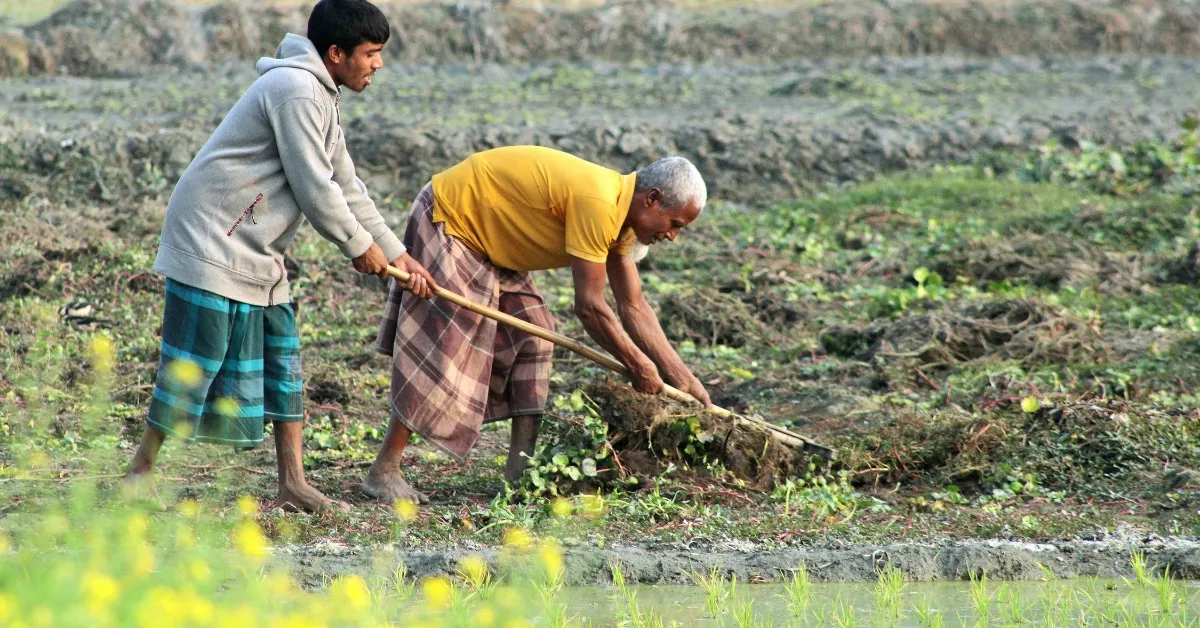
Have you ever thought about where the delicious food which you eat comes from? Well, the fact is that each morsel of rice, roti and tea comes from the hard-working farmers of our land. Indeed, agriculture is considered to be the backbone of India, as nearly half the population of our nation earns a living through agriculture. Whether it is the green fields of Punjab or the tea fields of Assam, we have so many crops in our country because of the different seasons and soils in our nation. Want to take a quiz on agriculture and crops? Here it is.
Agriculture: The True Backbone of India
Before we get into the questions, let’s take a quick look at why agriculture is so important for our country.
Why is Agriculture Called India's Backbone?
Well, now consider the structure of the building. If there is any damage to the main pillar under the earth, the whole building collapses, right? This is how agriculture acts as an important factor in India!
- Feeding the Nation: We have a population of more than 1.4 billion people in our country, and our farmers work hard round the clock to ensure that we get enough food.
- Providing Jobs: There are millions of villagers who earn their livelihood through agriculture. Some farmers cultivate crops, some rear farm animals, and some sell seeds and tractors.
- Supplying the Industries: Many large industries need farms. For example, sugar mills require sugarcane from the farmers, and clothing industries require cotton to manufacture clothes.
The Main Farming Seasons in India
The Indian agricultural production mainly relies on climatic conditions and monsoons. There are three major seasons for crop cultivation in India as follows:
- Kharif Season: Crops are sown during the onset of monsoons in June and are harvested during autumn. For example, rice, corn, and cotton.
- Rabi Season: These are crops which are grown in winter (October) and harvested in spring. Some examples of crops are wheat, mustard, and gram (chana).
- Zaid Season: It is a short summer season between Rabi and Kharif (March to June). It is during this period that the farmers cultivate watery fruits such as watermelon and cucumber!
So now you have learnt some basics about agriculture in India. Let us test how many of these GK questions you can answer correctly.
GK Quiz On Agriculture in India
Q1. Which agricultural crop is considered the main staple food for the majority of the population living in India?
a) Wheat
b) Rice
c) Maize
Ans.: b) Rice
Explanation: India grows the highest quantity of staples among all crops. Rice is the most significant staple in our country! We are one of the largest growers of rice in the whole world. This crop requires lots of water and a warm climate for cultivation. That’s why this crop is largely cultivated in coastal and riverine states.
Q2. What was the name of the famous movement in the 1960s that introduced high-yielding seeds and modern tools to boost food production in India?
a) White Revolution
b) Green Revolution
c) Blue Revolution
Ans.: b) Green Revolution
Explanation: In the sixties, there was scarcity of food grains in India. Scientist M.S. Swaminathan, aided by the Government, brought about modern agricultural techniques and high-yield seeds and fertilisers. This was known as the Green Revolution and this is what allowed India to produce such an abundance of wheat and rice that we became self-reliant in food grain production.
Q3. Which state in India is widely known as the "Granary of India" or the "Breadbasket of India" because of its massive wheat production?
a) Punjab
b) Bihar
c) Rajasthan
Ans.: a) Punjab
Explanation: Punjab is called the Granary of India due to its extremely fertile soil and amazing canals that serve as rivers for irrigation of crops. Despite the small size of the state of Punjab geographically, it yields a major share of the country’s overall production of wheat and rice.
Q4. Crops that are grown specifically to be sold in the market for profit, rather than being eaten by the farmer's family, are called what?
a) Subsistence crops
b) Cash crops
c) Plantation crops
Ans.: b) Cash crops
Explanation: Cash crops are grown by the farmers in order to earn profit from their sales to the industries or market. Some good examples of cash crops include sugarcane, cotton, tobacco, and jute. On the other hand, food crops like wheat and pulses are grown for consumption.
Q5. What is the name of the special government policy where the government promises a guaranteed minimum price to farmers for their crops before planting?
a) Maximum Retail Price (MRP)
b) Minimum Support Price (MSP)
c) Farm Crop Allowance (FCA)
Ans.: b) Minimum Support Price (MSP)
Explanation: Farming is quite a risky activity as the climate and market prices may change abruptly. In order to ensure that the farmer does not incur losses due to a drastic fall in market prices, the government of India fixes a Minimum Support Price (MSP).
Q6. Which state in India is the largest producer of tea, famous for its rich tea gardens spread across rolling hills?
a) Kerala
b) Assam
c) Karnataka
Ans.: b) Assam
Explanation: More than half of the tea that is produced in India comes from Assam. With its warm climate, rainfall, and hills, it is an excellent region to grow tea plants. Assam tea is known throughout the world because of its rich flavour and colour.
Q7. The "Operation Flood" programme, which launched in 1970 and transformed India into the world's largest milk producer, is also known as what?
a) Green Revolution
b) White Revolution
c) Golden Revolution
Ans.: b) White Revolution
Explanation: The White Revolution was led by Dr. Verghese Kurien, also known as the “Milkman of India". This project set up a massive network of dairy cooperatives that enabled the milk produced by local farmers to reach consumers directly. This great success story is also referred to as “the White Revolution” due to its massive output of milk.

Kriti Barua is a skilled digital journalist and communications professional with 4+ years of experience, currently writing for the General Knowledge section at Jagran New Media. She has established herself as a subject matter expert in History, Geography, Trending National and International News, Sports, Science, and Defence, producing clear, reliable, and search-optimised content that connects with readers worldwide.
Kriti holds a BA degree from Delhi University and a one-year diploma in TV Production and Journalism, an academic background that adds research depth and strong storytelling instincts to her writing. Her experience spans brand writing, content marketing, and digital media, giving her a sharp understanding of what makes content both helpful to readers and visible in search.
At Jagran New Media, she applies this expertise to national and international news coverage, query-based articles, and in-depth pieces across her specialist subject areas. Her content is defined by easy language, factual accuracy, strong keyword strategy, and reader-friendly storytelling.