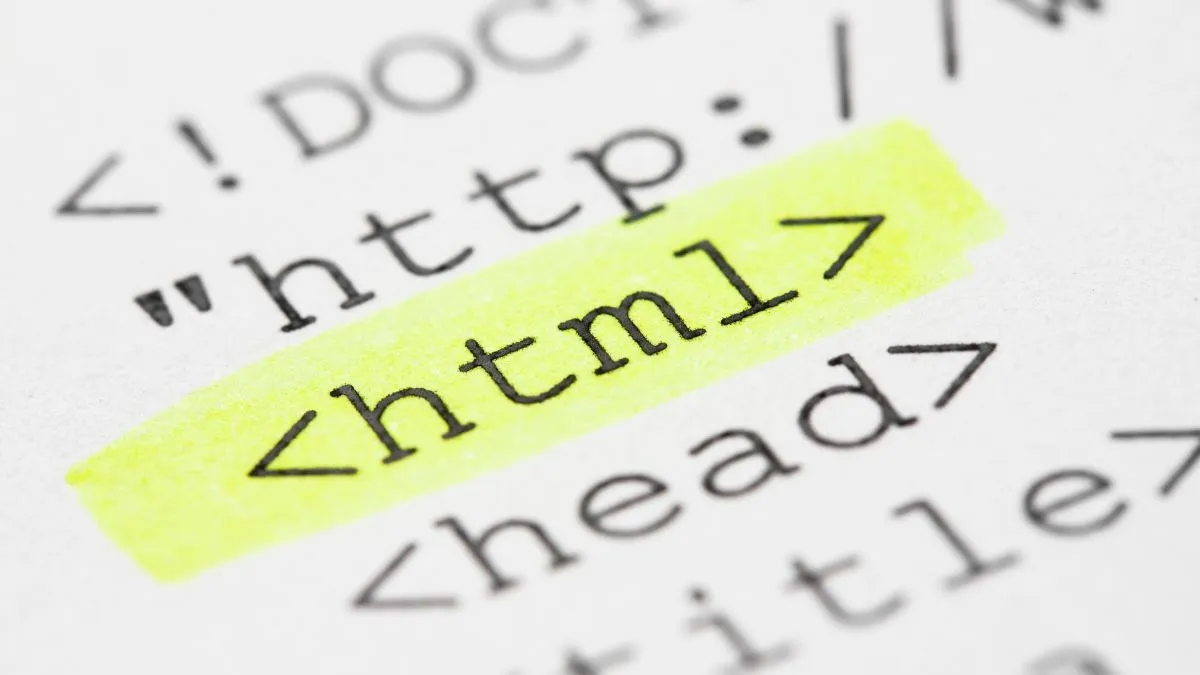
In today’s digital world, almost every website you visit is built using a common foundational language. From simple text pages to complex web platforms, this language plays a key role in structuring content on the internet. Its widespread use raises a basic yet important question about what HTML actually stands for. Keep reading to know more.
What Is the Full Form of HTML?
The full form of HTML is HyperText Markup Language. HTML is the standard language used to create and structure content on web pages. It defines the layout of text, images, links, tables and other elements that appear in a web browser.

HTML Overview
| Detail | Information |
| Full Form | HyperText Markup Language |
| Category | Markup Language |
| Used For | Creating and structuring web pages |
| Developed By | Tim Berners-Lee |
| First Released | 1991 (Initial version) |
What Does HyperText Mean in HTML?
HyperText refers to text that contains links, allowing users to move from one webpage to another. This linking system is the foundation of the World Wide Web and enables easy navigation between related content.
What Does Markup Language Mean?
A Markup Language uses tags to define elements within a document. In HTML, tags tell the browser how to display content such as headings, paragraphs, images, and links.
Who Invented HTML?
HTML was invented by Tim Berners-Lee in 1991. He created HTML to help scientists share and access documents easily over the internet, which later evolved into modern web development.
Why Is HTML Important?
HTML is important because it forms the basic structure of all websites. Without HTML, web browsers would not know how to display content correctly. It works alongside CSS and JavaScript to create visually appealing and interactive websites.
Where Is HTML Used?
HTML is used in website development, web applications, email templates, online forms and learning platforms. Every web browser supports HTML, making it universally accepted.
Interesting Facts About HTML
Foundation of the Web
HTML is the backbone of the internet and is used on almost every website worldwide, regardless of design or complexity.
Easy to Learn Language
HTML is considered beginner-friendly because it uses simple tags and does not require complex programming logic.
Works with Other Technologies
HTML works together with CSS for styling and JavaScript for interactivity, forming the core of web development.
Constantly Evolving
HTML has evolved over time, with HTML5 introducing multimedia support like audio, video and graphics.
Platform Independent
HTML works on all operating systems and devices, including computers, tablets and smartphones.
Read more: Which is the Largest State in India?
The full form of HTML is HyperText Markup Language. It is the foundation of web page creation and plays a crucial role in how information is displayed and shared on the internet. Keep reading for more such details.


-1769978754982.jpg)


Comments
All Comments (0)
Join the conversation