Double Meteor Shower Peak 2026: When and How to Watch Southern Delta Aquariids
Two separate meteors are crossing Earth's path at the same time this week. There will be a double meteor shower peak. Here is when to look up, what causes this sky event, and key astronomy facts for your exam prep.
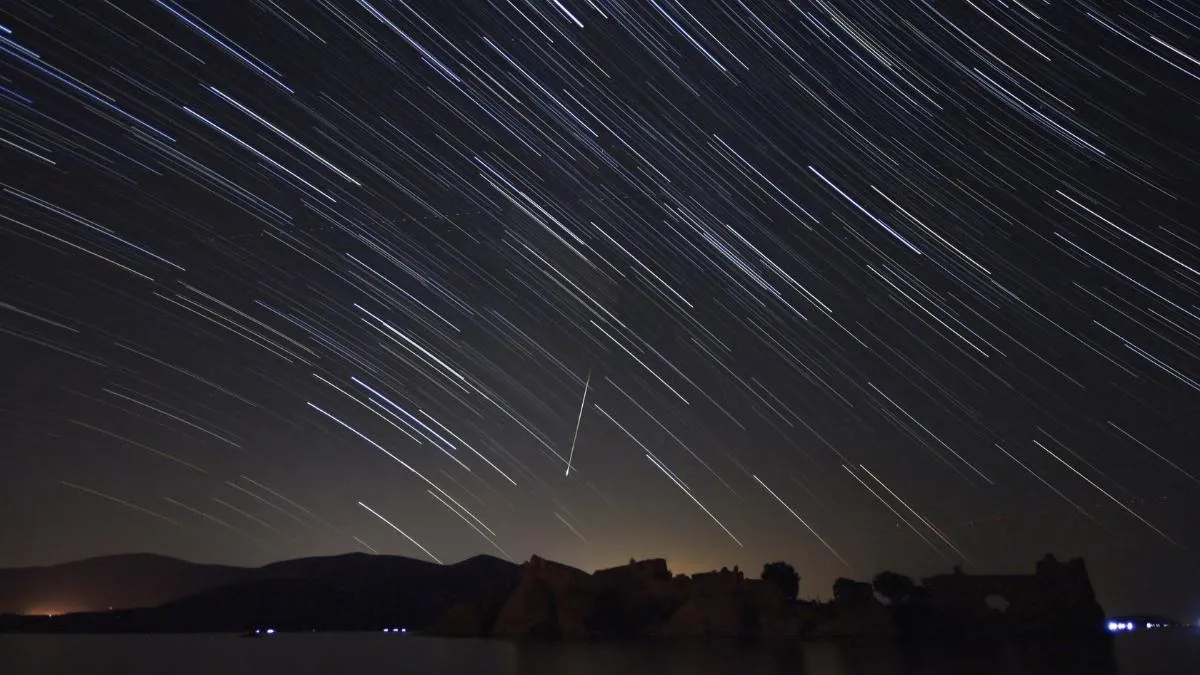
Two separate meteor showers are hitting their maximum activity on the exact same nights this week. The Southern Delta Aquariids and the Alpha Capricornids are overlapping. It gives skywatchers a chance to spot two different types of shooting stars at once.
The American Meteor Society suggests that people in both northern and southern parts of the world can see a double meteor shower peak this week.
A bright full moon will make fainter meteors harder to spot. But stepping outside after midnight still gives you a good chance to see bright streaks across the dark sky.
What to Expect from Double Meteor Shower Peak in 2026?
The two showers bring very different kinds of shooting stars. NASA data shows the Delta Aquariids come from dust left behind by Comet 96P/Machholz.
They move fast and produce around 15 to 25 meteors every hour.
The Alpha Capricornids on the other hand come from Comet 169P/NEAT.
They are much slower and only produce about 5 meteors per hour. But they often turn into unusually bright fireballs that stand out clearly.
| Upcoming Meteor Shower | Shooting Stars Per Hour | Source Comet | What They Look Like |
| Southern Delta Aquariids | 15 to 25 | Comet 96P/Machholz | Fast, faint streaks of light |
| Alpha Capricornids | 3 to 5 | Comet 169P/NEAT | Slow, very bright fireballs |
There is a full moon in July right now. So its glare will block out the smaller streaks of meteor shower. To get a better view stand in the shadow of a wall, building, or large tree to block direct moonlight from hitting your eyes.
How to Watch Meteor Shower and What Comes Next
The best time to look up for a meteor shower peak is between 1:00 AM and sunrise. It is the time when constellations holding these meteors sit high in the sky.
Step away from bright streetlights and give your eyes about 20 minutes to get used to the dark. Do not use binoculars or telescopes because you need a wide view of the whole sky to spot fast moving meteors.
This week's double peak is also a great warm up for the famous Perseid meteor shower. The Perseids meteor peak on August 12 and 13 under much darker skies. It brings up to 100 meteors every hour.
One date. Three major sky events. 🌌
— Star Walk (@StarWalk) July 29, 2026
Save August 12, 2026 for a full-day skywatching marathon:
🪐 Before sunrise: spot six planets across the sky — Jupiter, Mercury, Mars, Uranus, Saturn, and Neptune.
🌑 During the day or evening: watch a total solar eclipse from parts of… pic.twitter.com/VbVfohxZzm
General Science GK: Basic Space Terms Explained
This double meteor shower peak news relates directly to basic space concepts you need to know if you are preparing for exams like UPSC, SSC, or State PCS:
-
Meteoroid: A small piece of rock or dust floating through open space.
-
Meteor: The light streak you see when that rock falls into Earth's upper air layer (the mesosphere) and burns up from heat.
-
Meteorite: Any leftover piece of rock that does not burn up completely and actually hits the ground.
-
Radiant: The point in the sky where the meteors seem to start from.

Harshita Singh is an education and general knowledge journalist with over 5 years of experience in educational writing. Specializing in US affairs and GK, Harshita has a track record of breaking down intricate geopolitical and historical subjects into clear, digestible insights for learners. Her strong background in text analysis, coupled with a Bachelor of Arts (Hons) in English from the University of Delhi, helps her produce authoritative, thoroughly researched content that empowers readers to engage confidently with global current affairs. For inquiries or academic insights, you can reach out to her directly at harshita.singh@jagrannewmedia.com.