Key Points
- 30 Indian inscriptions found in Egypt's Valley of the Kings.
- Inscriptions in Tamil Brahmi, Prakrit, and Sanskrit, 1st-3rd CE.
- Discovery presented Feb 2026: Evidence of Indian travelers.
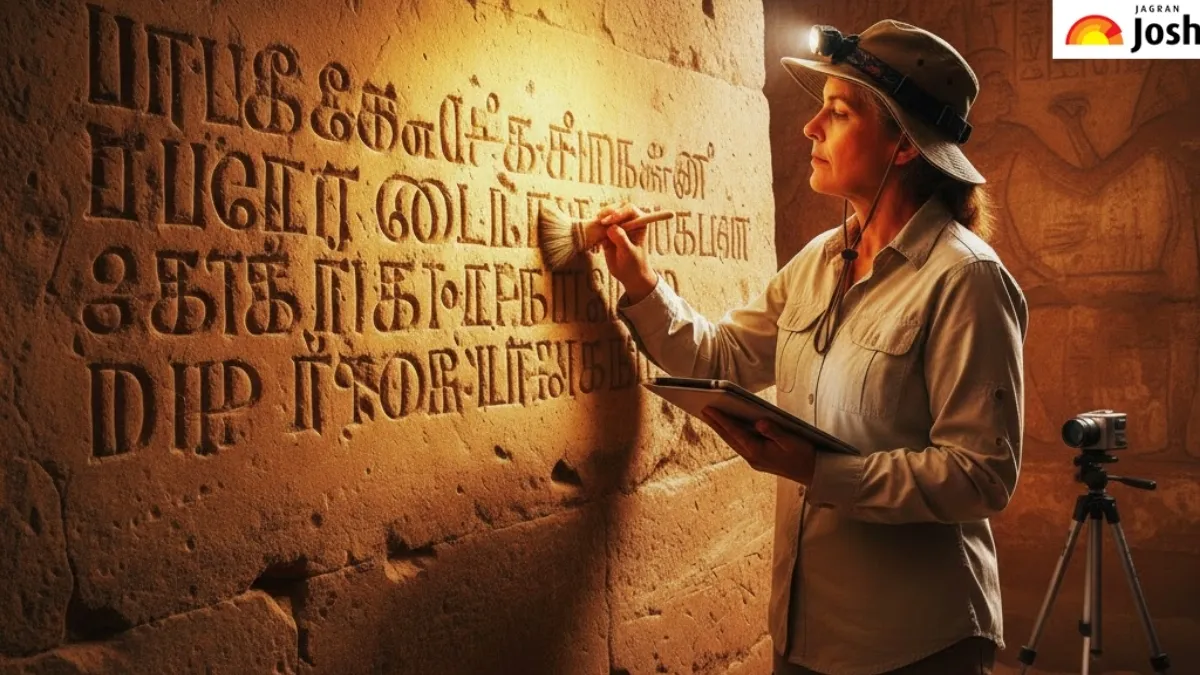
Two archaeologists, Professor Ingo Strauch and Professor Charlotte Schmid have recently identified nearly 30 ancient Indian inscriptions within the high-security royal tombs of Egypt’s Valley of the Kings. A groundbreaking discovery has shed light on the ancient trade links between Tamilagam, India and the Roman Empire. Researchers identified inscriptions in Tamil Brahmi, Prakrit, and Sanskrit at the royal tombs of Egypt.
The Finding presented at the International Conference on Tamil Epigraphy in February 2026, offers the first concrete evidence that ancient Indian merchants were not merely transient sailors docked at port cities but were tourists and explorers who traveled deep into the Egyptian interior.
Two archaeologists, Professor Ingo Strauch and Professor Charlotte Schmid have recently identified nearly 30 ancient Indian inscriptions within the high-security royal tombs of Egypt’s Valley of the Kings. A groundbreaking discovery has shed light on the ancient trade links between Tamilagam, India and the Roman Empire. Researchers identified inscriptions in Tamil Brahmi, Prakrit, and Sanskrit at the royal tombs of Egypt.
The Finding presented at the International Conference on Tamil Epigraphy in February 2026, offers the first concrete evidence that ancient Indian merchants were not merely transient sailors docked at port cities but were tourists and explorers who traveled deep into the Egyptian interior.
Key Highlights of the New Finding
These new findings were located in the Theban Necropolis near modern-day Luxor far from the coastline of Egypt.
-
Location: Six rock-cut tombs, including the tomb of Ramesses VI of Egypt.
-
Total Inscriptions: 30 identified Indian-language inscriptions, 20 inscriptions are in Tamil-Brahmi, remaining 10 are in Sanskrit, Prakrit, and Gandhari-Kharoshthi.
-
Chronology: Dated between the 1st and 3rd Centuries CE, aligning with the height of the Indo-Roman trade route.
Also Read: Vande Mataram New Guidelines: All Six Stanzas of National Song to be Sung Before National Anthem
Who is Cikai Korran the Ancient Traveler?
The most highlighted feature of the discovery is the name "Cikai Korran" (Sigai Korran) which appears eight times across five different tombs. The Meaning of "Cikai" is likely linked to the Sanskrit śikhā (meaning tuft or crown), while "Korran" is a distinctly Tamil name derived from koṟṟam (victory), often associated with the Chera warrior goddess Korravai. In one instance, the inscription reads "Cikai Korran vara kanta" meaning "Cikai Korran came and saw." Archaeologists believe this mirrors the formula of Greek "tourist graffiti" found in the same complex. It suggests that these Indian traders were multilingual, likely literate in Greek, and inspired by the local tradition of marking one's presence at historic sites.
Significance of New Finding:
Historians often highlight the debate over whether Indo-Roman trade was one-way or two-way, however Roman records by Ptolemy and Pliny detailed Roman voyages to India and these new finds of inscriptions provide the "missing link" for Indian voyages to the West.
| Feature | Details |
| Origin of Traders | Tamilagam, Gujarat, and Maharashtra |
| Trade Goods | Spices (pepper), pearls, ivory, textiles, and precious stones |
| Status of Traders | High-status individuals, likely members of powerful merchant guilds |
| Cultural Impact | Evidence of "Globalisation" 2,000 years ago, Indian names found 4 meters high on tomb walls |
Sangam Literature
The names found in Egypt such as Catan, Kiran, and Kopan are also mentioned in the Sangam literature, the earliest major literary work of the Tamil language. For Example the name Korran is linked to the Chera king Pittankoṟṟaṉ who is praised in the Purananooru which creates an unbroken historical and literary record from the 6th century BCE to the early centuries of the Common Era.
Also Read: India and Seychelles Relations



Comments
All Comments (0)
Join the conversation