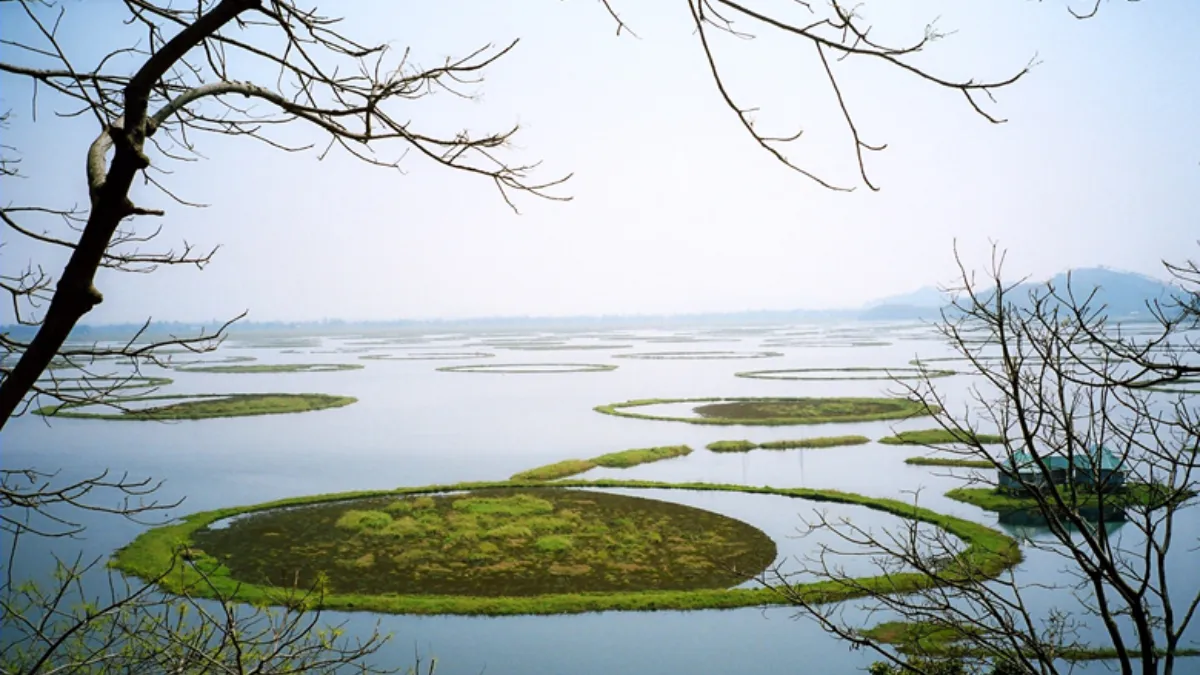
In February 2026, India included two new wetlands on its Ramsar list, Patna Bird Sanctuary, Uttar Pradesh, and Chhari-Dhand, Gujarat, becoming 98 sites in total.
This increase as announced by Union Environment Minister Bhupender Yadav before the World Wetlands Day on February 2 highlights the growing interest of India in biodiversity protection.
What is the Ramsar Convention?
Ramsar Convention, signed in 1971 in Iran is the international treaty on the protection of wetlands of international importance, in which India became a signatory on 1 st February, 1982.
These areas preserve ecosystems that help in purifying water, managing floods, and keeping inactive carbon and supporting the habitat of migratory birds and animals.
With PM Narendra Modi in charge, the Ramsar network in India has increased by 276 per cent since 26 sites were reported in the year 2014 to 98 currently, thus a global leader.
Patna Bird Sanctuary Information
This sanctuary was created in 1990 in the Jalesar tehsil in the Etah district of Uttar Pradesh on 108.86 hectares and contains more than 178 bird species, 18 of them found only on the Indian subcontinent and harbors 100,000+ waterbirds during the winter season.
It has 252 water plants and is a main destination of foreign migrants. It was greeted as a biodiversity boost by PM Modi who praised locals in conservation efforts.
Also Read: Census 2027: Full List of 33 Questions for Phase I
Highlights of Chhari-Dhand Wetland
On the border of Banni grasslands and Rann of Kutch, in the Kutch district of Gujarat, this seasonal desert wetland of 22,700 hectares, the first Conservation Reserve in Gujarat since 2008, fills in the case of rivers and hills.
It harbors 250 and more species of birds such as flamingos, cranes, pelicans, and storks and mammals such as chinkara, wolves, caracals, desert foxes, and cats. Gujarat currently controls more than 21 per cent of the wetlands in India, as a leader in the country.
What is the importance of the New Features Introduced?
The new features increase the ecological resilience during climate change and promote the UN SDGs on life below water (SDG 14) and life on land (SDG 15).
They sponsor eco-tourism, research, and livelihoods and they set the example of prudent wetland exploitation. Uttar Pradesh obtains its 11th location, which strengthens local initiatives.
The relocation is in accord with the national policies such as the National Wetland Conservation Programme which focuses on community participation to be sustainable.
Since wetlands are increasingly being endangered by urbanization and pollution, these types of recognition are the motivation behind restoring them which makes India a global custodian.



-1770030666121.jpg)

Comments
All Comments (0)
Join the conversation