Key Points
- Umngot River (Dawki River) in Meghalaya is known for its exceptional water clarity.
- The river flows from Eastern Shillong Peak, acting as a border between hills.
- Peak transparency occurs during dry winter months (Nov-Feb) due to no rain.
India has many waterways. It has more than 400 rivers spread across 20 major river basins. These rivers are essential to the country. The Ganga is the longest river, and the Brahmaputra is the widest.
Many rivers have unique nicknames. For example, the Brahmaputra is known as the "Red River". The Godavari is referred to as the "Dakshina Ganga".
But do you know which river is called the Emerald River of India? This river is known for its clear, greenish-blue water.
It is so clear that you can often see the riverbed and fish swimming deep below. In this article, we will look into the history, location, and stunning beauty of this hidden gem.
ALSO READ| Which River Is Known As The Blue River Of India?
Which River Is Known As The Emerald River Of India?
Source: eMeghalaya
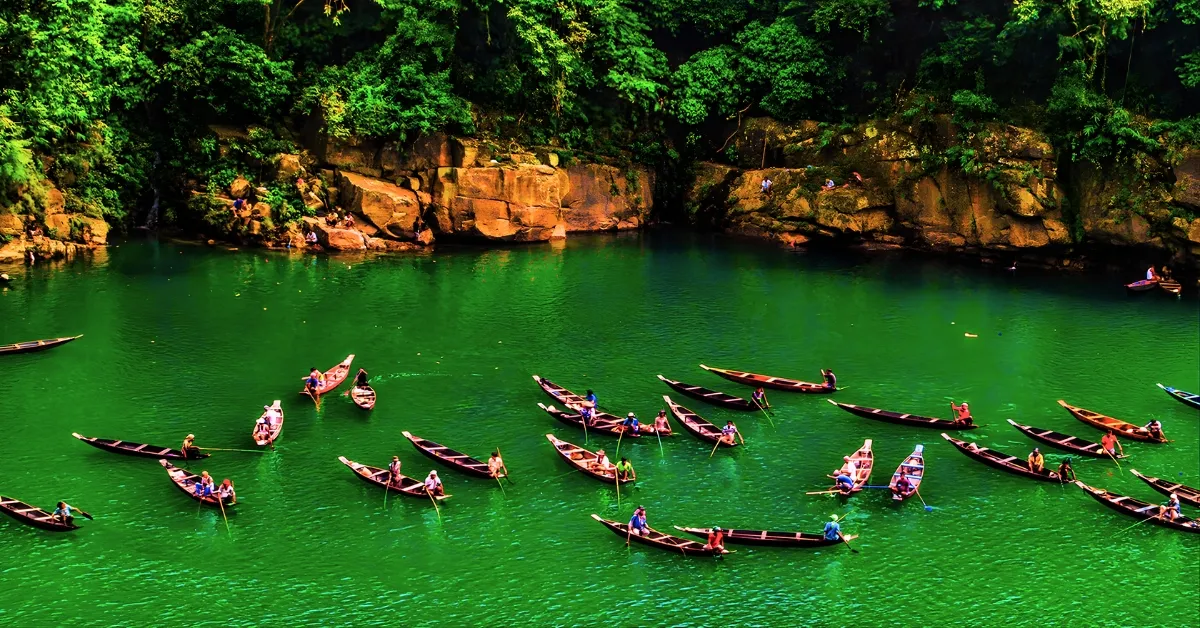
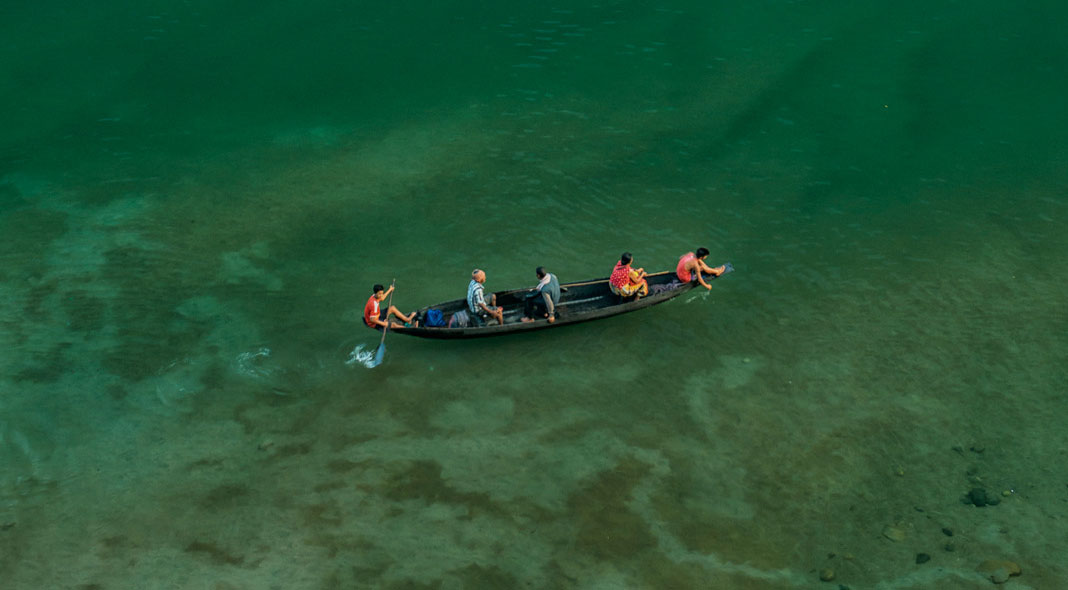
The Umngot River, also called the Dawki River, is the beautiful "Emerald River of India". It is in the state of Meghalaya and is known worldwide for its amazing clarity. At certain times of the year, the water is so clear that boats seem to float in mid-air.
The Path of the Umngot River
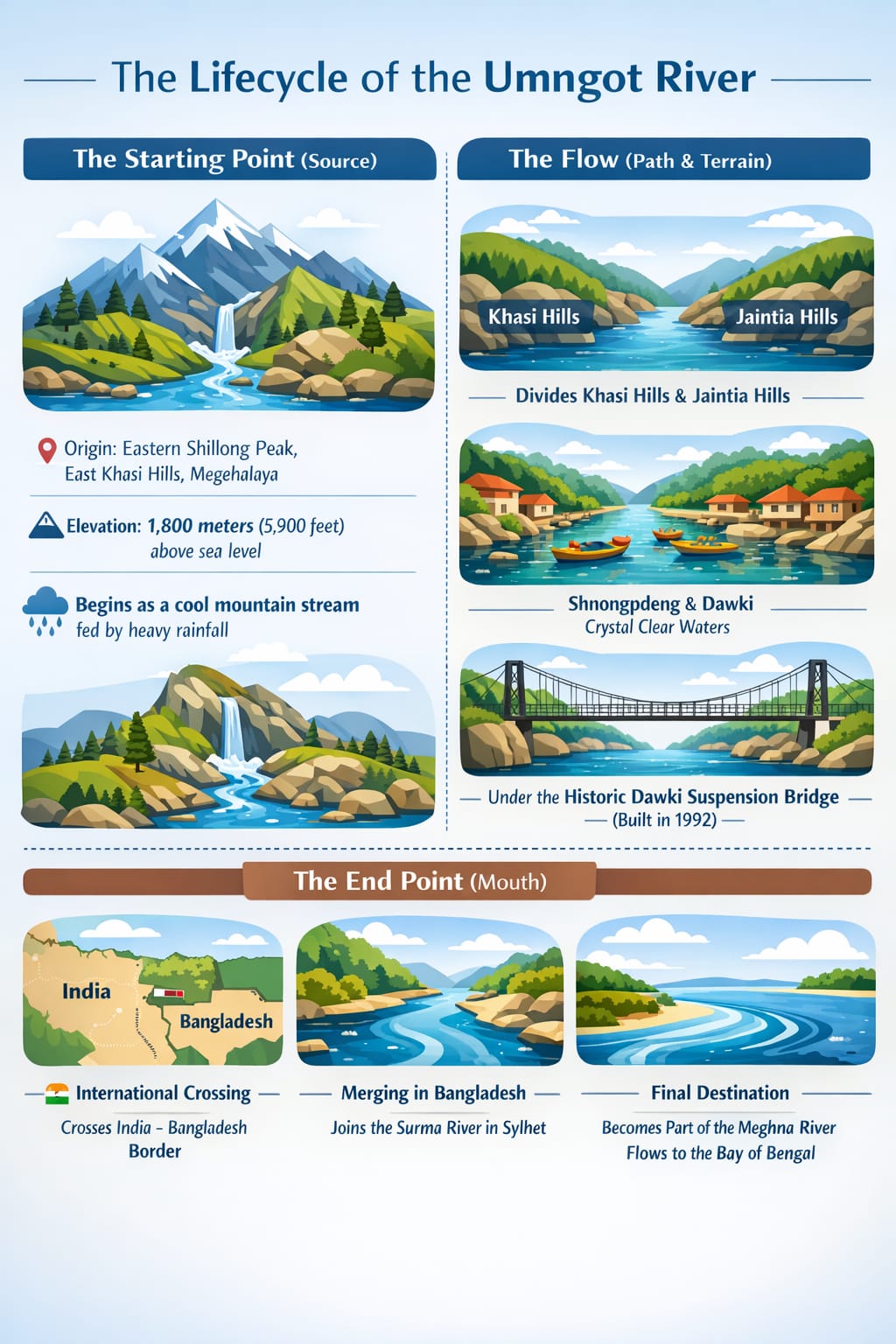
The river starts its journey in the Eastern Shillong Peak, which is about 1,800 metres above sea level. From these high hills, it flows down toward the village of Dawki.
The Umngot acts as a natural border between the Jaintia Hills and the Khasi Hills. It moves through deep gorges and green forests.
Eventually, it crosses the international border and flows into the plains of Bangladesh, joining the Surma-Meghna river system.
7 Lesser-Known Facts About the Umngot River
- The riverbed consists mainly of large rocks and pebbles rather than silt, which prevents the water from becoming cloudy.
- Local Khasi tribes follow a centuries-old tradition of "community cleaning" to ensure no waste enters the water.
- Its distinct emerald colour is caused by specific types of freshwater algae and minerals reflecting sunlight through the clear water.
- Because the river flows over a hard, rocky terrain, there is very little soil erosion to disturb the water’s clarity.
- The river acts as a primary geographical boundary between India and Bangladesh near the Dawki bridge.
- The water reaches peak transparency during the dry winter months when there is no rainwater runoff to carry debris.
- The fast-moving water over rocky falls increases aeration, supporting a healthy ecosystem of indigenous fish species.
IN CASE YOU MISSED| Which are the Snow-Fed Rivers of India?
Why is the Umngot River the Cleanest in India?
The Umngot River doesn't stay clean by chance. It is a combination of nature's design and human effort. Here is how this "magical" transparency works:
The Secret of the Rocks
Unlike many rivers that flow over mud or clay, the Umngot flows over a rocky bed.
- No Mud: Because there is very little sand or silt, the water doesn't get "cloudy" when it moves.
- Natural Filter: The pebbles and boulders act like a giant, natural filter.
The Role of the Local People
The people of the Dawki and Shnongpdeng villages are the real protectors of this river.
- Community Rules: Local tribes have strict rules against littering.
- Daily Cleaning: Every morning, community members check the water to make sure it stays clean for everyone.
What Makes the Water Look Like a Green Jewel?

The "Emerald" colour isn't just a name. It is a scientific phenomenon. The river changes its appearance based on the surrounding environment.
The Science of Colour
The green tint comes from a combination of light and nature.
- Algae and Moss: The rocks under the water are covered in specific types of green algae.
- Light Scattering: When sunlight hits the deep, clear water, it reflects blue and green wavelengths back to our eyes.
Conclusion: How the Seasons Change the View
The river changes throughout the year. Its "emerald" beauty relies on the weather. From November to February, there is no rain. The water remains still, and the green colour is at its brightest. During the heavy rains in Meghalaya, the river flows faster. Therefore, it loses its clarity for a while as it picks up forest debris.




-1768807676875.jpg)
Comments
All Comments (0)
Join the conversation