Show Key Points
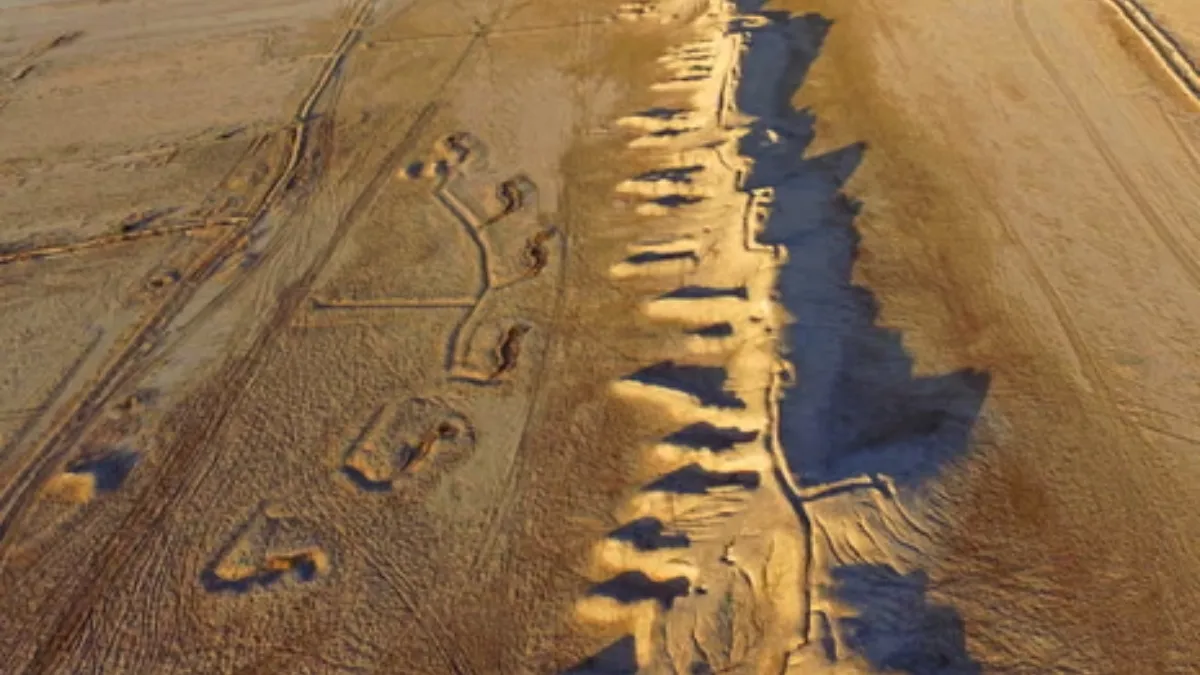
The recent identification of Charax Spasinou, an ancient port city associated with the Hellenistic world and traditionally linked to Alexander the Great, marks a significant milestone in archaeological research. Located near the delta of the Tigris and Euphrates rivers in present-day Iraq, the city once functioned as a major commercial and cultural hub.This discovery is related to ancient civilisations, Hellenistic expansion, maritime trade, and the role of archaeology in reconstructing history.
Historical Background of Charax Spasinou:
Charax Spasinou was founded in the late 4th century BCE during the period of Hellenistic expansion following Alexander’s eastern campaigns. Over time, it became the capital of the Characene Kingdom, which prospered due to its strategic location near the Persian Gulf.Its rediscovery confirms classical accounts about the city’s prominence in ancient trade and administration.
The city served as:
-
A key maritime trade port
-
A political centre in southern Mesopotamia
-
A bridge between Greek and local Mesopotamian cultures
Hellenistic Influence and Cultural Exchange:
The era of Alexander witnessed the spread of Greek political institutions, urban planning, and cultural practices across West Asia.The city stands as evidence that ancient civilisations were interconnected rather than isolated entities.
Charax Spasinou reflects:
-
Grid-based city planning typical of Hellenistic settlements
-
Cultural syncretism between Greek and indigenous traditions
-
Expansion of trade networks connecting East and West
Role in Ancient Trade Networks:
Due to its strategic location, Charax Spasinou became a major node in trade routes connecting Mesopotamia,The Persian Gulf and The Indian subcontinent. For examination purposes, this can be linked with topics such as ancient maritime trade, economic history, and early globalisation.
It facilitated the movement of spices, textiles, precious stones, and other goods. This aligns with historical evidence of Indo-Mesopotamian and Indo-Roman trade, highlighting early global economic integration.
Archaeological Significance:
Excavations provide tangible evidence through pottery, coins, inscriptions, and settlement patterns. Such findings strengthen the scientific foundation of historical narrative. Archaeological discoveries like Charax Spasinou are crucial for:
-
Validating historical texts and classical writings
-
Understanding urban planning and material culture
-
Reconstructing political and economic systems
The rediscovery of ancient cities underscores the need for protecting cultural heritage, especially in regions affected by conflict. Archaeological heritage contributes to Academic research and global historical understanding, cultural tourism and international cooperation in heritage preservation. Safeguarding such sites is essential for preserving humanity’s shared legacy.
The rediscovery of Charax Spasinou revives scholarly interest in the interconnected nature of ancient civilisations. Associated with the Hellenistic period and linked to Alexander the Great, the city represents cultural fusion, maritime trade expansion, and administrative development.
Also Read: What is Exercise MILAN 2026? Objectives, Participating Countries & Warships



Comments
All Comments (0)
Join the conversation