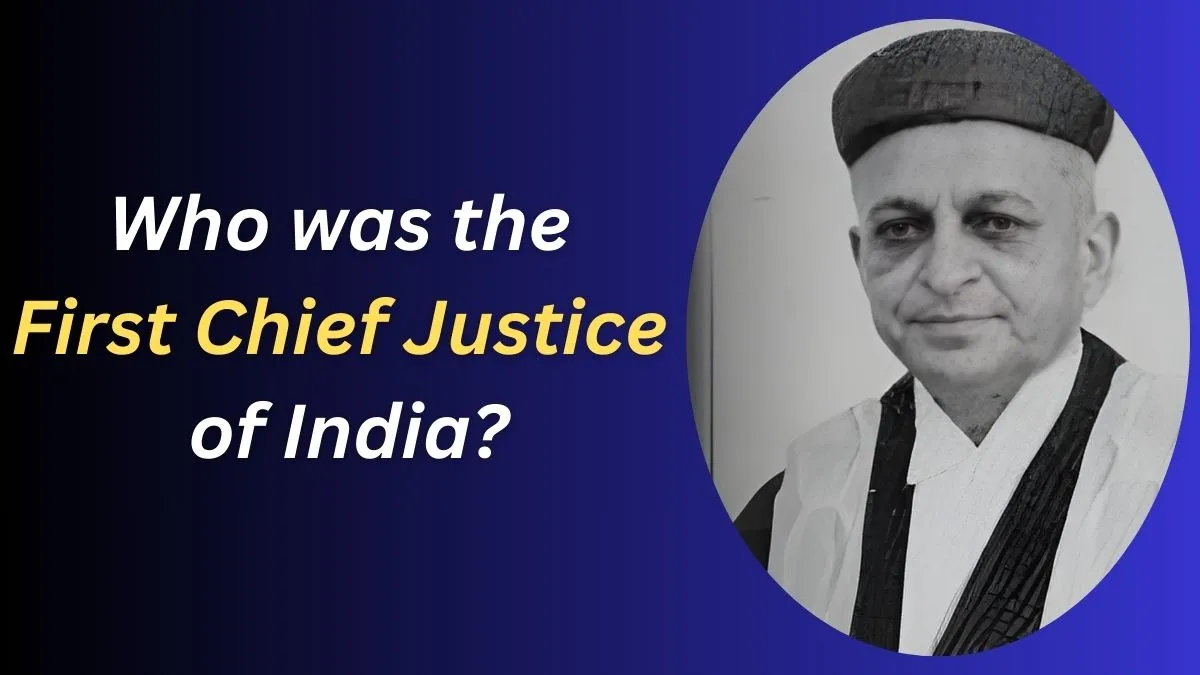
The Supreme Court of India is the apex judicial body under the Constitution of India. Article 124 of the Constitution states that “There shall be a Supreme Court of India.”
The Supreme Court came into existence on 26 January 1950 with the coming into force of the Constitution. The Supreme Court initially functioned from the old Parliament House until it moved to the present building on Tilak Marg, New Delhi, in 1958.
On 28 January 1950, two days after India became a Sovereign Democratic Republic, the Supreme Court was inaugurated.
The inauguration took place in the Chamber of Princes in the old Parliament building, where the Federal Court of India sat for 12 years from 1937 to 1950.
The inaugural proceedings began at 9:45 am. The first Chief Justice of India attended it.
But, who was the First Chief Justice of India who attended the inaugural proceedings of the Supreme Court on 28 January 1950?
So, let’s explore this article in detail about the First Chief Justice of India.
Who was the First Chief Justice of India?
On the inaugural proceedings of the Supreme Court, which took place on 28 January 1950, the first Chief Justice of India, Harilal J. Kania, attended it with others Judges of the Supreme Court:
-
Justices Saiyid Fazl Ali,
-
M. Patanjali Sastri,
-
Mehr Chand Mahajan,
-
Bijan Kumar Mukherjea
-
S.R. Das,
-
N. Chandrashekhara Aiyar
-
Vivian Bose
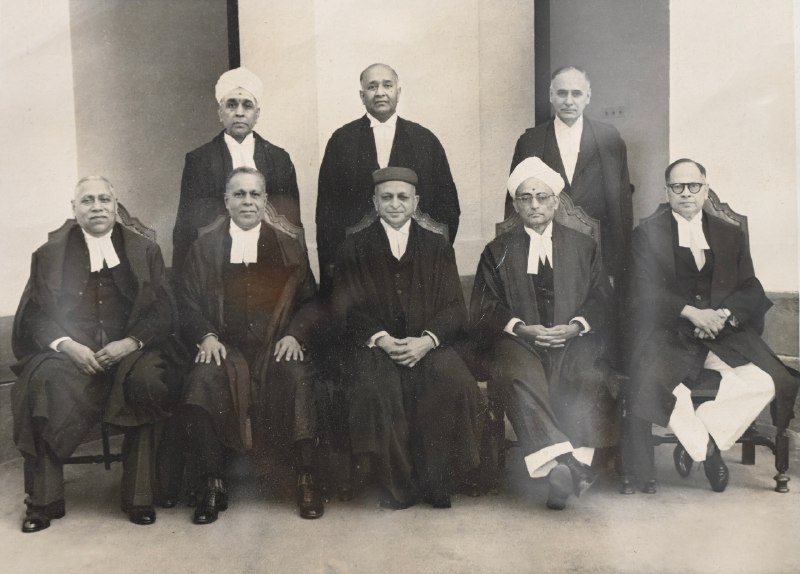
Source: Supreme Court of India
What was the Early Life and Education of Harilal J. Kania?
Harilal J. Kania was born on 3 November 1890 in Surat, Gujarat. He was brought up in an academic family since his father was a Sanskrit professor and a principal in Samaldas College in the city of Bhavnagar.
He completed:
-
BA from Samaldas College (1910)
-
LLB (1912) and LLM (1913) from Government Law College, Bombay
His education and his classical learning would be evident in his analysis of law in the future.
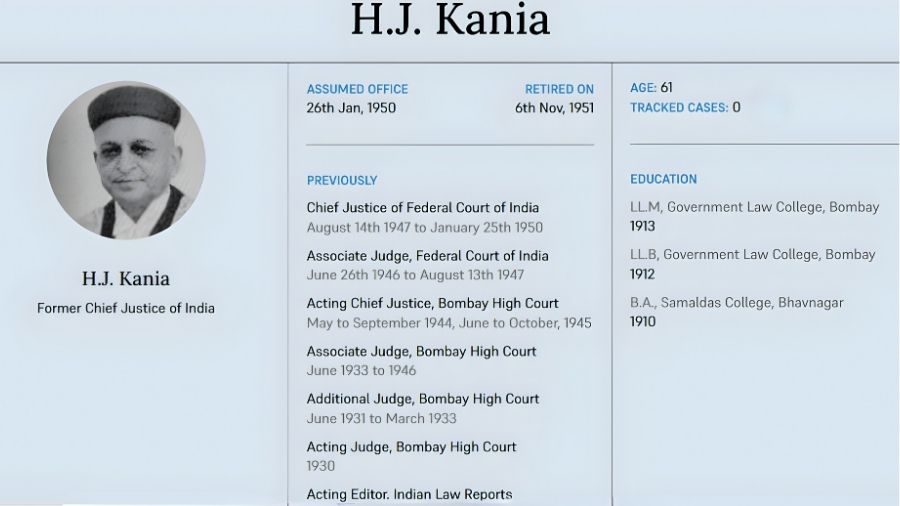
Source: scobserver
How did Harilal J. Kania start the Legal Practice and his early Judicial Career?
Justice Kania got started at the Bombay High Court in 1915 as a partner with his brother and became the first-generation lawyer in their family. He was also an early exposed legal scholar, having served briefly as an Acting Editor of the Indian Law Reports.
In 1930, he was made an Acting Judge of the Bombay High Court, and then:
-
Additional Judge (1931–1933)
-
Permanent Judge from June 1933 onward
During his service as a judge, he was a permanent judge for approximately 13 years and had an image of being very legal and firm as an administrator.
What were the key Contributions of Justice Harilal J. Kania at the Bombay High Court?
Justice Kania was the chairperson of the Bombay Disturbances Inquiry Commission, which was mandated to inquire into police fire on a labour strike in 1939.
Although his findings were controversial, the report was indicative of his firm compliance with the legal interpretation as opposed to political inclination.
In 1943, he was knighted by the British Crown, a recognition of his judicial service during the colonial period.
Journey to the Federal Court
Justice Kania joined the Federal Court of India in June 1946 as its second senior-most judge. Following India’s independence in 1947, he became the Chief Justice of the Federal Court, succeeding Sir Patrick Spens.
His elevation was not without challenges. Differences of opinion with political leaders, including Jawaharlal Nehru, briefly complicated matters. Ultimately, pragmatic leadership by Vallabhbhai Patel ensured institutional stability and continuity.
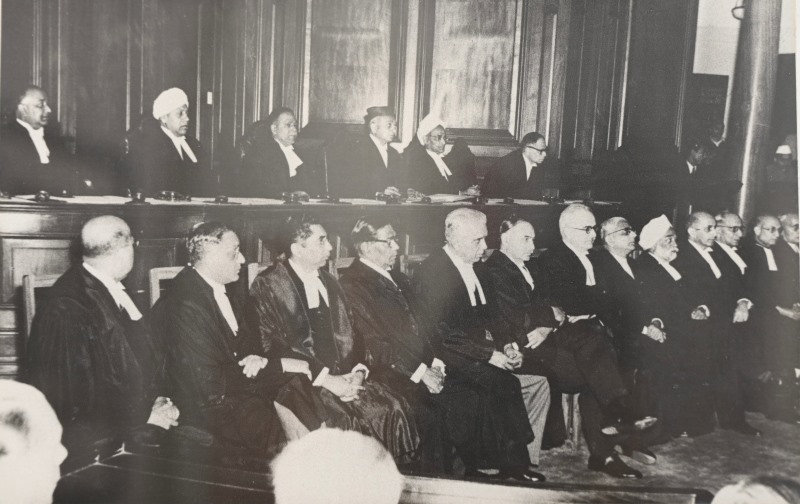
Source: Supreme Court of India
Leadership of the Supreme Court of India
As a Chief Justice of India, Justice Kania oversaw in providing early guidance to the Supreme Court. Under his leadership:
-
The Supreme Court was fully strengthened.
-
The autonomy of the judiciary was strongly established.
-
Some of these great judges were appointed, and their function in early constitutional interpretation was set.
According to George Gadbois in Judges of the Supreme Court of India 1950-1989, his tenure assisted in the creation of conventions to this day used to guide the Court.
What was the Legacy of Justice Harilal J. Kania?
Justice Harilal J. Kania died on 6 November 1951, in active service, of a heart attack. His premature demise ended an essential tenure, yet not his influence.
The Legacy of Justice Harilal J. Kaniait that matters:
-
First Chief Justice of independent India
-
Guiding spirit of Supreme Court traditions.
-
Linking colonial judicial structures and constitutional democracy.
In conclusion, Harilal J. Kaniawas not only the first Chief Justice of India- he was an institution who assisted in making the Supreme Court of India credible and independent to uphold the Constitution.
His career project is integrity, educational efforts and adherence to judicial discipline, which led to a key role in the legal history of India.



-1770114495275.jpg)

Comments
All Comments (0)
Join the conversation