Key Points
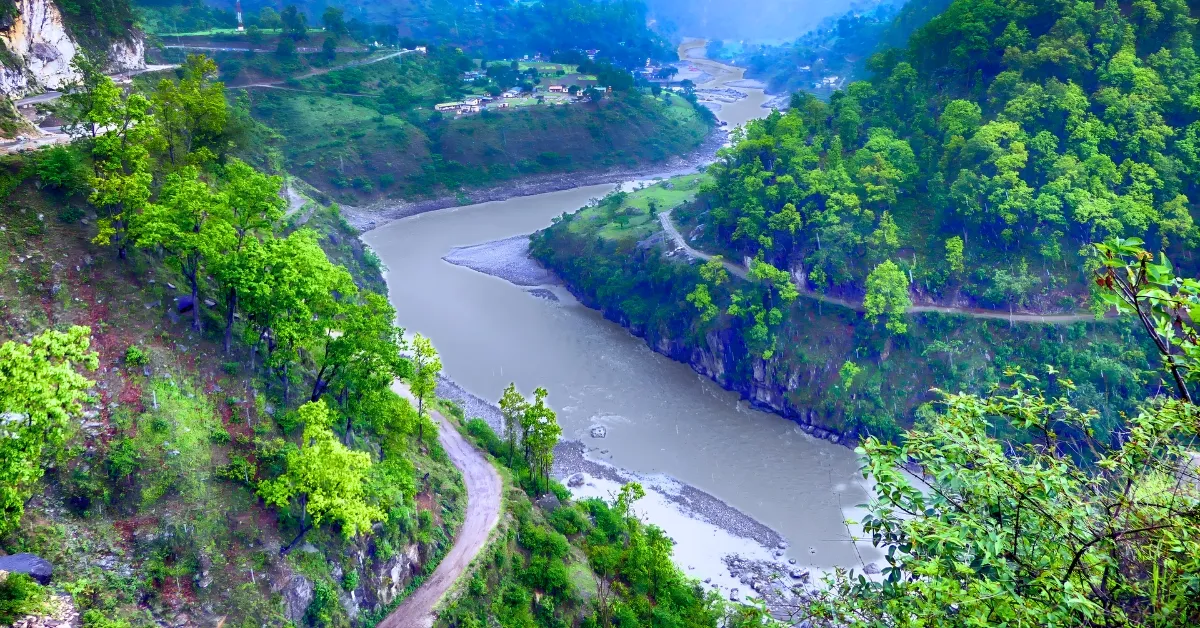
- Kali originates in Himalayas at Kalapani, Uttarakhand at 3,600m altitude.
- Sugauli Treaty (1816) established it as India-Nepal border.
- It supports millions via agriculture, energy, and shared history.
India has many water bodies and more than 400 rivers, grouped into several major river basins. The Ganges is the country's longest and largest river, and it is a lifeline for millions of people.
Many Indian rivers have special nicknames. The Brahmaputra is called the "Red River", and the Damodar was once known as the "Sorrow of Bengal".
But which river is called the "Black River" of India? In this article, we will explore the history, geography, and stories behind this mysterious river.
ALSO READ| Which River is known as the Emerald River of India?
Which River Is Called The Black River In India?
Source: Drishti IAS
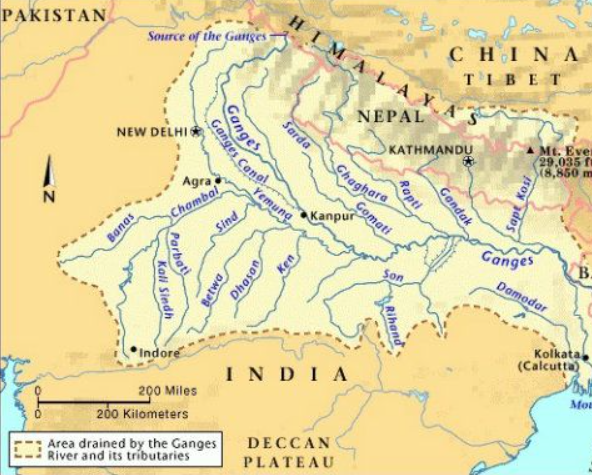
The Kali River, also called the Sharda River or Mahakali River, is named "Black River" for the dark colour of its waters and its association with Goddess Kali.
> The Meaning and Origin
The name Kali comes from the Hindu Goddess Kali, who stands for power and time. In the high Himalayas, people also call the river Kala Pani. Its dark, silt-filled waters or the deep shadows in the mountain gorges are often given as reasons for calling it "black".
> Path and Flow
- Source: The river starts in the High Himalayas at Kalapani, in the Pithoragarh district of Uttarakhand, at an altitude of roughly 3,600 metres.
- States and Borders: It primarily flows through the state of Uttarakhand. For a long stretch, it serves as the natural international border between India and Nepal.
- The Journey: It descends through the mountains, entering the plains at Tanakpur. Here, it is commonly referred to as the Sharda River.
- The End: After travelling through the Terai region of Uttar Pradesh, it eventually joins the Ghaghara River, a major tributary of the Ganges.
> 10 Lesser-Known Facts About the Kali River
- The Kali River was established as the official western border between India and Nepal by the Sugauli Treaty in 1816.
- Due to its steep descent from the Himalayas, the river has immense hydroelectric potential, as evidenced by the massive Pancheshwar Dam project.
- It is famously known as the home of the "Goonch" catfish, a giant freshwater fish that has sparked several scientific studies on river ecosystems.
- The river drops thousands of metres in altitude over a relatively short distance, making it one of the fastest-flowing rivers in the region.
- The river basin lies in a highly active seismic zone, meaning the landscape is constantly being shaped by tectonic shifts.
- The Sharda basin acts as a biological corridor, connecting the high-altitude Himalayan forests with the tropical Terai jungles.
- Although called the Black River, its water remains remarkably clear in the upper reaches during winter before picking up dark sediment during the monsoon.
- The river is a critical breeding ground for the Golden Mahseer, an endangered fish species often called the "Tiger of the Indian Rivers".
- The river cuts through the Main Himalayan Thrust, providing geologists with a "natural window" to study the mountain range's internal layers.
- When the Kali joins the Sarju River at Pancheshwar, the mixing of different mineral compositions creates a unique nutrient profile for the downstream soil.
IN CASE YOU MISSED| Which River Is Known As The Blue River Of India?
Why is the Kali River a Lifeline for Two Different Nations?

This river is much more than just a body of water; it acts as a bridge between India and Nepal. It supports millions of people through agriculture, energy, and shared history.
> How the Water is Shared
- The Mahakali Treaty: A major agreement between India and Nepal to share the river's water for energy and farming.
- Irrigation for the Plains: The river feeds the Sharda Canal, one of the longest canal systems in India, turning dry lands into green fields.
> The Role of the River in Local Life
1. Economic Support
- Hydroelectric Power: The river's fast flow is used to generate "green" electricity.
- Tourism: The river's rapids are famous for white-water rafting, bringing visitors to the region.
2. Cultural Connection
- Sacred Confluences: Places where the Kali meets other rivers (like the Sarju) are considered holy, and people gather there for festivals.
- Cross-Border Markets: Many small towns along the river serve as trading hubs for both Indian and Nepalese citizens.
What Secrets Does the Black River Hide Beneath Its Surface?
Source: Adobe Stock
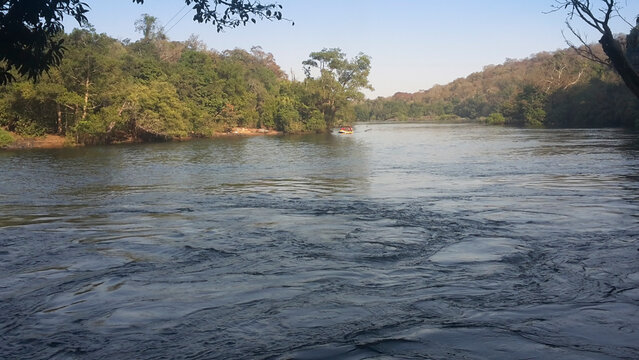
The river is not only beautiful but also full of scientific mystery and natural power. Both scientists and nature lovers are drawn to what happens in its deep mountain gorges.
> The Science of the "Black" Water
- Mineral Richness: The dark colour often comes from unique minerals and metamorphic rocks found only in the high Himalayas.
- Temperature Extremes: Because it originates from glacial melt, the water remains near freezing for most of its journey through the mountain.
> Rare Wildlife and Ecosystems
- The Goonch Catfish: This river is home to one of the largest freshwater fish in the world. It can grow to massive sizes and is a top predator in the water.
- The Terai-Duar Savanna: As the river enters the plains, it creates a "marshy" environment that supports endangered animals like the One-horned Rhino and the Bengal Tiger.
> Unique Geographical Features
- Gorge Formation: Over thousands of years, the river has carved some of the deepest V-shaped valleys in the world.
- Changing Course: In the flat plains of Uttar Pradesh, the river is known to "meander" or change its path slightly during heavy monsoons.
Note for Readers:
- The Kali River in Karnataka is also called the "Black River" of India and flows through the Uttara Kannada district.
- Its name comes from the dark, manganese-rich rocks and soil along its bed, which give the water a blackish colour.
- The river begins in the Western Ghats near Diggi village in Joida taluk. It travels west through thick forests and the Dandeli Wildlife Sanctuary.
- Along the way, it supports large dams like the Supa Dam, which generate electricity.
- After covering about 184 kilometres, the river reaches Karwar and flows into the Arabian Sea.
- The Kali River is an important source of water and energy for Karnataka.
Conclusion: The Mighty Kali River of India
The Kali-Sharda River is an important part of India’s natural heritage. It starts in the cold Himalayas and forms an international border, but it is more than just the "Black River". For people living nearby, it brings life, energy, and a sense of mystery.
WHAT'S NEXT| Which River is Known as the Lifeline of the Thar Desert?



-1769671142335_t.webp)
-1770114495275_t.webp)
Comments
All Comments (0)
Join the conversation