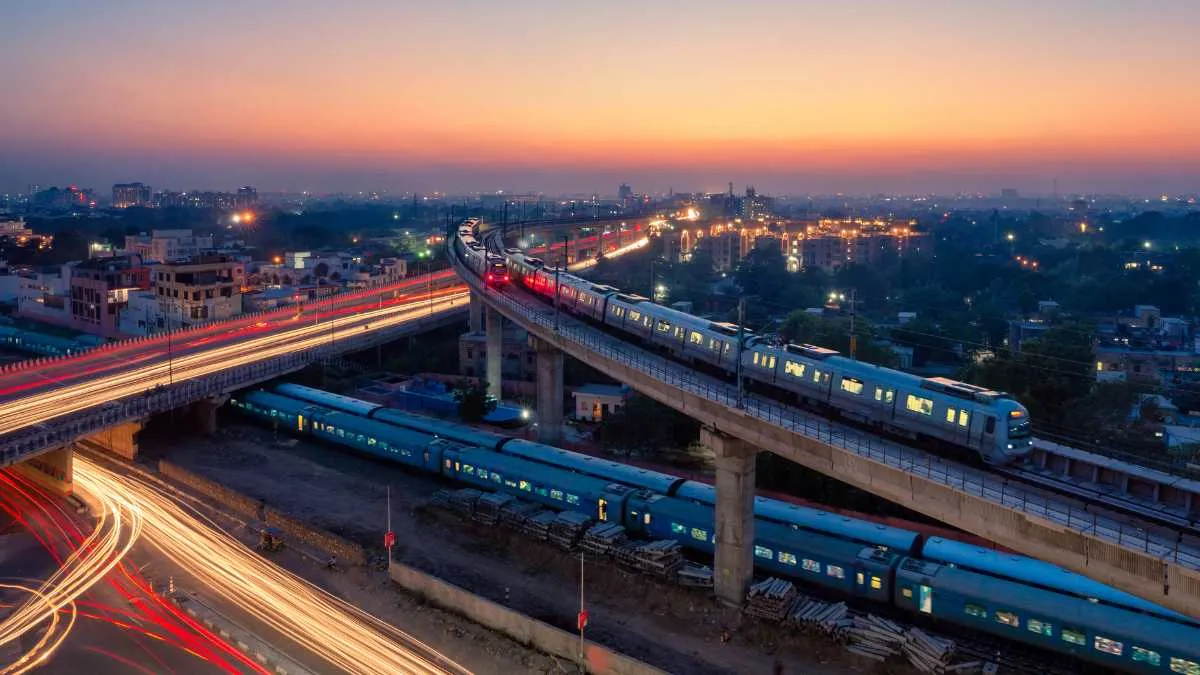
Key Points
- Delhi Metro serves Delhi & NCR (Noida, Gurugram, Faridabad, Ghaziabad).
- The Yellow Line is the longest route, running 49 km from Samaypur Badli.
- Delhi Metro connects North, South, East, West & Central Delhi with NCR.
Metro rail systems are essential for reducing transportation difficulties in India as the rapidly growing city populations have increased commuting needs. Urban areas in various parts of the country have added metro rail lines for more service coverage, improved connections between different locations, and less traffic congestion over time.
The metro rail system network’s size is typically defined by the total operational length of the rail routes and the extent of the rail coverage in and around the metropolitan area. The greater the extent of the metro rail system network, the higher the number of people who will make use of it and the better the networks will integrate with other forms of transportation.
Below is a list of India’s 5 largest cities with their respective metro rail networks that demonstrate their overall size, history of growth, and importance to urban mobility.
Check Out: Which Palace Is Called the Palace of Winds?
Which Is the Largest Metro Network in India?

Source: DMRC
India's largest metro system is located in Delhi, the Delhi Metro.
Operated by the Delhi Metro Rail Corporation Limited (DMRC), it services Delhi and the National Capital Region (NCR), which includes Noida, Gurugram, Faridabad, and Ghaziabad.
The Delhi Metro's enormous size, numerous corridors, and high volume of daily riders make it the leader among all Indian metros with respect to network size. It has significantly improved urban mobility in and around Delhi, making it one of the most successful metro systems in India.
What is Delhi Metro's longest line?
The yellow line is the longest route in Delhi Metro and it runs 49 km from Samaypur Badli at the north to Millennium City Centre at the south-gurgaon, connecting key residential, commercial and business areas in the capital city with millions of commuters riding every day.
It is very frequent, very efficient and passes through many major interchanging stations like Rajiv Chowk, Kashmere Gate and Central Secretariat- making this line the most important- in the entire delhi metro network.
Which Areas Does the Delhi Metro Cover?
The Delhi Metro network connects Metro System in Delhi with New Delhi, and surrounding parts of the NCR. The areas covered by the Metro are:
-
North Delhi: Samaypur Badli, Jahangirpuri, ROHINI and Mukherjee Nagar
-
South Delhi: Millennium City Centre, Saket, Qutab Minar, Mehrauli.
-
East Delhi: Shahdara, Anand Vihar, Welcome and Laxmi Nagar.
-
West Delhi: Dwarka, Uttam Nagar, Janakpuri.
-
Central Delhi: Rajiv Chowk, Central Secretariat and Kashmere Gate.
Around the NCR are neighbouring cities like Gurugram (Haryana), Noida & Greater Noida (Uttar Pradesh), Faridabad (Haryana) and Ghaziabad (Uttar Pradesh).
The metro network provides connectivity between residences, businesses, education, and business districts thereby creating faster and safer commuting for millions of travellers using the metro system every day.
Conclusion
Urban transport in National Capital Region has been transformed by the Delhi Metro. It's the biggest Metrosystems in Indiaso far, offering fast, achievable, high-throughput connections between all of the major parts of this area while reducing traffic jams and enabling safe, registered work commute for a million people per day.




Comments
All Comments (0)
Join the conversation