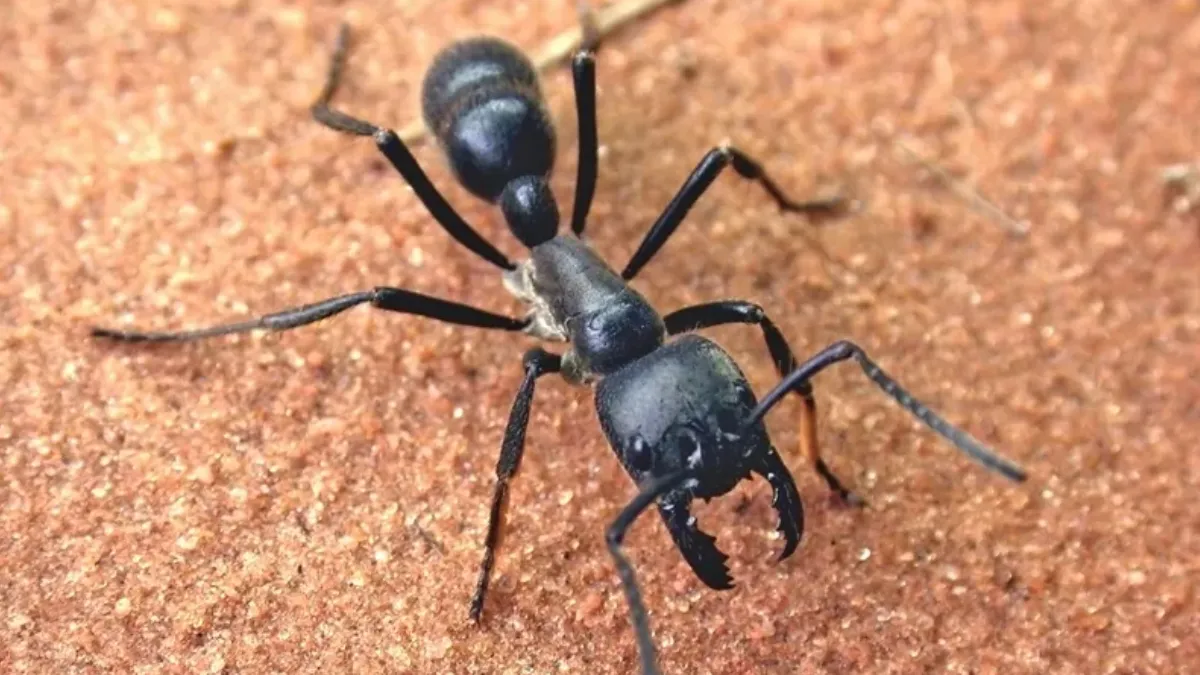
The giant Amazonian ant, Dinoponera gigantea, is considered the largest living ant species, reaching lengths of 3 to 4 cm for the females. Native to the unflooded parts of the Amazon rainforest in Brazil, Peru, and Guyana, their jet-black females are dominant members of the colonies averaging 3.3 cm in mean size across all castes. Still, the absolute record is held by Titanomyrma giganteum, an already extinct relative, which attained lengths of 6 cm with a wingspan of 15 cm and dates back 49.5 million years.
Largest Living Ant: Dinoponera gigantea
Females of Dinoponera gigantea, also known as tocandiras, reach up to 4 cm and thus are the largest extant ants by body length. Smaller dark red males also exist. Inhabiting soil nests in South American rainforests, they forage within 30 feet for insects, spiders, plants, and snails in small colonies totaling up to 100 individuals that are led by a single queen. Unable to sting, they possess strong mandibles and acidic venom, administered via a bite, and are territorial with no slavery present like other related species.
Guinness recognizes their colony mean size as the largest among living ants, beating even driver ants like Dorylus helvolus workers at 5 cm but smaller overall averages. Their ponerine subfamily characteristics include monogynous colonies, and foraging via individual hunts.
Extinct Record Holder: Titanomyrma giganteum
-
Titanomyrma giganteum queens reached 6-7 cm with 15-16 cm wingspans, dwarfing modern giants and discovered in Germany's Messel shales from the Eocene epoch. Males measured 3 cm, and the stingless species dispersed across Europe and North America, with T. lubei found in Wyoming. This thermophilic genus suggests ancient cross-Arctic migrations, larger than Africa's 5 cm Dorylus driver ants.
-
Fossils point to non-swollen abdomens unlike modern queens, with size reductions in ants since post-Eocene.
Read more: Which Mountain Is Known as the Sleeping Giant?
Other Notable Giant Ants
Several species vie with Dinoponera for size rankings:
-
Bullet ant (Paraponera clavata): up to 3 cm, Central/South America rainforests; infamous due to excruciating stings from poneratoxin.
-
Driver ants (Dorylus spp.): Queens near 5 cm, workers/soldiers up to 5 cm; African army ants in massive raiding colonies.
-
Giant forest ant: Camponotus gigas, heaviest ant of East Asia, soldiers over 3 cm by weight.
-
Carpenter ants: Camponotus spp.; up to 2.5 cm, worldwide; wood-nesting, structural pests.
| Rank | Species | Max Length | Habitat |
| 1 | Dinoponera gigantea | 4 cm | South America |
| 2 | Bullet ant | 3 cm | Central/S. America |
| 3 | Carpenter ant | 2.5 cm | Worldwide |
| 4 | Dinoponera quadriceps | 2 cm | Brazil |
Ecological Role and Human Encounters
Giant ants like Dinoponera control invertebrate populations, aiding rainforest ecosystems as apex predators in their niches. Their size enables dominance over smaller insects, with chemical trails for navigation. Human encounters risk painful bites, though less venomous than bullet ants; pest control targets carpenter variants.
Read more: Which Mountain Is Known as the Young Fold Mountain?





Comments
All Comments (0)
Join the conversation