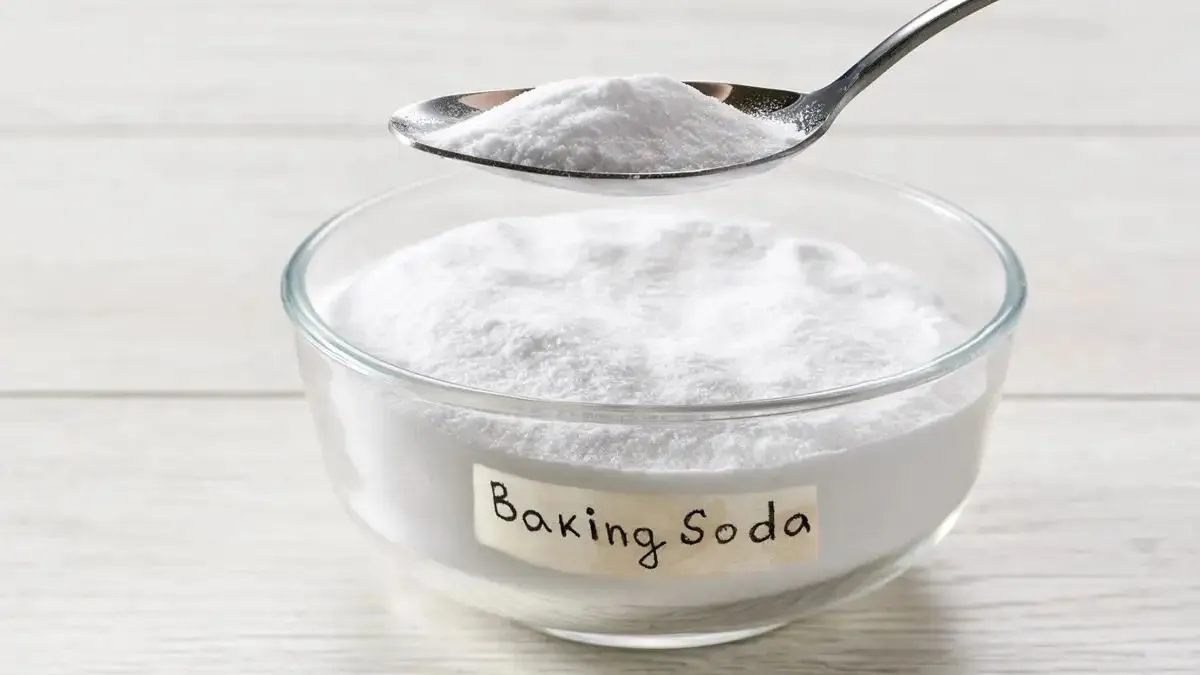
The discovery of baking soda dates back to ancient times when it was used naturally as natron by ancient Egyptians for cleaning, mummification, and ointments. Later, a French chemist, Nicolas Leblanc first synthesised it in 1791. It was in 1801 that a pharmacist, Valentin Rose the Younger, isolated pure baking soda. The commercialisation and mass production of baking soda began in 1846 when John Dwight & Austin Church made baking soda a household staple.
Baking soda is used as a leavener in baking to make baked goods fluffy, or when it reacts with acidic nature items such as buttermilk or vinegar, it releases carbon dioxide, which gives bubbles and a fluffy texture. Baking soda is used in household cleaning, such as absorbing odors in fridges, vacuuming carpets, cleaning drains, scrubbing kitchens and bathrooms, boosting detergent strength, extinguishing grease fires, and also in health and beauty as antacid for indigestion relief, deodorant, toothpaste, etc.
That's an interesting history about baking soda. Now let's understand what the chemical name and chemical formula of baking soda are and its uses in everyday life.
What is the chemical name for baking soda?
Sodium bicarbonate or sodium hydrogen carbonate is the chemical name for baking soda. It is a white, crystalline solid or powder. It is a chemical compound composed of a sodium cation and a bicarbonate anion.
Chemical Properties of Sodium Bicarbonate
- It is non-flammable and odourless. It is basic in nature.
- It is slightly alkaline or bitter in taste.
- It is soluble in water.
- It has a molas mass of 84.007 g/mol.
- It has a density of -2.20 gm/cubic cm.
- It decomposes around 50 degrees Celsius (122 degrees Farenheit) instead of melting. It then produces sodium carbonate, water, and carbon dioxide.
- It has a ph level ~-8.3 (slight alkaline).
- It reacts with acids to produce salt, water, and carbon dioxide.
- It acts as a weak acid or weak base. This property makes it an excellent buffering agent.
Chemical Formula of Baking Soda

The chemical formula of sodium bicarbonate, commonly known as baking soda, is NaHCO3
It consists of sodium (Na), hydrogen (H), carbon (C), and oxygen (O) atoms.
The industrial method for making sodium carbonate is the Solvay process during which ammonia and carbon dioxide are passed through a solution of sodium chloride to make sodium bicarbonate and ammonium chloride. Then sodium bicarbonate is heated to give sodium carbonate, carbon dioxide and steam.
Uses of Sodium Bicarbonate
Sodium bicarbonate, commonly known as baking soda, has a wide variety of uses across cooking, industrial applications, medical, household, etc. Due to its slightly alkaline nature and ability to neutralize acids and release carbon dioxide, it is used as:
- Anaticid to relieve heartburn and indigestion
- Leavening agent to make dough rise
- Cleaning agent
- Odour control
- Fire extinguisher
- Neutralising acids






Comments
All Comments (0)
Join the conversation