Key Points
- Vaishali, in Bihar, was the world's first republic in the 7th-6th century BCE.
- Governance featured assemblies, voting (Salakas), and separation of powers.
- Vaishali was the capital of the Vrijjian Confederacy, a federal union.
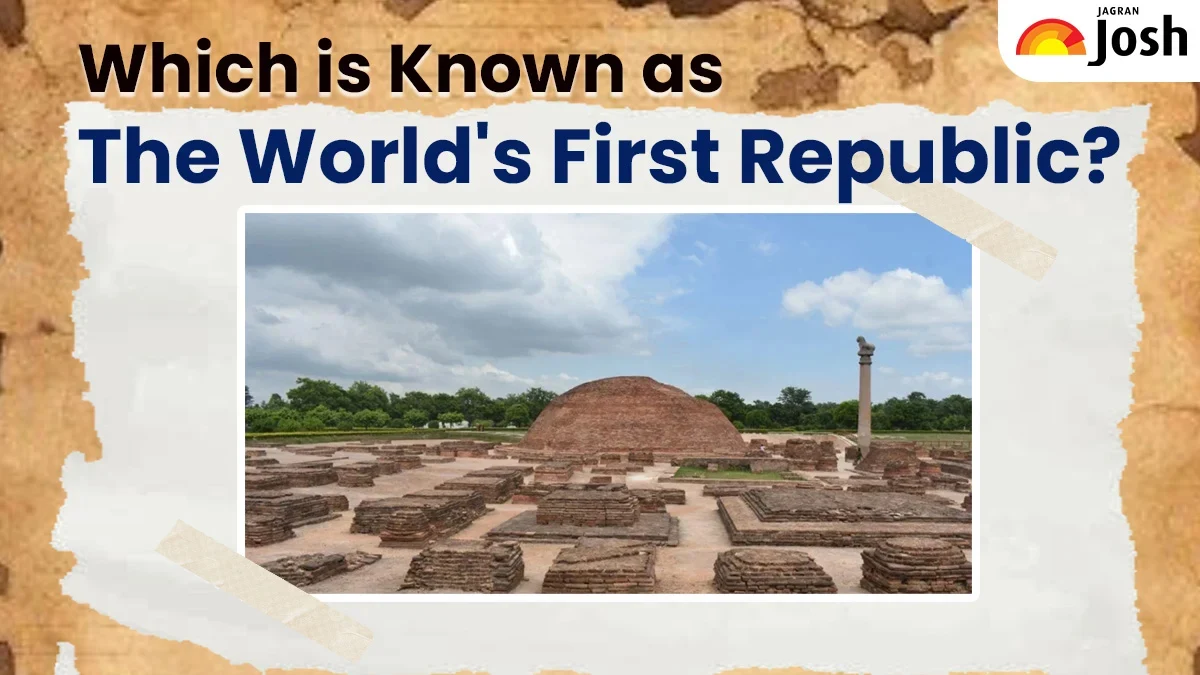
The Vaishali is known as the world's first republic or representative democracy. It is an archaeological site located in present-day Bihar, India. The concept of a republic in Vaishali, where the power of the state lies with the people and their representatives rather than the hereditary monarch, is like present-day democratic systems. While the Roman Senate and Athenian assemblies are famous for flourishing as democratic systems, the republic system existed much earlier in the heart of the Indian subcontinent.
The Lachchavi Clan ruled Vaishali in the 7th-6th century, and it was extended up to the foothills of Nepal. According to the Biddhidt Jataka stories, Vaishali was ruled by several kings of the Lichchavi Clan; later it was annexed by Magadh king Ajatshatru in the 5th century BCE. After the annexation, Vaishali gradually lost its glory and power.
Source: Buddhist Jataka Stories and Anguttara Nikay, Bhagavati Sutra, Uttarapurana, Vishnu Puran, and ancient travelogues of Chinese travellers Faxian and Xuanzang.
The Rise of the Lichchhavi Republic
The rise of the Lichchhavi republic dated back to the 7th-6th century BCE, when the Indian subcontinent was divided into sixteen Mahajanpadas (kingdoms). Most of them were absolute monarchies; however, Vaishali stood out as a Gana-Sangha, or oligarchic system, which was governed by the Lichchhavis. The Lichchavis was a clan that rejected the idea of divine kingship in favour of a consultative leadership model of people. Vaishali was home to the Licchavi Clan in Bihar, India, and its capital was the Vrijjian Confederacy, famous for its organised and collective self-governance in human history. Vaishali has taken its name from King Vishal of the Mahabharat age, who constructed a great fort here, which is now in ruins. Later Vaishali became famous for the Buddhist pilgrimage and birthplace of Lord Mahavira.
Also read: What is the Vande Mataram debate? Know more here
Key Features of the World’s First Republic: Vaishali
The governance of Vaishali was surprisingly modern which was characterised by a complex system of checks and balances:
Administrative and Judicial Features of Vaishali:
-
The Gana Parishad and Santhagara: The administration was not handled by a single ruler. Instead, power was vested in an assembly of representatives known as the Raja. They met in a public assembly hall called the Santhagara (General Assembly) to debate laws, foreign policy, and financial matters.
-
Santhagara (General Assembly) had the bicameral influence. It was the primary body; there was also an Executive Council of nine or eighteen members who handled day-to-day administration and urgent military decisions, preventing the larger assembly from becoming bogged down in trivialities.
-
The "Seven-Step" Judicial System: Vaishali practised a remarkably fair legal process. An accused person was never punished until they were found guilty by seven successive layers of authority included
-
Viniscaya Mahamatra (investigating magistrates)
-
Sūtradhāra (Keepers of the law and tradition)
-
The process ensured that no individual could be wrongly convicted due to the whim or bias of a single official.
-
Separation of Powers: Vaishali maintained a clear hierarchy of roles to ensure efficiency and maintain the separation of powers, as we can see in the modern-day democratic system
-
The Raja (Head of State)
-
The Uparaja (Vice-President or Deputy)
-
The Senapati (General of the Army)
-
The Bhandagarika (Treasurer)
-
The Federal System:Vaishali was the capital/head of the Vrijjian Confederacy, which consisted of eight different clans, and set the example of the worlds first example of a federal union, where different tribes maintained their internal identity but united for the external defence and trade to maintain the diplomatic sovereignty.
-
Salakas system (Democratic voting system): When the assembly could not reach a unanimous consensus, they used a voting system called Salaka-Gahapaka. would collect coloured wooden sticks (Salakas) to count votes, ensuring that the majority's will was recorded.
Also Read: Who is known as the Father of Indian Archaeology?
Social and Military Structure of the Vaishali:
-
The Lichchhavi clan considered every individual as ‘Raja’, or a king, which shows the equal status prevented the rise of a single authority/monarchical system and fostered a strong sense of collective ownership.
-
The Vaishali was an aristocratic republic system where power was held mostly by the Kshatriya clans; however, the assembly was open to a wide range of representatives, and decisions were often reached through consensus. A voting process in Vaishali used coloured wooden pieces known as Salakas.
Economic and Urban Planning:
-
Fortified Infrastructure: Unlike many contemporary settlements, Vaishali was a highly planned city with three concentric walls and several gates, reflecting an organised public works department funded by the collective treasury.
-
Trade and Coinage: The republic issued its own punch-marked coins and maintained trade routes that connected the Ganges plain to the Himalayas, showing that their "republican" values extended to a free and flourishing merchant class.
Vaishali is not just an ancient ruin, but it is also a cradle of the global democratic system and a reminder of the democratic values of equality, fairness and collective wisdom, which have existed in the Indian subcontinent for over 2500 years. The spirit of the world’s first republic serves as a compass, guiding us to remember that true power always belongs to the people.



-1767987324333.png)

Comments
All Comments (0)
Join the conversation