What is a Cockroach called in Hindi?
As urban pest sightings rise across Indian households this season, millions of internet users are actively searching for the exact linguistic terms for the common cockroach in Hindi. Knowing these native names helps homeowners correctly identify specific infestations and communicate effectively with local pest control services.
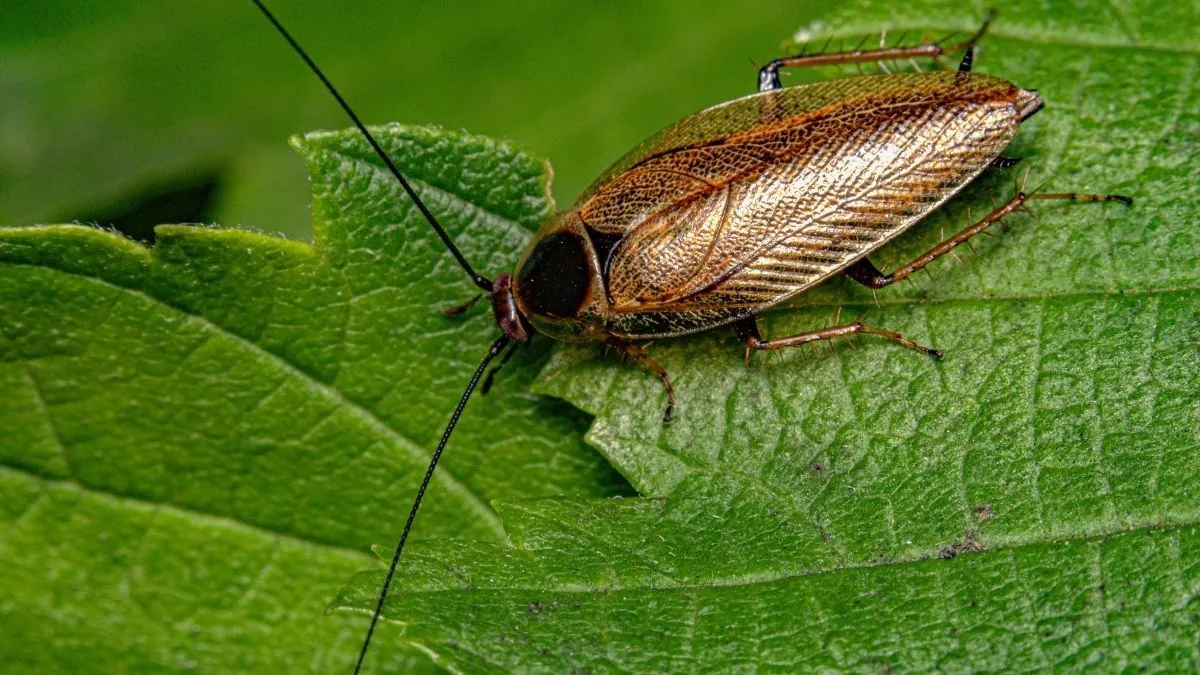
Imagine a creature so evolutionarily resilient that it strolled right alongside the Tyrannosaurus Rex 350 million years ago, survived the asteroid impact, and now comfortably rents a space under your kitchen sink. Cockroaches are the ultimate survivors of planet Earth. According to entomological studies published in the Journal of Economic Entomology, these ancient insects can withstand ten times more radiation than a human being and even live for an entire week without a head.
Yet, while we cross paths with these shiny, brown hitchhikers almost daily, a surprising linguistic mystery has taken social media by storm. Thousands of curious minds are currently hitting search engines to answer a deceptively simple question: what exactly is a cockroach in hindi? Let’s learn the local vocabulary, get the correct pronunciation of cockroaches in hindi and also learn some mind boggling secrets about their bizarre biology.
What is a Cockroach called in Hindi?
In standard Hindi, the formal and most widely accepted term for a cockroach is तिलचट्टा (Tilchatta). The literal breakdown of the word is quite fascinating, Til refers to oil, and Chatta means to lick, pointing directly to the insect's notorious habit of invading oily utensils and greasy kitchen corners.
Alternatively, in casual everyday conversations across North India, it is frequently referred to as झींगुर (Jhingur), though in pure biological terms, Jhingur is actually the Hindi name for a cricket.
When learning the cockroach in hindi pronunciation, it is pronounced phonetically as "Til-chut-taa".
While the adult pest is a common sight, a baby cockroach in Hindi is referred to as तिलचट्टे का बच्चा (Tilchatte ka baccha) or scientifically acknowledged as a nymph.
Terms for Cockroach in Different Indian Languages
India's rich linguistic diversity means this resilient insect goes by many unique names across state borders. Linguistic databases and regional dictionaries note that as you travel across the country, the standard cockroach in English transforms into distinct local dialects. Organizing these regional names helps in identifying how different cultures perceive this universal household pest.
| Language | Regional Name for Cockroach | Written Script |
| Hindi | Tilchatta / Jhingur | तिलचट्टा / झींगुर |
| Bengali | Telapoka | তেলাপোকা |
| Marathi | झुरळ (Zural) | झुरळ |
| Gujarati | Vando | વાંદો |
| Tamil | Karappanpoochi | கரப்பான்பூச்சி |
| Telugu | Bobbula Purugu / Solla | బొద్దింక |
Also Read - What Is the Cockroach Janta Party? Viral Indian Satirical Movement Explodes on Social Media
How to Say Cockroach in Different Languages?
The word cockroach has a history of translations worldwide. The Oxford English Dictionary’s etymological records show that the English word actually derives from the Spanish word cucaracha. Since these insects travel on global shipping vessels, virtually every major language has developed its own unique phonetic word for them.
-
Spanish: Cucaracha (The original root phrase)
-
French: Cafard or Blatte
-
German: Kakerlake
-
Japanese: Gokiburi (ゴキブリ)
-
Mandarin Chinese: Zhāngláng (蟑螂)
Whether you are dealing with a standard adult pest, a smaller female cockroach in hindi contexts, or a massive giant cockroach in hindi (often referring to the American Cockroach species), knowing these international terms highlights how globally widespread these survivors truly are.
Check Out - What is a Group of Butterflies Called in English?
Interesting Facts about Cockroaches
Beyond their names, the biological warfare capabilities of these insects are stunning. The Natural History Museum and evolutionary biologists highlight several incredible facts about cockroaches:
-
Headless Survival: A cockroach can live for a week without its head. Because they breathe through tiny holes called spiracles located in their body segments, they do not rely on a mouth to breathe. They only die eventually because they cannot drink water.
-
Deep Divers: They can hold their breath underwater for up to 40 minutes.
-
High-Speed Runners: Even a freshly hatched baby cockroach can run nearly as fast as its parents, clocking speeds of up to 3 miles per hour.
-
Ancient Lineage: They are older than dinosaurs, dating back to the Carboniferous era.
Tracing the cockroach’s linguistic identity traces a cultural tapestry from the Hindi Tilchatta to the Spanish Cucaracha. By understanding these terms, you can help to bridge the gap between your everyday home experience and the remarkable, ultra-resilient evolutionary history of Earth’s oldest surviving roommates.

Harshita Singh specializes in US affairs and general knowledge, simplifying intricate geopolitical and historical subjects into clear, digestible insights for learners. Holding a BA (Hons) in English from the University of Delhi and with over three years of experience in educational writing, she produces authoritative, thoroughly researched content that empowers readers to engage confidently with global current affairs. For inquiries, you can reach out to her at harshita.singh@jagrannewmedia.com.


-1779447611294_t.webp)
