Top 5 Countries Leading the World in Digital Payments: The 1st & 5th Ones Will Surprise You!
Discover the top 5 countries leading the world in digital payments, with World Bank data, key facts and insights on Mongolia, Kenya, China, Kazakhstan and Thailand.
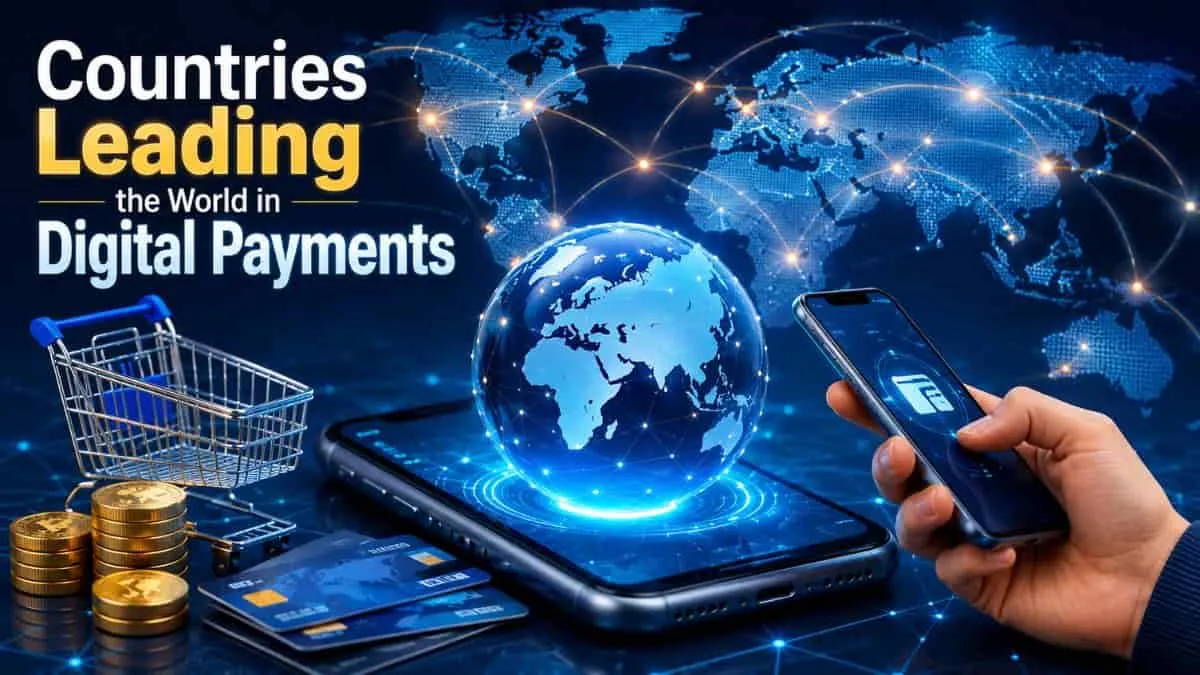
Digital payments have changed the way we buy and sell products, send money, or pay bills. Today, a person can pay for groceries, recharge a phone, or send money to family members or friends without having cash.
But do you know which countries lead the world in digital payments? You'll all be guessing about India. But India is not leading the world in digital payments. Perhaps it has worldwide; UPI payments have been accepted in 11 countries, but as per the World Bank’s Global Findex Database 2025, Mongolia is at the top of the list, which is leading the world in digital payments.
So, explore here the top 5 countries leading the world in digital payments; the 1st one has surprised you the most. Now, check which one is at the 5th rank, which is leading in digital payments worldwide.
What is a digital payment?
A digital payment means sending or receiving money through a digital method.
For example:
-
Paying by UPI or QR code
-
Using a debit or credit card
-
Paying through a mobile phone
-
Paying a bill online
-
Sending money directly to another bank account
-
Receiving money into a bank or mobile money account
Top 5 countries for digital payments
Based on the World Bank Global Findex 2025 indicator “Made or received a digital payment”, these are the leading countries among economies with comparable 2024 data:
| Rank | Country | Adults who made or received a digital payment |
| 1 | Mongolia | 95% |
| 2 | Kenya | 89.3% |
| 3 | China | 88.7% |
| 4 | Kazakhstan | 85% |
| 5 | Thailand | 85% |
Source: World Bank Global Findex Database 2025, based mainly on 2024 survey data.
1. Mongolia: 95%
-
POPULATION (age 15+): 2.34 million
-
Adult population without an account: 0.04 million
-
Formal saving, borrowing, and payments
-
Saved in an account: 36%
-
Borrowed from a lender or with a credit card: 42%
-
Used digital payments: 95%
2. Kenya: 89.3%
-
POPULATION (age 15+): 34.62 million
-
Adult population without an account: 3.42 million
-
Formal saving, borrowing, and payments
-
Saved in an account: 54%
-
Borrowed from a lender or with a credit card: 38%
-
Used digital payments: 89.3%
3. China: 88.7%
-
POPULATION (age 15+): 1,176.68 million
-
Adult population without an account: 124.93 million
-
Formal saving, borrowing, and payments
-
Saved in an account: 67%
-
Borrowed from a lender or with a credit card: 41%
-
Used digital payments: 88.7%
4. Kazakhstan: 85%
-
POPULATION (age 15+): 14.32 million
-
Adult population without an account: 1.86 million
-
Formal saving, borrowing, and payments
-
Saved in an account: 38%
-
Borrowed from a lender or with a credit card: 33%
-
Used digital payments: 85%
5. Thailand: 85%
-
POPULATION (age 15+): 60.88 million
-
Adult population without an account: 4.98 million
-
Formal saving, borrowing, and payments
-
Saved in an account: 54%
-
Borrowed from a lender or with a credit card: 18%
-
Used digital payments: 83%
What about India?
India is known for the highest payment through UPI, and globally it is recognised in 11 countries where UPI payments are operational.
India has about only 48% of the population using digital payments.
Formal saving, borrowing, and payments
-
Saved in an account: 27%
-
Borrowed from a lender or with a credit card: 15%
-
Used digital payments: 48%
Digital payments are growing worldwide
| Trend | What it means |
| More smartphones | More people can use digital payment apps |
| More bank accounts | More people can enter the formal financial system |
| QR payments | Small shops can accept digital money easily |
| Mobile money | People can send money without visiting a bank |
| Online shopping | Digital payment becomes more useful |
| Online bills | Electricity, phone and other bills can be paid digitally |
Why are digital payments important?
Digital payments can make everyday money transactions easier.
For customers
-
Payments can be quick.
-
There is less need to carry cash.
-
Bills can be paid from home.
-
Money can be sent to family members easily.
For shopkeepers
-
Small shops can accept digital payments.
-
Payment records are created automatically.
-
Customers do not always need to carry cash.
-
Digital records may help businesses access financial services.

Prabhat Mishra is a Subject Matter Expert and digital journalist with an extensive background in the competitive exam landscape and over 4 years of experience in education, national and international news, and current affairs. Over his tenure with top knowledge platforms like Mentorship India, IAS BABA, IAS SARTHI, and now Jagran Josh, he has a deep understanding of government exams like UPSC and State PCS, including UP and Bihar, as he has already qualified for the UPPCS 2022 Mains and Bihar 68th Mains. With his core expertise in history, polity, geography & current affairs, he specialises in creating well-researched, aspirant-centric content and simplifying complex topics for competitive examinations.