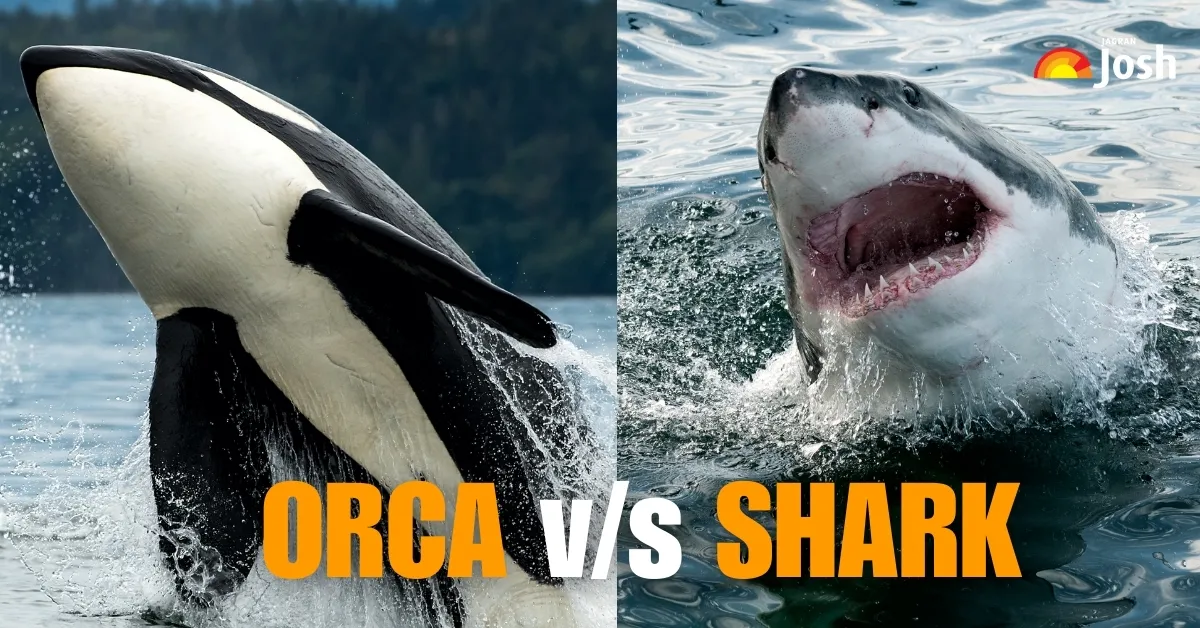
The ocean is full of mighty hunters. Two of the most feared are the shark and the orca (killer whale). Sharks are ancient, solitary predators. They have rows of razor-sharp teeth, whereas orcas are fast and smart and hunt in well-organised family groups. But what happens when these two titans meet? There are huge differences between them. Consider their sheer strength and their intelligence. One is a powerful fish, while the other is a massive, brainy marine mammal. Do you know which animal usually wins a fight between a shark and an orca? It might surprise you. In this article, we'll take a look at the key differences, hunting tactics, and documented encounters to see who truly rules the sea.
What Are The 7 Quick Facts About Orcas?

Orcas are genuinely fascinating. Here are 10 quick, simple facts about killer whales:
- They are Dolphins: Despite their name, orcas are the largest member of the dolphin family, not whales.
- Apex Predators: Orcas are at the very top of the food chain, meaning they have no natural predators in the ocean.
- Group Hunters: They are highly social and hunt in organised family groups called pods, like wolves on land.
- Smart and Cultured: Orcas are highly intelligent. Different pods have their own unique "language" or dialect and pass down specific hunting skills.
- Very Large Size: Adult male orcas can grow up to 32 feet (9.5 metres) long and weigh up to 6 tonnes.
- Lifespan Like Humans: Female orcas can live for 50 to sometimes even 90 years in the wild.
- Unique Sleep: They sleep by resting only one half of their brain at a time, keeping the other half awake to remember to breathe.
- Tall Dorsal Fin: A large male's dorsal (back) fin can be as tall as 6 feet (1.8 meters)—taller than most people.
What Are The 7 Quick Facts About Sharks?

Here are 10 quick, simple facts about sharks:
- They are Fish: Sharks are a type of fish. They are not mammals like the orca.
- No Bones: A shark's skeleton is made of cartilage, the same flexible material found in your nose and ears.
- Ancient Survivors: Sharks have been swimming in the oceans for over 400 million years, making them older than the dinosaurs.
- Conveyor Belt Teeth: Sharks constantly lose and replace their teeth. Some species shed tens of thousands of teeth over a lifetime.
- Six Senses: They have a special sixth sense. Tiny pores on their snout (called Ampullae of Lorenzini) let them sense the electric fields of their prey.
- Skin Like Sandpaper: A shark's skin is covered in tiny, tooth-like scales called dermal denticles, which help them swim faster and feel rough like sandpaper.
- Must Keep Moving: Many large, fast-swimming sharks (like the Great White) must keep swimming to pass water over their gills and breathe.
- Varying Birth: Some sharks lay eggs (like the catshark), while others give birth to live young (like the great white).
What Do Orcas and Sharks Have in Common?
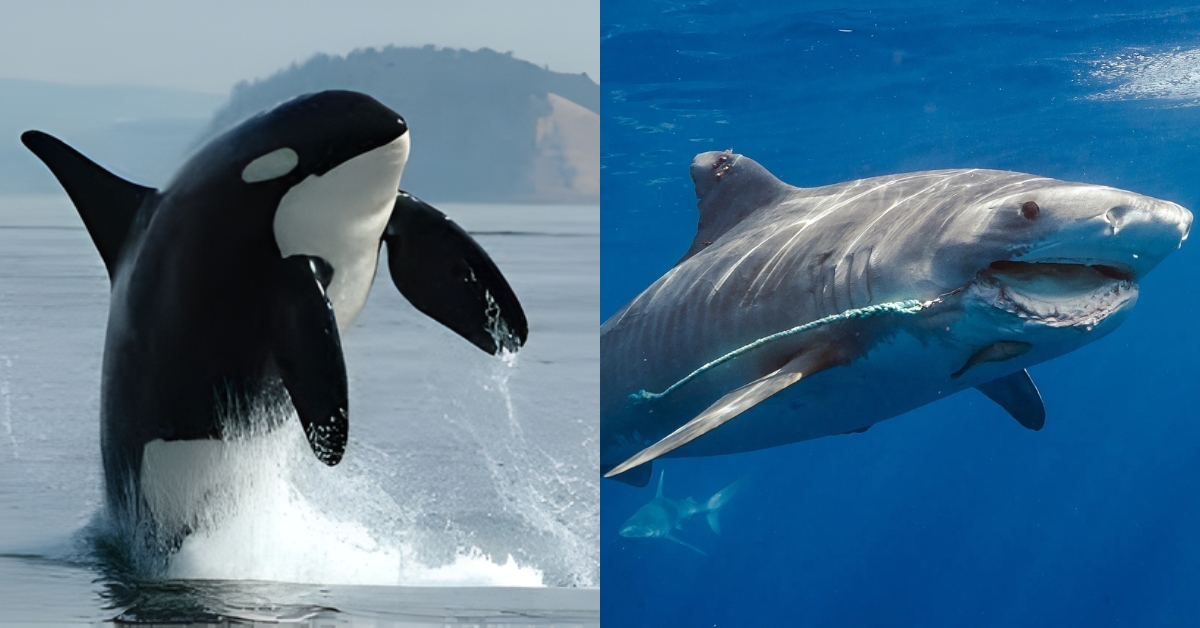
Both the shark and the orca stand at the very top of their respective food chains. They are both apex predators, meaning they have no natural enemies except each other. Both animals possess extreme strength and speed, allowing them to hunt and take down large prey such as seals and other marine mammals. They also play a key role in the ocean: they help keep marine ecosystems healthy by regulating the populations of different species.
- Apex Predators: Both are at the very top of the food chain.
- Target Large Prey: Both can and do hunt seals, sea lions, and big fish.
- Found Worldwide: Both species are highly dispersed, found in oceans across the globe.
- Powerful Swimmers: Both rely on incredible speed and power to catch their meals.
Who Is Bigger, an Orca or a Shark?
The orca is significantly larger than most sharks, including the great white shark, often considered the champion of sharks. An adult male orca can grow up to 32 feet (9.5 metres) long and can weigh as much as 6 tonnes. The largest great white shark, by comparison, typically reaches about 20 feet (6 metres) in length and is much lighter. The killer whale is not only longer but is also much heavier and more robustly built. Because of this massive difference in size and weight, the orca is the clear winner in the sheer mass and power category.
What are the Hunting Strategies of Orcas and Sharks?
v
Orcas are incredibly smart hunters and the true masters of teamwork. They hunt in family groups called pods, using specialised strategies passed down through generations. They might work together to create a giant wave to wash a seal off an ice floe or use their bodies to herd schools of fish into a tight "bait ball" before stunning them with their tails. Orca hunting is planned and cooperative, and uses high-level intelligence.
Sharks, on the other hand, are more solitary, relying on stealth and brute power. A great white shark typically uses an ambush attack, swimming up from below at high speed to surprise its prey, often launching its entire body out of the water (breaching). Other sharks, like the thresher shark, use a long tail like a whip to stun fish before eating them. Shark hunting relies on their superior senses, speed, and powerful bite.
- Orca Strategy: Cooperative, complex teamwork, using intelligence to trap or confuse prey.
- Shark Strategy: Solitary ambush attacks, relying on surprise, speed, and powerful jaws.
Shark vs Orca: Who Would Win?
| Feature | Shark (Example: Great White) | Orca (Killer Whale) | Edge Goes To |
| Physical Size | Up to 20 feet, lighter build. | Up to 32 feet, much heavier (up to 6 tons). | Orca |
| Intelligence | An instinctual hunter focuses on ambush. | Highly intelligent; uses complex strategy and communication. | Orca |
| Hunting Style | Solitary relies on surprise and raw power. | Cooperative hunting in highly organised pods (teams). | Orca |
| Weaponry | Rows of replaceable, razor-sharp teeth. | Massive jaw, powerful body slams, and huge teeth. | Orca |
| Speed | Fast, capable of bursts up to 35 mph (56 km/h). | Faster, capable of bursts up to 35 mph (56 km/h). | Even |
| Weakness | Must keep moving to breathe (for many species). | None known; rests one brain half at a time. | Shark (Due to the orca's lack of this weakness) |
Conclusion: The Final Verdict
When it comes down to a direct battle, the orca is the clear winner. While a shark has incredible speed and a powerful bite, the orca dominates in every critical area. The killer whale is significantly larger and heavier and possesses a level of intelligence that allows it to outsmart its foe. Orcas rarely hunt alone, working in coordinated teams to isolate and incapacitate the solitary shark. They are known to flip a shark over, causing it to enter a paralysed state called "tonic immobility". The combination of superior size, strength, and strategic intelligence makes the orca the undisputed champion of the deep.




Comments
All Comments (0)
Join the conversation