Key Points
- Decidophobia is an intense, irrational fear of making decisions in daily life.
- It can cause panic symptoms and avoidance, affecting education & career paths.
- WHO estimated 359 million people worldwide affected by anxiety disorders in 2021.
In everyday life, like going to school, at work, or in personal life, we are required to make choices.
Some decisions are small and routine, while others feel life-changing. Although it is natural to pause and think before choosing, some individuals experience overwhelming fear at the very idea of making a decision.
This intense anxiety is known as Decidophobia, a condition that can interfere with daily functioning and long-term growth.
Although many people occasionally worry about making the wrong choice or taking any decision, decidophobia goes far beyond hesitation.
Also Read: What is Cetaphobia?
What is a Phobia?
As per the Harward, a phobia is a persistent, excessive, unrealistic fear of an object, person, animal, activity, or situation. It is a type of anxiety disorder. A person with a phobia either tries to avoid the thing that triggers the fear or endures it with great anxiety and distress.

Source: Shutterstock
What is Decidophobia?
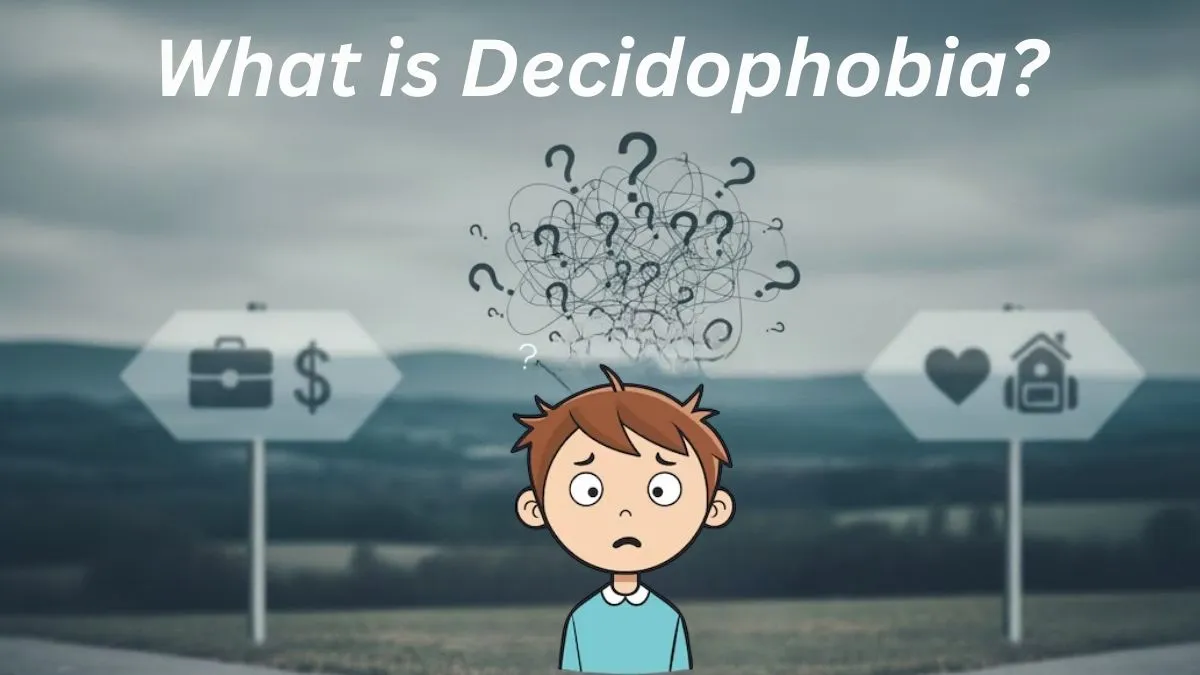
Decidophobia is an irrational and persistent fear of making decisions in our daily lives.
Those person who has experience with Decidophobia they faced problem in taking decision, making choices, and making any minor decision also.
In severe cases, merely thinking about having to choose can trigger many problems, like shortness of breath, increased blood pressure, excessive sweating and muscle tension & trembling.
Clinical anxiety disorders and panic symptoms are recognised by public health authorities, including theU.S. National Institute of Mental Health (NIMH)
Also Read: What is Barophobia?
How does Decidophobia affect our daily life?
Decidophobia affects the Daily Life in various ways. To prevent to taking decision-making, and this phobia mainly affect to a student going to college or university, any major academic decision, class schedule or career path.
Similarly, adults may rely excessively on others to make personal, financial, or professional decisions, which can reduce confidence and increase long-term stress.
Interesting Fact About Decidophobia
-
About Decidophobia: Decidophobia refers to an intense, irrational fear of making decisions, particularly when the possibility of a “wrong choice” triggers anxiety beyond normal uncertainty.
-
Type of Specific Phobia: Decidophobia falls under the broader category of specific phobias, which are recognised anxiety disorders involving extreme fear of certain situations or stimuli.
-
Origin of the Term: The word Decidophobia was first used by philosopher Walter Kaufmann to describe the psychological dread of consequential decision-making.
-
High Anxiety in Decision-Making: Individuals with this condition may experience panic symptoms, such as rapid heartbeat, trembling, or avoidance behaviours, when faced with decisions.
-
Relation to Anxiety Disorders: Decidophobia often occurs alongside general anxiety disorders, which are the most common class of mental health conditions worldwide, affecting an estimated 359 million people in 2021, according to the WHO.
-
Decision Avoidance: From this phobia, the individual generally avoid decision making situation, which affects their dailylife routine in their personal surroundings.
-
Symptoms Overlap with Other Phobias: Similar to other specific phobias, decidophobia can produce intense nervousness and fight/flight responses even when the situation poses no real danger.
-
Impact on Quality of Life: When severe, decidophobia may affect important life areas such as education, relationships, and work performance due to persistent fear of choices.
In conclusion, Decidophobia is not so simple, but going with this phobia may lead to fear for taking dscison in any place, whether around college time, in carrer path or in a working environment.
Recognising the symptoms is the first step toward regaining control.
With awareness, psychological support, and evidence-based guidance from trusted health authorities, individuals can learn to manage anxiety and develop confidence in their decision-making abilities.




-1767987324333.png)

Comments
All Comments (0)
Join the conversation