Asian Games vs Commonwealth Games: Know the Difference Between the Two Events
The Asian Games 2026 are set to begin on September 19 in Aichi-Nagoya, Japan. Know the key differences between the Asian Games and Commonwealth Games, including their history, participating nations and sports.
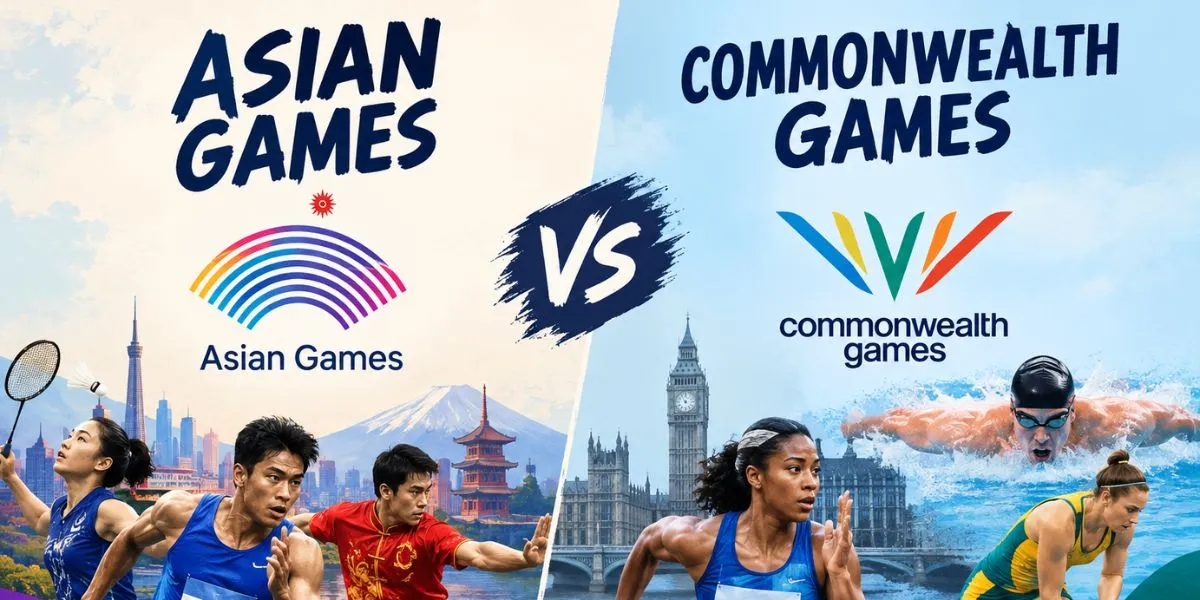
The Asian Games 2026 is now just a week away. The 20th edition of this continental multi sport event is set to take place in Aichi-Nagoya, Japan from September 19.
Held once every 4 years, the Asian Games bring together athletes from across the continent to compete across multiple sporting disciplines.
However, there has always been a discussion around how the Asian Games’ compare with the Commonwealth Games. While both tournaments have their unique features, there are several key differences too.
In this article, we will explore the major differences between the Asian Games and the Commonwealth Games.
What are the Asian Games?
The Asian Games started in 1951 for the first time. The tournament is organised by the Olympic Council of Asia with 45 National Olympic Committees represented in the tournament, along with some of the finest sporting names who showcase their talent across different disciplines and categories.
The Asian Games are also home to some of the continent's traditional sports, like Kabaddi and Wushu, which are quite popular in the continent.
What are the Commonwealth Games?
The Commonwealth Games are an international multi sport event held between the member entities of the Commonwealth of Nations. The inaugural edition took place in 1930 in Canada. Organized by Commonwealth Sport (CGF), it takes place once every four years, with participants coming from all the member nations and territories spread across different continents.
Unlike the Olympics, one unique feature of the Commonwealth Games is that overseas territories and constituent home nations, such as Gibraltar and Northern Ireland, can participate as separate teams rather than representing a single nation.
Asian Games vs Commonwealth Games: Quick Comparison
| Difference Feature | Asian Games | Commonwealth Games |
| Geographic Scope | Restricted to Asia | Worldwide (Global Scope) |
| Primary Basis | Continental / Regional location | Political membership (Commonwealth of Nations) |
| Governing Body | Olympic Council of Asia (OCA) | Commonwealth Sport (CGF) |
| First Edition | 1951 (New Delhi, India) | 1930 (Hamilton, Canada) |
| Participating Entities | 45 National Olympic Committees (NOCs) | 74 Commonwealth Games Associations (CGAs) |
| Team Representation | Sovereign countries / official NOCs | Sovereign nations + Dependent territories & constituent countries |
India’s performance in Last Commonwealth Games and Asian Games
| Event | Gold | Silver | Bronze | Total Medals | Overall Rank |
| Commonwealth Games 2026 (Glasgow) | 13 | 17 | 9 | 39 | 4th |
| Asian Games 2023 (Hangzhou) | 28 | 38 | 41 | 107 | 4th |
The Commonwealth Games 2026 concluded earlier this year in Glasgow, Scotland. India retained their fourth spot in the competition with 39 medals, with boxing dominating the tally.
Whereas at the Asian Games 2022, India crossed the 100-medal mark for the first time in history. The tournament took place in Hangzhou, China where India finished at 4th position.

Varun Verma is an education and sports journalist with over three years of experience in journalism, with a strong focus on cricket . He has previously worked with SportsYaari and CricketTimes.com, where he developed a strong news sense and a knack for storytelling while covering breaking news and major sporting events. He holds a PG Diploma in English Journalism from the Indian Institute of Mass Communication (IIMC), New Delhi. Beyond sports, his interests include geopolitics, Indian polity and government policies. Inspired by the grit and passion of Ben Stokes, he strives to bring the same depth in his life.
For inquiries or professional insights, you can reach him directly at varun.verma@jagrannewmedia.com