BRICS Summit 2026: PM Modi's 10-Point Global Governance Roadmap Explained
PM Modi's 10-point global governance reform roadmap unveiled at the 18th BRICS Summit 2026 in New Delhi, anchored on Representation, Responsiveness and Rule-Making for the Global South.
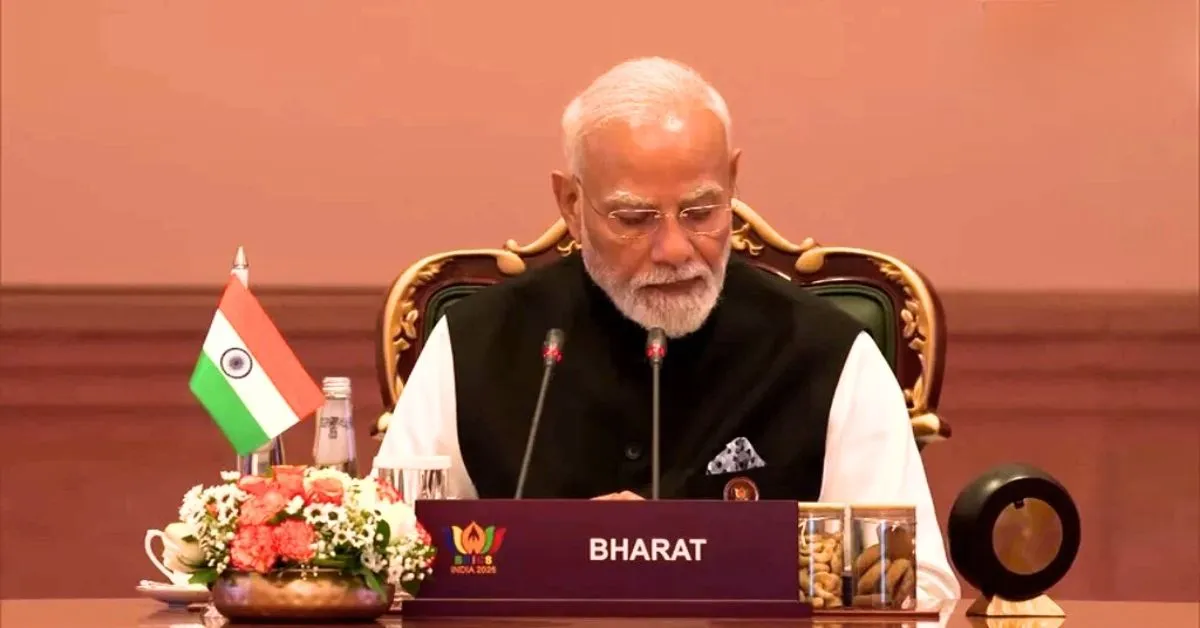
During the first speech at the 18th BRICS summit (held on September 12, 2026) organized in New Delhi, Prime Minister Narendra Modi called upon the member countries to come together to produce 10 recommendations for global governance that will help in making a full BRICS reform roadmap by the follow-up summit. While speaking to the world leaders at Bharat Mandapam.
As mentioned by PM Modi, "the Global South is on the frontline when crises emerge across the globe in 18th BRICS Summit. But it continues to remain in the last row when it comes to decision-making." He stated that the traditional 'pyramid of privilege' should be changed into the modern 'platform of partnership.'
10 Recommendations for the Global Governance Reform Roadmap of BRICS
The 10 recommendations have been based and organized around India's 3-Pillar Reform Architecture based on Representation, Responsiveness and rule-making.
Pillar 1: Representation (Reestablishing the Global Power Balance)
-
Time-bound UNSC Reforms: Transition from discussing the expansion of the UNSC (United Nations Security Council) to initiating the time-based reform process that guarantees the permanent representation of Global South countries.
-
Re-establishing the Multilateral Financial Institutions: Revise voting, quota allocation and management systems of global financial institutions (IMF and World Bank) to reflect current affairs instead of the post-WWII situation.
-
Institutionalising a Voice of the Global South: Go from the “pyramid of privilege” to the “partnership platform,” which would enable developing countries to actively participate in decision-making.
Pillar 2: Responsiveness (Addressing Contemporary Economic and Security Challenges)
-
Removing Intra-Bloc Trade Barriers: Identify the top 10 trade barriers that exist among member countries and eliminate them gradually to ensure resilient economic connections.
-
Seafarers' Emergency Support Network: Create a coordinated 24/7 emergency assistance network with agencies involved in the maritime industry and embassies to help seafarers in distress and manage their communication.
-
Supply Chain Security: Help maintain global trade routes and ensure uninterrupted delivery of agricultural and energy products even during troubled times.
Pillar 3: Rule-Making (Transforming Global South into 'Rule-Shapers')
-
Establishing Governance of Advanced Technologies through Co-Creation: Enable the less privileged countries to be active participants in the formation of international rules regulating artificial intelligence and biotechnology instead of the passive subjects of these processes.
-
Democratic Rules for Digital Public and Outer Space: Develop fair international regulations for the digital public infrastructure, cybersecurity, and exploration of space.
-
Global Expansibility of Open-Source Tools: Share successful methods of financing on a massive scale through digital transactions, for instance, a UPI system or green technologies through which financial inclusion can be achieved around the globe.
Changing the system of global governance calls for a change in approach from a "pyramid of privilege" to a "platform of partnership" by transferring political consensus into action based on principles like Representation, Responsiveness and Rule-making. The Global South can become not just a passive recipient of international policies but an active participant in decision-making processes.

Manisha Waldia is a distinguished content strategist with 5 years of experience crafting premium educational content for UPSC and State PCS, with a focus on deep conceptual analysis across Polity, Geography, History, and Environment. She currently brings this expertise to Jagran Josh, where she covers major national and international events, current affairs, and static general knowledge. Over her career, Manisha's specialized insights have led her to curate high-impact materials and serve as a UPSC Mains answer-evaluator for India’s top institutes—including Drishti IAS, Shubhra Ranjan IAS, Study IQ, GS Score, and PWonlyIAS. She has also worked alongside leading NGOs like Oxfam India and Avani Kumaon.
Contact: manisha.waldia@jagrannewmedia.com