Anak Krakatau Volcano Eruption: Location, Ring of Fire Connection and Latest Impacts
Anak Krakatau volcano erupted in Indonesia, disrupting flights and daily life. Learn about its location, Ring of Fire connection, formation, and latest impacts.
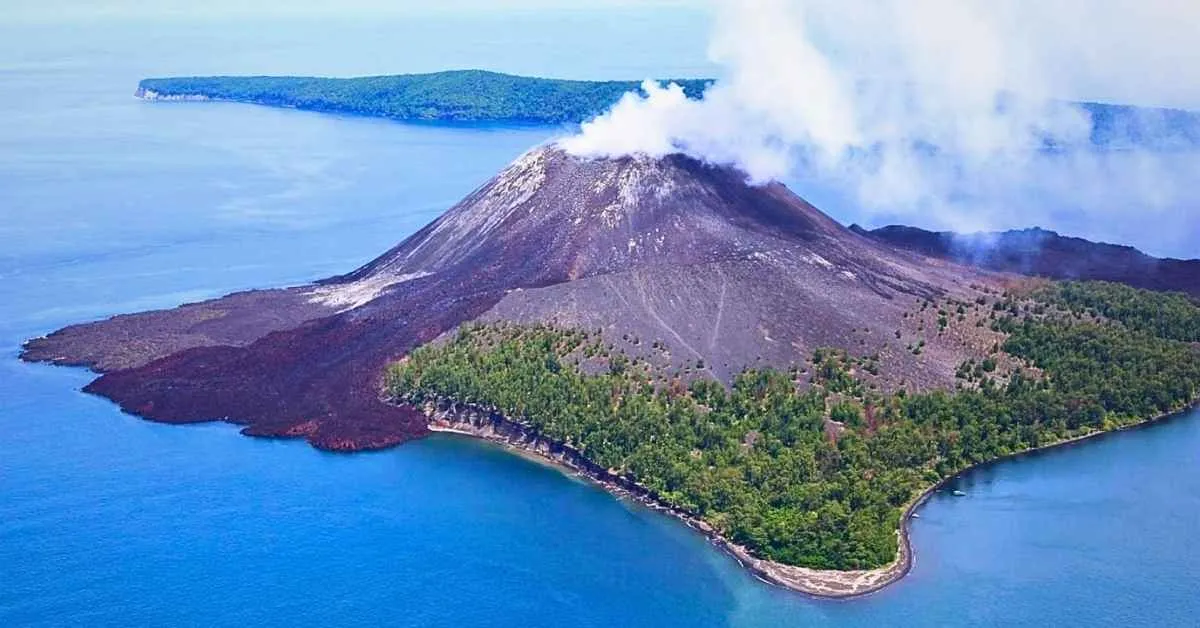
The Anak Krakatau volcano of Indonesia has recently made the headlines globally after its violent eruption has made massive ash clouds rise into the atmosphere, affected several hundred flights and led to the temporary suspension of schools in the areas affected by the eruption.
The eruption is of great importance not only as an event in the field of current events but also due to its significance in geography as it takes place is on the Pacific Ring of Fire which is one of the most seismic places on earth.
The recent eruption of Anak Krakatau took place with explosive pulses sending volcanic ash, vapor and heated volcanic rock into the upper atmosphere.
Key Highlights and Impacts:
-
Eruption Column: A dense cloud of ash rose several kilometers above the island, filling the skies of Java and Sumatra.
-
Airlines Disruptions: The VAAC issued warnings to commercial airlines, forcing them to divert flights or temporarily suspend all operations.
-
Local Safety Measures: Authorities created exclusion zones within a 5-kilometer radius around the volcano, banning all fishing and tourism activities.
-
Health Precautions: Those living in the affected coastal regions have been advised to wear masks and reduce activity levels.
-
Tsunami Monitoring: The Badan Geologi and the Meteorology and Geophysics Institute are monitoring the situation but no alert was issued for major tidal waves yet.
Geographical Location of Anak Krakatau
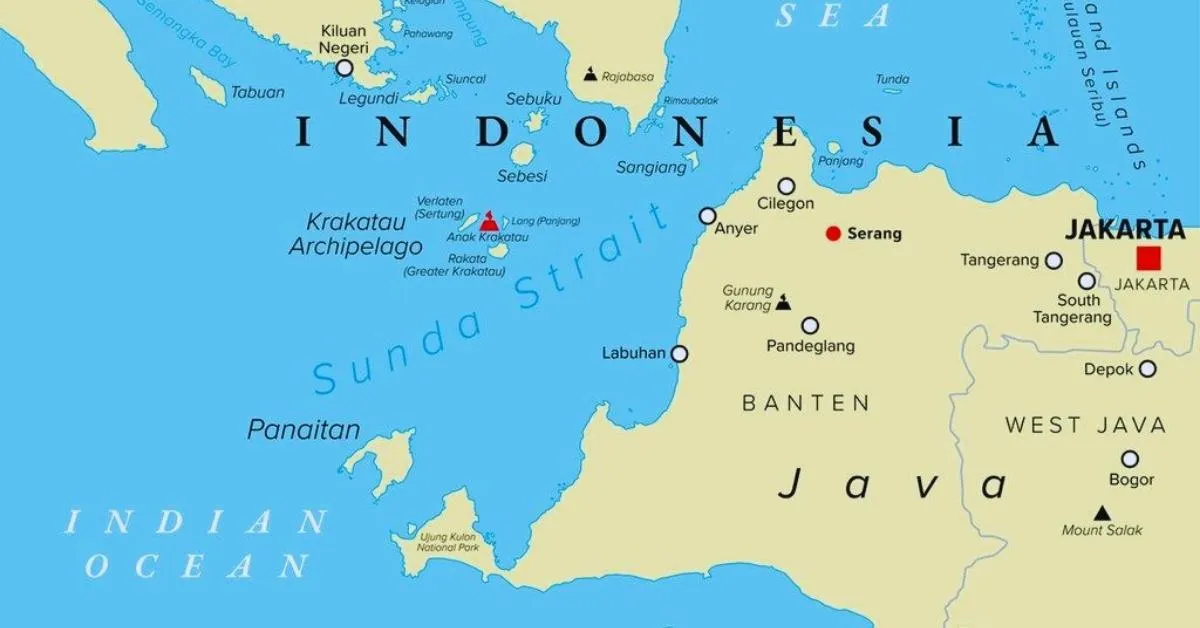
Anak Krakatau is found in the Sunda Strait, which is a narrow body of water separating the two islands of Sumatra and Java in Indonesia. The volcano is part of the Krakatera island group, within the region of geophysical activity formed by the subsidence of the Indo-Australian plate below the Eurasian plate.
| Feature | Details |
| Country | Indonesia |
| Province | Lampung (administratively part of South Lampung Regency) |
| Body of Water | Sunda Strait (between Java and Sumatra) |
| Coordinates | 6.102° S, 105.423° E |
| Volcano Type | Active Stratovolcano (Island Volcano) |
| Tectonic Setting | Subduction Zone along the Sunda Trench |
Meaning of Anak Krakatau
Anak Krakatau in Indonesian means „son of Krakatoa‟, as it emerged out of sea waters sometime between 1927 and 1930 after the muting of the original Krakatau in 1883. The continuous volcanic action on the island permits it to come to existence making it to be one of the most carefully studied volcanoes of Indonesia.
The volcano has remained active ever since the 1990s, so scientists try to watch over its activity.
Connection with the Pacific Ring of Fire
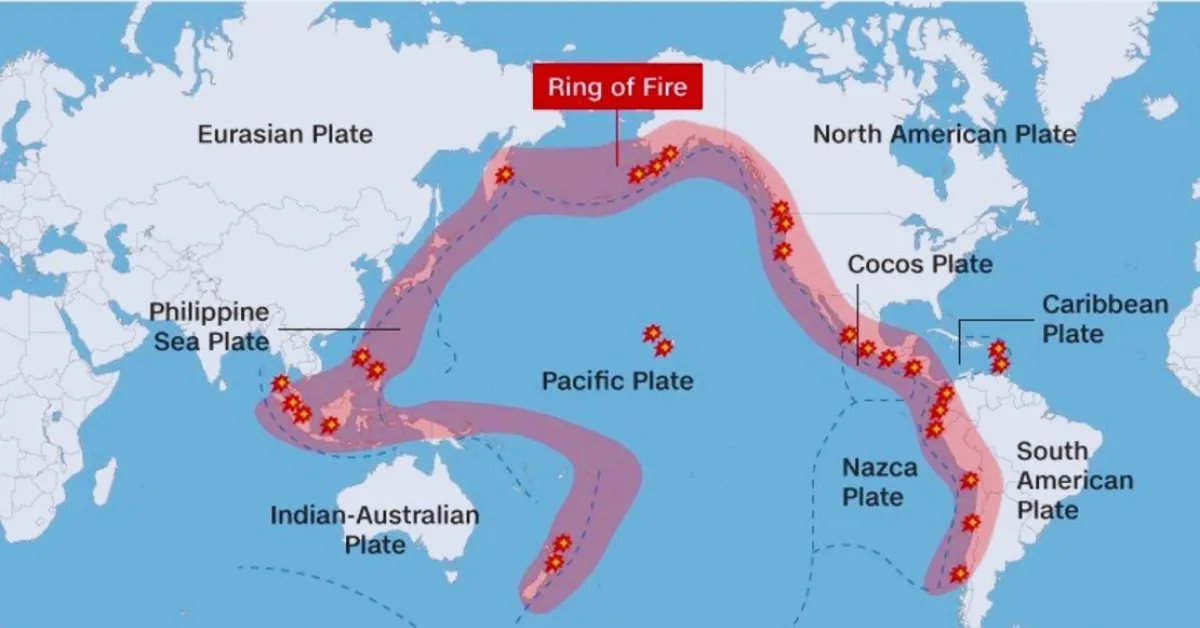
Krakatau is a veritable product of the Pacific Ring of Fire a 40,000-km (25,000-mile) long horseshoe that surrounds the Pacific Ocean and represents an area with plenty of volcanism and seismicity.
-
Mechanism of Tectonics: Subduction at the Sunda Arc Plate Collision: The dense oceanic Indo-Australian Plate moves northward with a speed of approximately 6-7cm per year underneath the less dense continental Eurasian (Sunda) Plate.
-
Magma Production: As the subducting plate descends into the Earth’s mantle, the increase of temperature and pressure forces the release of water and volatiles. This results in a decrease in the melting point of the mantle rocks above, which generates silica-rich magma.
-
Explosive Volcanism: The coming to the surface of magma takes place under the Sunda Arc in special chambers for the purpose of explosion.

Manisha Waldia is a distinguished content strategist with 5 years of experience crafting premium educational content for UPSC and State PCS, with a focus on deep conceptual analysis across Polity, Geography, History, and Environment. She currently brings this expertise to Jagran Josh, where she covers major national and international events, current affairs, and static general knowledge. Over her career, Manisha's specialized insights have led her to curate high-impact materials and serve as a UPSC Mains answer-evaluator for India’s top institutes—including Drishti IAS, Shubhra Ranjan IAS, Study IQ, GS Score, and PWonlyIAS. She has also worked alongside leading NGOs like Oxfam India and Avani Kumaon.
Contact: manisha.waldia@jagrannewmedia.com


![[LIVE] RRB Group D Answer Key 2026: Download CBT Response Sheet PDF - Direct Link Shortly](https://img.jagranjosh.com/images/2026/September/692026/RRB-Group-D-Answer-Key-2026-Live--Updates.jpg)
![[OUT] EMRS Tier 2 Result 2026 Live: Download PRT, TGT and PGT Result PDF at nests.tribal.gov.in](https://img.jagranjosh.com/images/2026/August/3182026/EMRS-Tier-2-Result-2026.jpg)