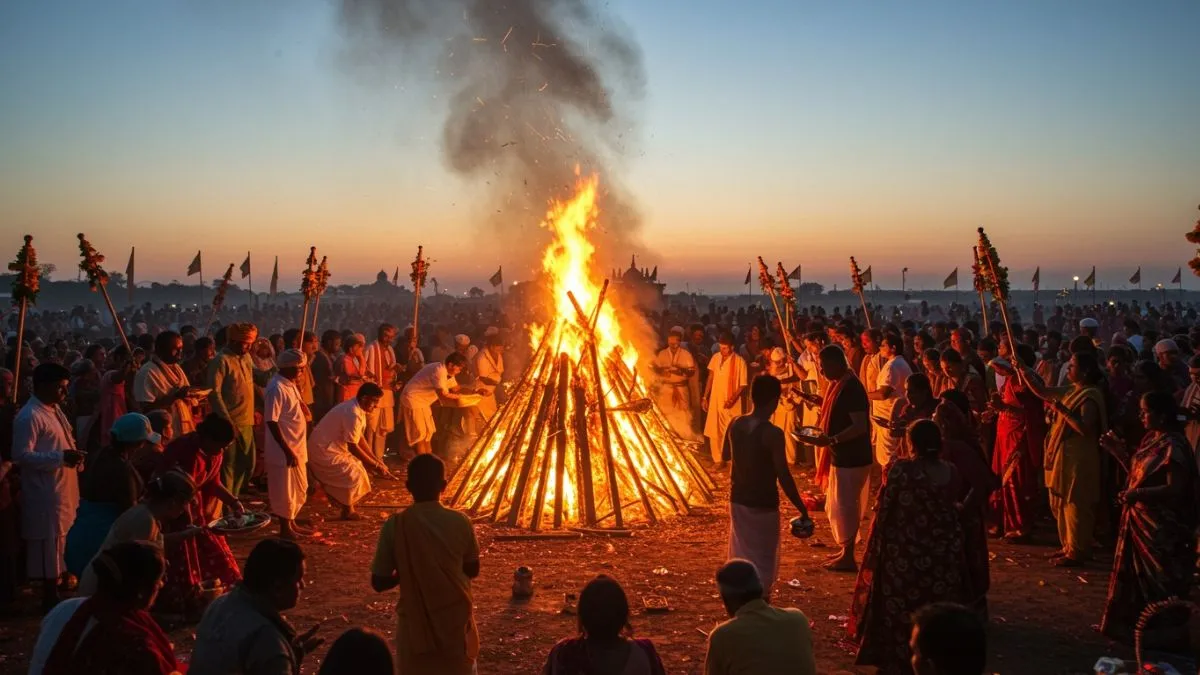
In the Hindu culture, Prahlada is remembered as being one of the most devout (pure and unafraid) of Lord Vishnu's devotees. The story of his life, narrated in the ancient texts of Bhagavad Gita 12.2, whose whose story appears in the Śrīmad Bhāgavatam (Canto 7) in , is not just some miracle tale but also a lesson of great example and teachings of faithfulness, strong will and forgiveness.
Prahlada was born into a family of mighty demons and opted to be a devotee as opposed to being proud and a truth teller. His spiritual strength stood firm even before his tyrannical father, Hiranyakashipu. The story beautifully shows how divine grace protects sincere devotion, no matter how difficult the circumstances may be.
Hiranyakashipu’s Vow and the Desire for Immortality
Hiranyakashipu was the powerful king of the Asuras. After his brother Hiranyaksha was killed by Lord Vishnu, he was consumed by anger and revenge.
He was determined to defeat Lord Vishnu and rule the universe without challenge. So, he decided to perform intense penance to gain extraordinary powers.
He meditated for years without food, water, or rest. With his discipline devoted to his desire for immortality, his devotion was so severe that it disturbed the balance of the universe. Finally, Brahma appeared before him and offered a boon.
Hiranyakashipu asked for immortality, but Brahma explained that no living being could escape death completely. So he cleverly asked for conditions that would nearly guarantee he could not be killed — not by man or animal, not inside or outside, not during day or night, not on land, sky, or sea, and not by any weapon. Brahma granted these conditions.
Believing himself invincible, Hiranyakashipu conquered the heavens and declared himself supreme.
Prahlada’s The Great Devotee of Vishnu
Source: radhakrishnatemple
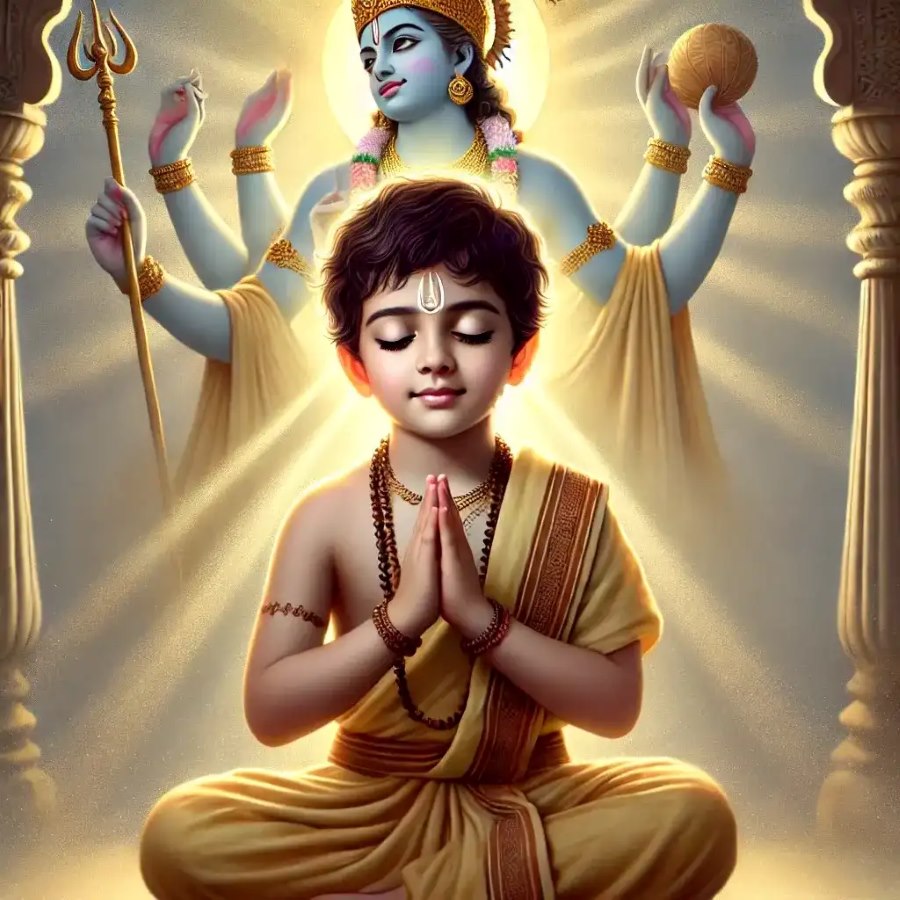
Prahlada, the son of Hiranyakashipu, was very different from his father. From a young age, he displayed kindness, humility, and deep devotion to Vishnu.
From the younger age, he was sent to a Gurukul to learn and gain knowledge. But, once Hiranyakashipu came to his gurukul and asked what he had learned in school, Prahlada replied that the highest knowledge was devotion to Vishnu, who resides in every heart.
This reply from his son, he get angered him, as Lord Vishnu was his greatest enemy for him.
Despite repeated warnings, Prahlada refused to abandon his faith. For him, devotion was not fear-driven or forced—it was natural and heartfelt.
He believed that the same divine power that gave strength to his father was the source of strength for everyone.
Hiranyakashipu’s Attempts to Kill Prahlada
Hiranyakashipu could not tolerate his son’s devotion. In a rage, he ordered his guards to kill Prahlada.
Prahlada faced numerous life-threatening situations, which were:
-
Attacked with weapons.
-
Also thrown from a high cliff.
-
He was trampled by elephants.
-
He was placed among venomous snakes.
-
He was poisoned, burned, and starved.
Yet, each time, he remained calm and unharmed. Prahlada continued praying with complete faith, believing that Vishnu would always protect him.
His survival was not shown as an act of defiance, but as a reflection of divine protection granted to sincere devotion.
The Incident of Holika and the Origin of Holi
Source: linkedin/pulse
When all other plans failed, Hiranyakashipu sought help from his sister Holika. She possessed a special boon that made her immune to fire—but only if she entered it alone.
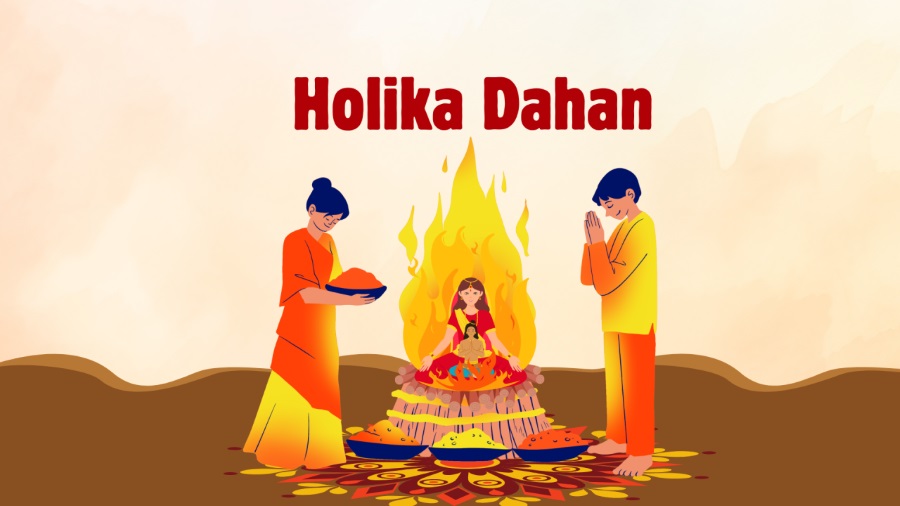
With a deceitful plan, Holika sat on a blazing pyre with young Prahlada in her lap, believing she would remain unharmed while the child would perish.
However, divine justice prevailed. Because she misused her blessing with evil intent, her protection failed.
Holika was burned to ashes, while Prahlada, chanting the Lord’s Vishnu name, emerged safely from the flames.
This event is remembered as Holika Dahan, symbolising the destruction of evil and the protection of true devotion. The festival of Holi derives its name from Holika and celebrates this triumph of righteousness.
Across India, especially in northern states, people light bonfires on the eve of Holi to reenact Holika’s burning. Offerings of grains and harvest stalks are made to the fire as a mark of gratitude and purification.
In some regions, families take a small portion of the sacred fire home, believing it brings purity and protection from disease. Homes are cleaned, and unwanted items are discarded, symbolising the removal of negativity.
Thus, Holi is not only a festival of colours but also a spiritual reminder that evil intentions ultimately destroy themselves.
The Appearance of Narasimha
Source: nanchi
Frustrated and furious, Hiranyakashipu once asked Prahlada, “If your God is everywhere, is He present in this pillar?”
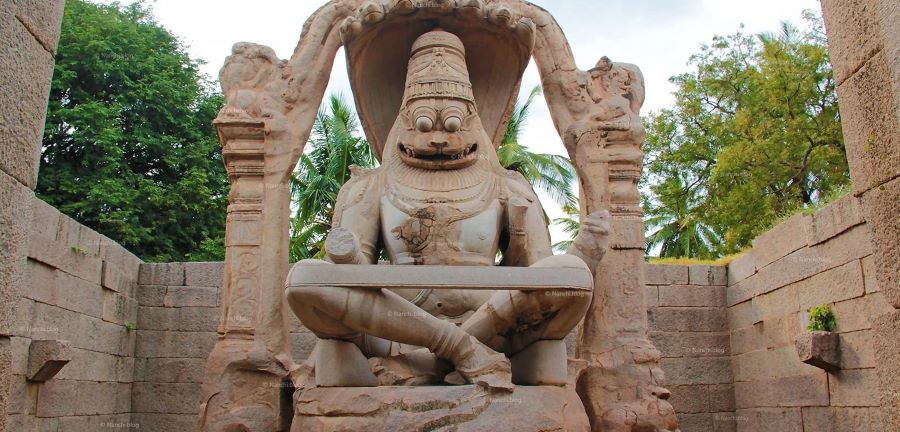
When Prahlada answered yes, the king struck the pillar with his weapon. From within it emerged Narasimha, the half-man, half-lion incarnation of Vishnu.
Narasimha appeared at twilight—neither day nor night. He dragged Hiranyakashipu to the threshold of the palace—neither inside nor outside. Placing him on His lap—neither land, sky, nor sea—He killed him with His claws, not with a weapon.
In this extraordinary way, every condition of Brahma’s boon remained intact, yet justice was delivered. The arrogance of Hiranyakashipu was destroyed, while Prahlada’s faith was protected.
Prahlada’s Compassion and Forgiveness
After the demon king’s death, Narasimha’s anger shook the universe. However, as Prahlada came forth with folded hands and heartfelt prayers the Lord was pacified.
Narasimha gave him an assurance of whatever he wished to be blessed. Everlastingly, Prahlada however did not seek the grant of wealth and power and even liberation. As an alternative, he asked his father to forgive his sins.
Practiced with such a self-less desire, the Lord gave freedom not only to Hiranyakashipu but to several generations of his race. The love and forgiveness, but not revenge, that was the real devotion that Prahlada displayed.
Conclusion
The story of Prahlada is an eternal warning of the fact that faith founded on truth cannot be affected by fear or by force. He was braver than any of the strongest warriors, even being a child himself. Life also teaches him that devotion does not involve finding any reward but rather giving up with honesty.
By the emergence of Narasimha, the supernatural created an illustration of the fact that righteousness prevails eventually over arrogance and cruelty. Prahlada will continue to be the classic image of unflinching trust and tenderness, and the protective power of Lord Vishnu.




Comments
All Comments (0)
Join the conversation