Show Key Points
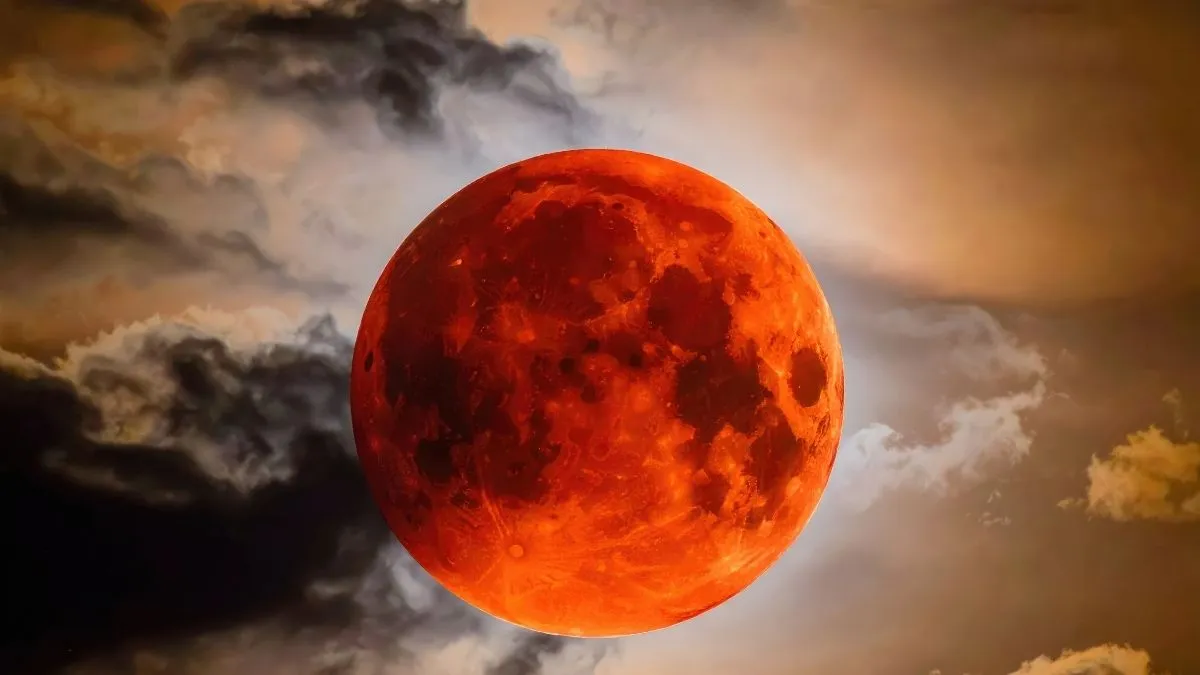
The cosmos is preparing for its most dramatic show of the year, as a total lunar eclipse blood moon, is slated to occur on the morning of March 3, 2026. NASA's Scientific Visualization Studio says that this will be the first total lunar eclipse visible in the Americas since March 2025.
This celestial event will be different from partial eclipses because the Moon will be completely in Earth's dark umbral shadow, giving it a hauntingly beautiful coppery-red color. Official records show that the totality phase will last about 58 minutes, giving photographers and observers plenty of time to take pictures and watch.
Whether you are on the West Coast or the Eastern seaboard, understanding the precise window for this Blood Moon is essential for catching the peak of the eclipse.
What Time is the Total Lunar Eclipse Blood Moon in the USA?
The timing of the eclipse depends heavily on your time zone. While the entire event lasts over five hours, including the subtle penumbral phases, the most sought-after Blood Moon stage occurs when the Moon is fully eclipsed.
| Phase | Eastern Time (EST) | Central Time (CST) | Mountain Time (MST) | Pacific Time (PST) |
| Partial Eclipse Begins | 4:50 AM | 3:50 AM | 2:50 AM | 1:50 AM |
| Totality Starts | 6:04 AM | 5:04 AM | 4:04 AM | 3:04 AM |
| Maximum Eclipse | 6:33 AM | 5:33 AM | 4:33 AM | 3:33 AM |
| Totality Ends | 7:02 AM | 6:02 AM | 5:02 AM | 4:02 AM |
Note: For observers in the Eastern U.S., the Moon will be setting during or shortly after totality, so a clear view of the western horizon is crucial.
Check Out - Total Lunar Eclipse vs Partial Lunar Eclipse: What's the Difference?
Why does the Moon turn Red during a Total Lunar Eclipse?
The phenomenon of the Blood Moon is a result of Rayleigh scattering, the same scientific process that makes sunsets appear orange and red. Even though Earth completely blocks direct sunlight from reaching the Moon, our atmosphere acts as a lens.
It lets shorter blue wavelengths through and bends longer red wavelengths toward the surface of the moon.
According to NASA scientists, when you look at a Blood Moon, you are seeing the light from every sunrise and sunset that is happening on Earth at that moment.
The amount of dust and clouds in the air on Earth can change the red color. When there is more ash or smoke from a volcano, the red color usually gets darker and richer.
A total lunar eclipse is coming 🌕 🌏 ☀️
— NASA Solar System (@NASASolarSystem) February 24, 2026
In the early morning hours of March 3, 2026 (UTC), the full Moon will pass through Earth’s shadow, reddening the lunar surface. Here’s what you need to know: https://t.co/3yyVsE22An
Credit: NASA’s Scientific Visualization Studio pic.twitter.com/D091JHDdqd
Where are the Best Places to Watch the 2026 Blood Moon?
While the eclipse is visible to the naked eye from almost any location with clear skies, certain regions in the U.S. will have a front-row seat to the entire transition.
-
The West Coast: Cities like Los Angeles, Seattle, and San Francisco will see the entire duration of totality high in the sky.
-
National Parks: Locations such as the Grand Canyon and Joshua Tree are top picks due to their International Dark Sky Park status, which minimizes light pollution and enhances the moon's red glow.
-
The East Coast: Viewers in New York and Florida will see a dramatic Red Moonset on the western horizon just before sunrise.
Check Out - List of Solar and Lunar Eclipses in 2026, Check Dates and Times!
You have to see this total lunar eclipse, blood moon, because the next one won't happen until late 2028. To get ready, make sure you can see the west-southwest sky clearly. You might want to use binoculars to see the lunar craters through the red veil. Keep an eye on the weather in your area to make sure you can see this cosmic masterpiece clearly in 2026.



-1772091930975_t.webp)

Comments
All Comments (0)
Join the conversation