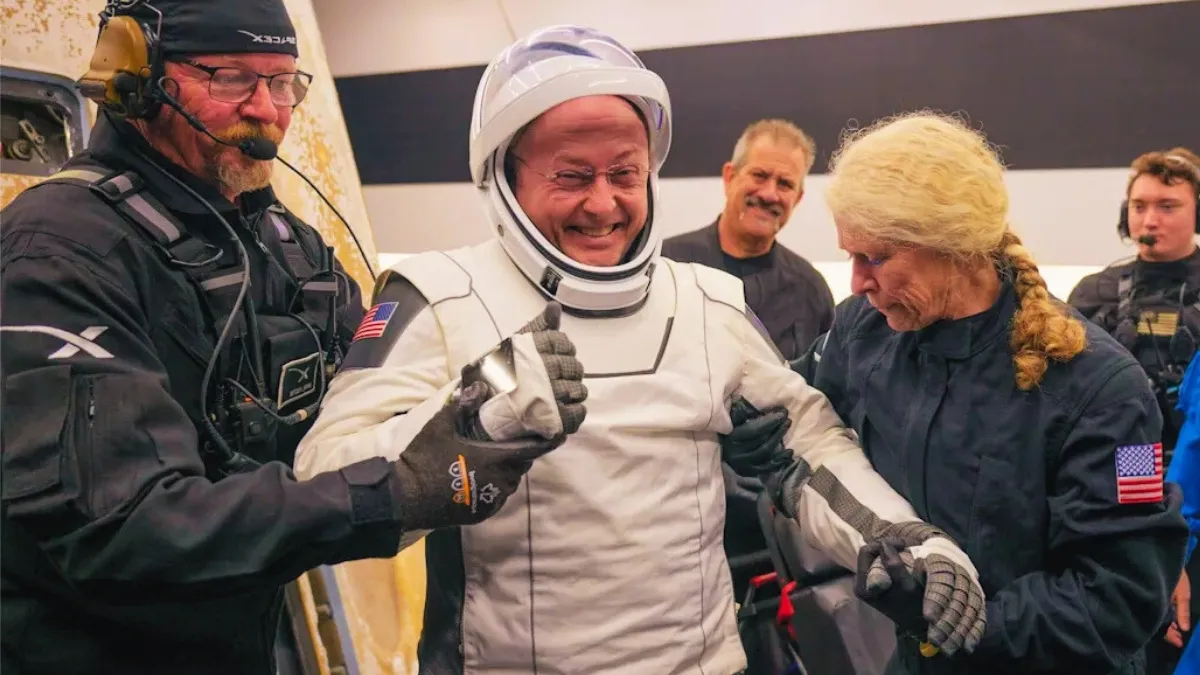
NASA confirmed on February 25, 2026, in Houston, that veteran astronaut Mike Fincke suffered a medical event on January 7 aboard the International Space Station, prompting the first dedicated medical evacuation in ISS history.
Fincke, pilot of SpaceX's Crew-11 and Expedition 74 commander, needed advanced Earth imaging unavailable in orbit, leading to the crew's early splashdown off San Diego on January 15.
Crewmates Zena Cardman, Kimiya Yui, and Oleg Platonov provided aid; NASA canceled a spacewalk and rushed their Dragon return for safety.
Fincke, stable post-flight at Johnson Space Center, praised team response amid space risks like fluid shifts and bone loss.
NASA Astronaut Mike Fincke behind the Early ISS Evacuation
Fincke's issue hit during spacewalk prep; crew stabilized him with onboard kits and flight surgeon guidance. NASA prioritized full diagnostics over orbit limits, marking historic pullout after 5.5 months.
The station ran with three crew till replacements arrived. Fincke's symptoms involved vision changes from fluid shifts, common in microgravity. Ground teams monitored vitals remotely via high-def links. This rare event cut short vital microgravity experiments.
Who is Mike Fincke?
Mike Fincke, with 549 days in space, flew prior ISS expeditions and commanded Crew-11 under NASA-SpaceX. A pilot and Expedition 74 leader, he's among top-veterans, now rehabbing post-evac.
His case spotlights long-mission health monitoring. The Air Force test pilot from California earned a Silver Star in Afghanistan before joining NASA in 1996.
Fincke logged four spaceflights, including Soyuz missions. His expertise in human physiology aids ongoing studies.
SpaceX Crew-11 Early Return Details
The crew splashed down safely off San Diego; all got hospital checks in La Jolla. Fincke thanked SpaceX, NASA, and medics for seamless handling.
Event tests protocols for Artemis lunar and Mars goals. Dragon capsule adjustments ensured smooth reentry despite haste.
Post-flight, Fincke walked aided after weeks of muscle atrophy rehab. Data from this informs risk models for year-long trips.
Check the current U.S. News here:
NASA’s Artemis 2 Delayed Again, SLS Rocket to Rollback Today!
Trump Calls NYC Mayor Mamdani 'Nice Guy' but Slams His Policies
Fincke's safe return boosts ISS resilience for future deep-space trips. NASA eyes better orbit diagnostics amid rising mission lengths. Space health advances pave safer paths ahead.



-1772091930975_t.webp)
Comments
All Comments (0)
Join the conversation