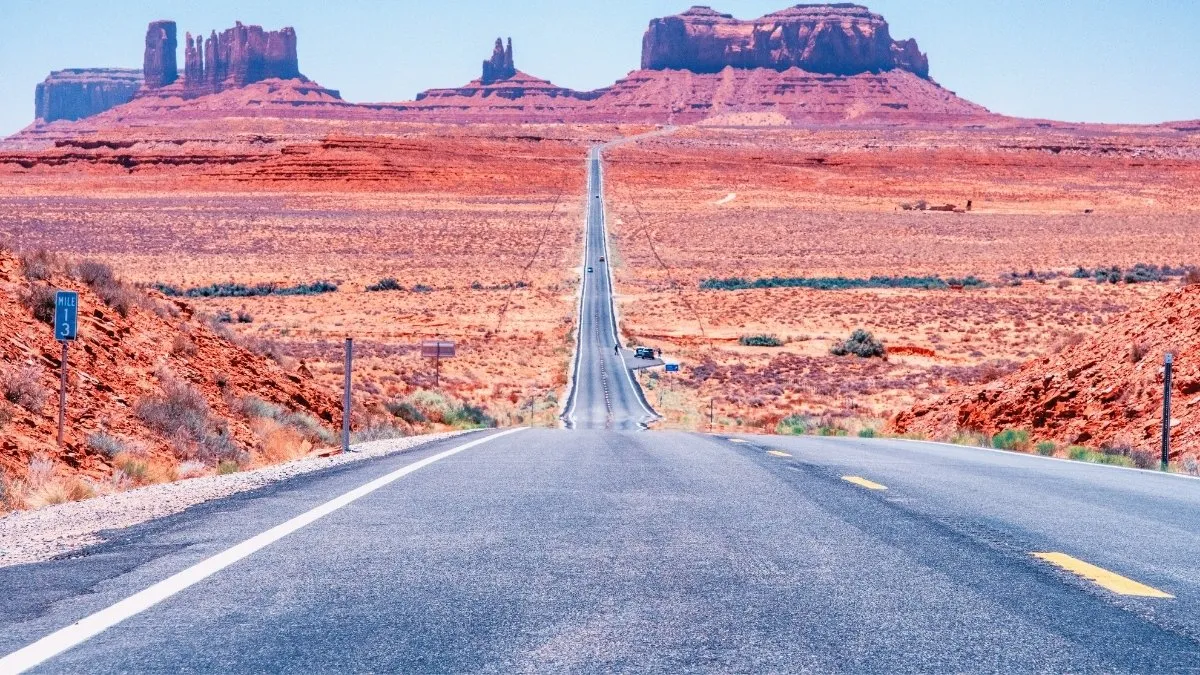
U.S. Route 66, famously called the “Mother Road,” is the iconic highway that stretches 2,448 miles from Chicago, Illinois, to Santa Monica, California.
Established in 1926, Route 66 symbolized America’s push westward, fueling migration, commerce, and dreams during the auto age.
The Federal Highway Administration notes that Route 66 supported over 200,000 Dust Bowl migrants fleeing to California in the 1930s, transforming rural economies along its path.
Dive into Route 66’s legendary 2,448-mile journey, its role in Dust Bowl migration, WWII logistics, origins, route, and enduring legacy.
Which U.S. Route is Known as the “Mother Road”?
U.S. Route 66 is known as the “Mother Road,” a nickname popularized by John Steinbeck in his 1939 novel The Grapes of Wrath.
Commissioned November 11, 1926, it connected rural heartland to Pacific dreams, bypassing mountains for easier trucking.
Cyrus Avery, “Father of Route 66,” championed its diagonal path through eight states, linking farms to cities.
By 1938, fully paved, it boomed with diners, motels, and neon signs, earning “Main Street of America” too. This lifeline carried America’s spirit through Depression and war.
Know about What is the Oldest National Monument in the United States?
Why is Route 66 Known as the Mother Road?
Route 66 earned “Mother Road” for nurturing America’s growth, from Dust Bowl escapes to postwar road trips that built a tourist culture.
Steinbeck’s Joad family fled Oklahoma droughts via “the road of flight,” immortalizing it. Truckers loved its flat prairies over northern snow; farmers shipped grain to Chicago markets.
WWII saw troops train along it, with $70 billion in California investments spurred by its access.
-
Paved 1938 after Depression-era jobs programs.
-
Fueled trucking boom rivaling railroads by 1930s.
-
Inspired songs, TV shows, and endless souvenirs.
Where does Highway 66 Start and End?
Highway 66 starts at Adams Street and Michigan Avenue in downtown Chicago, Illinois, and ends at 7th Street and Ocean Avenue in Santa Monica, California.
The 2,448-mile path wends diagonally through eight states, skirting Rockies for milder weather. It crosses 25 counties, passing sod houses, painted deserts, and Pacific piers.
Decommissioned 1985 by interstates, historic segments preserve its charm. Today, drivers chase original alignments for authentic vibes.
Map of Route 66 Highway
Mother Road of America or Route 66’s map traces a jagged line from Chicago’s Loop, hugging Illinois farmlands, dipping through Missouri’s Ozarks, grazing Kansas’ panhandle, slashing Oklahoma and Texas plains, climbing New Mexico mesas, and coasting Arizona canyons to Santa Monica Pier.
Key stops include St. Louis’ Gateway Arch, Amarillo’s Cadillac Ranch, and Flagstaff’s lumber legacy.
Modern GPS apps overlay alignments; National Park Service maps highlight drivable sections.
| State | Distance (miles) | Iconic Stops |
| Illinois | 289 | Gemini Giant, Pontiac murals |
| Missouri | 317 | Chain of Rocks Bridge |
| Kansas | 13 | Galena’s Cars on the Route |
| Oklahoma | 432 | Pops Soda Ranch, Blue Whale |
| Texas | 193 | Midpoint sign, Big Texan |
| New Mexico | 399 | Tucumcari, Continental Divide |
| Arizona | 401 | Painted Desert, Oatman |
| California | 315 | Amboy School, Santa Monica |
Spans eight states, fully mapped by NPS.
Conclusion
U.S. Route 66, the “Mother Road,” linked Chicago to California, carrying migrants, truckers, and dreamers across 2,448 miles of American heartland. From 1926 paving to 1985 decommissioning, it shaped commerce, culture, and cross-country quests. Today, its neon relics and open road call adventurers to trace history’s tire tracks.



Comments
All Comments (0)
Join the conversation