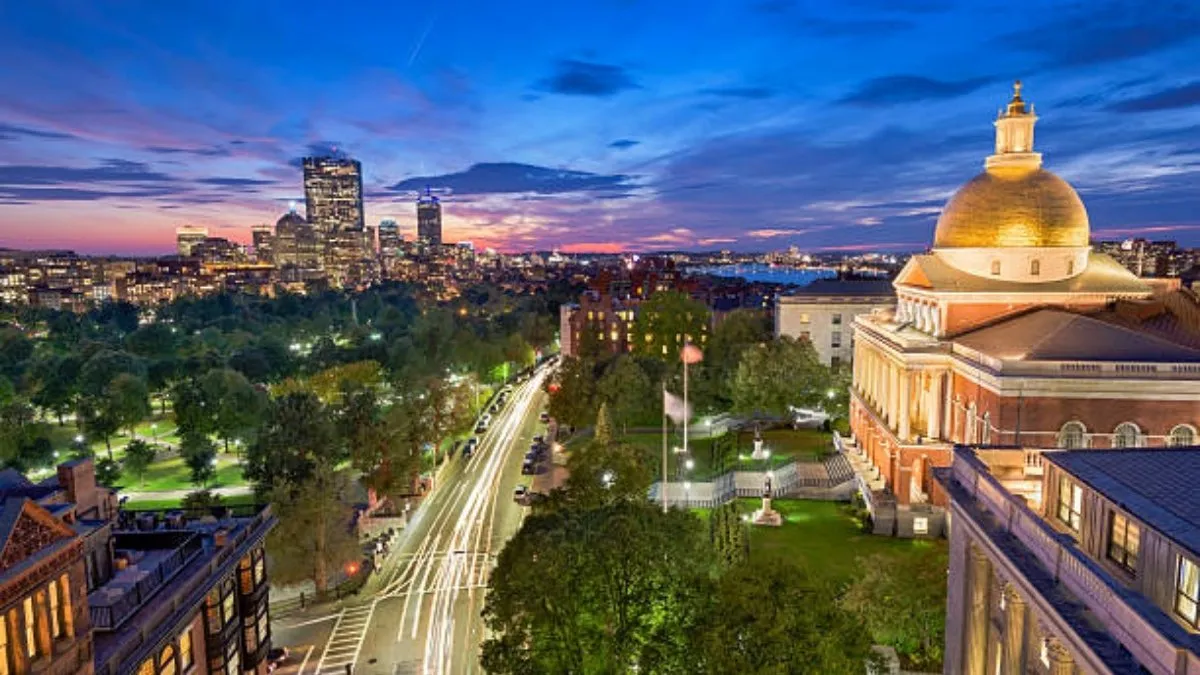
Massachusetts is one of the historic states in the United States of America. It has a very long history that can be traced back to the early ages of settlement for the Europeans in North America at that time. However, in the context of the capital of Massachusetts, there is more to Massachusetts than its political importance as the capital state in the country. Its capital is a very historic, cultural, academic, and economic hub that in itself makes it a very interesting place to visit.
Through this article, we shall explore one of the most crucial elements of Massachusetts, that being how it is governed and organized. Let us take a brief journey and understand the significance of Massachusetts’s capital city.
What is the Capital City of Massachusetts?
The Capital of Massachusetts is Boston since 1630. This makes it one of the oldest capital cities in the country.
It was founded by Puritan settlers, and it quickly became the political, cultural, and economic heart of the Massachusetts Bay Colony. Today, it serves as the seat of the state government, and houses the Massachusetts State House, the Governor’s office, and many other key administrative buildings.
The city is strategically located on the eastern coast of Massachusetts, along the Atlantic Ocean. Moreover, its natural harbour made it an important centre for trade and shipping during colonial times, which contributed to its growth and prominence.
CCheck Out: List of 5 Most Watched Streamers in the U.S., Check Their Channels Here!
What is the History of the Capital of Massachusetts?
Do you know that Boston is also known as the “Cradle of Liberty”? There are primarily three reasons related to the American Revolution.
It has major events that have contributed to the history of the United States, and one among them was the Boston Massacre that occurred in 1770. Next was the Boston Tea Party in 1773, followed by the Battle of Bunker Hill in 1775.
Taking a walk through Boston today, one can catch glimpses of such locations as the Faneuil Hall, Paul Revere’s House, and the Old North Church. They all serve as reminders of its revolutionary past.
As the capital, Boston was also the centre of early education in the United States. There are great educational institutions like Harvard University in nearby Cambridge and Boston University that highlights the city’s long-standing tradition of learning and innovation.
What are the Interesting Facts About Boston?
Today, Boston continues to be a centre for government, commerce, and culture in Massachusetts. It has its iconic golden dome, which sits atop Beacon Hill. Moreover, it stands as a symbol of governance and history. Let us know about its historic charm and modern development more through some interesting facts:
-
Population: Boston has a population of approximately 700,000, but the Greater Boston metropolitan area houses over 4.8 million people.
-
Economy: Boston is a major economic hub, especially in finance, healthcare, technology, and education.
-
Culture: The city is famous for its museums, historic sites, sports teams like the Red Sox, and a vibrant arts scene.
-
Nickname: Boston is often called “Beantown”, a reference to a popular colonial dish, baked beans.
Whether you are a visitor in Boston for historical, educational, or business reasons, Boston provides a unique perspective on the historical significance of Massachusetts. Indeed, being the capital of the State of Massachusetts, Boston is bound to be right at the cutting edge of all that is happening in this State.
You may also like to read: Which is the Largest City in California? (By Population)
In conclusion, the capital of Massachusetts is Boston. It is a city steeped in history with its revolutionary roots and its current role as a centre for education, business, and culture. Therefore, it remains a city of national importance and a true symbol of the Bay State.

-1767703998208.jpg "Which is the Largest City in California? (By Population)")



-1767783778649.jpg)
Comments
All Comments (0)
Join the conversation