Did you know that everything you touch, smell, or taste is actually a complex dance of tiny particles? This is the world of chemistry. It is the scientific study of matter, the "stuff" that makes up everything in our universe. From the air you breathe to the screen you are reading right now, chemistry explains how substances change and react with one another. It is often called the "central science" because it connects biology, physics, and geology. But how did we move from ancient magic and alchemy to the organised science we have today? Behind this shift stands one brilliant mind who changed everything. This individual revolutionised the way we measure experiments and named the very elements we study today. He lived during a time of great revolution and met a tragic end, yet his legacy lives on in every laboratory worldwide. Do you know who is known as the Father of Chemistry? In this article, we'll take a look at the life, the discoveries, and the incredible impact of this mystery scientist.
Who is the Father of Chemistry?
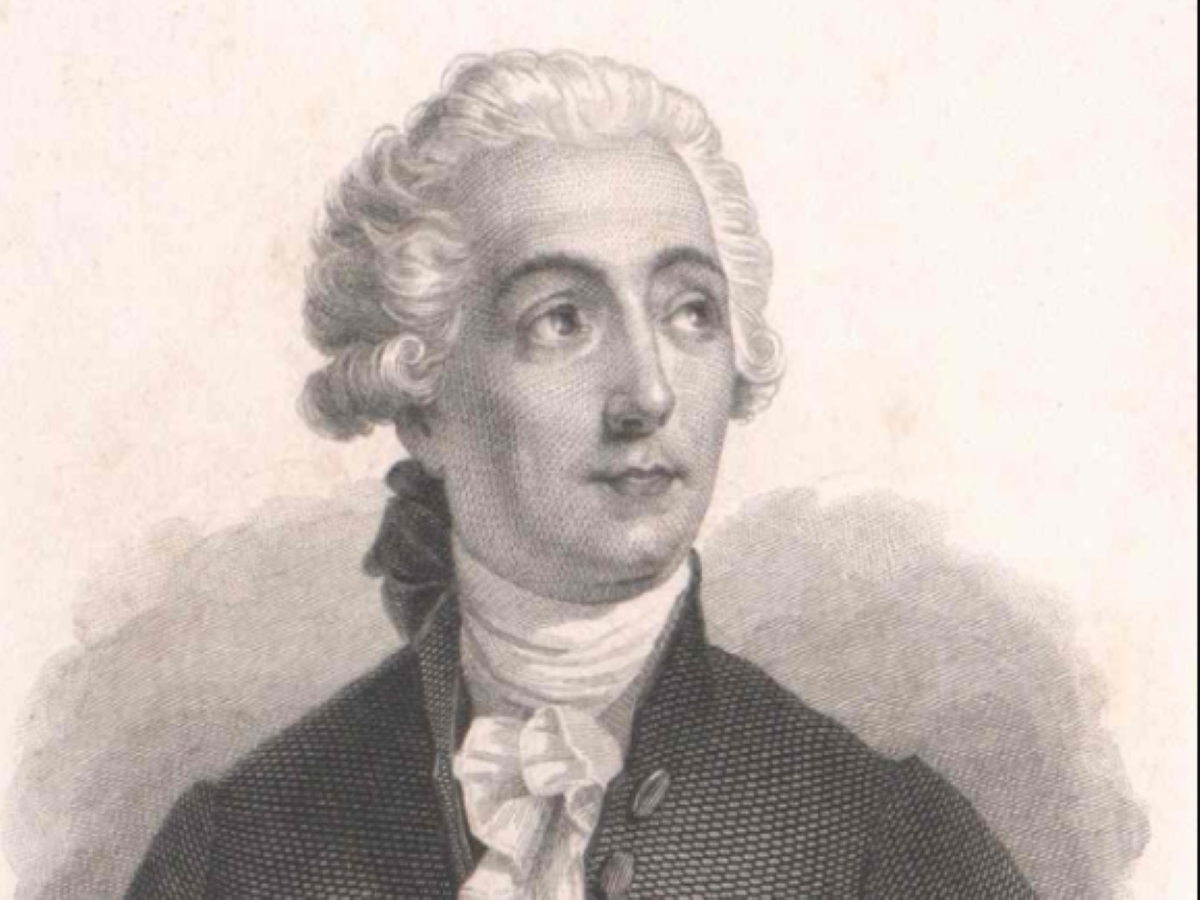
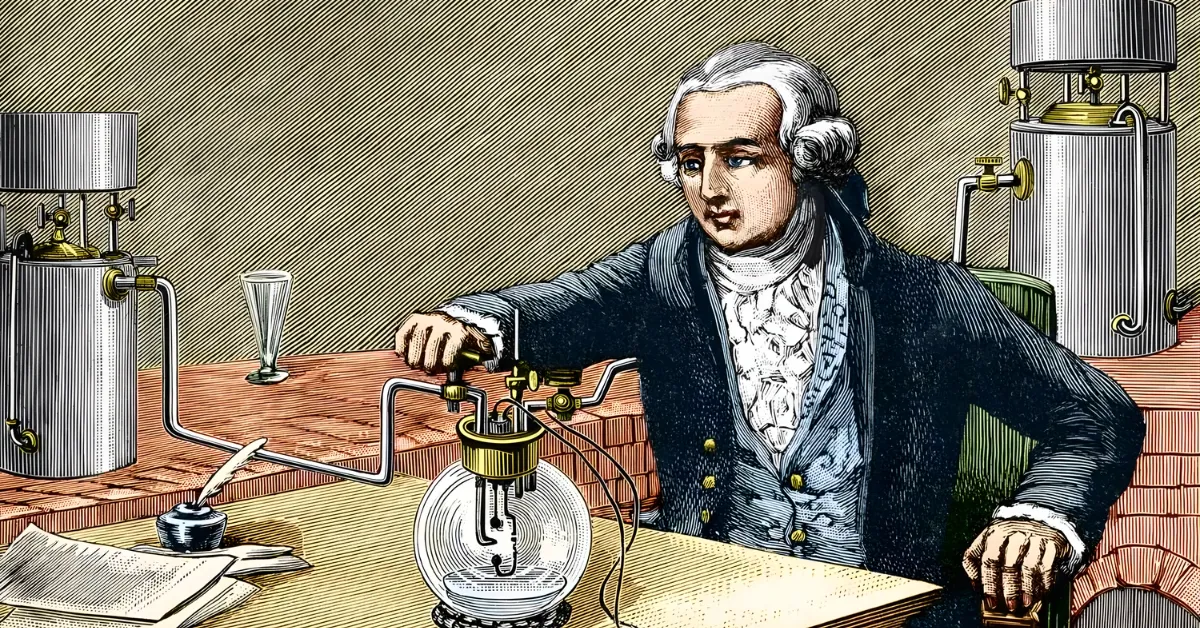
The man widely recognised as the Father of Chemistry is Antoine Lavoisier. He was a French nobleman and scientist born in Paris in 1743.
| Feature | Details |
| Full Name | Antoine-Laurent de Lavoisier |
| Known As | Father of Modern Chemistry |
| Date of Birth (DOB) | 26 August 1743 |
| Place of Birth | Paris, Kingdom of France |
| Nationality | French |
| Date of Death | 8 May 1794 |
| Place of Death | Paris, France |
| Age at Death | 50 years |
| Cause of Death | Execution by guillotine during the French Revolution |
| Wife | Marie-Anne Pierrette Paulze (chemist, illustrator, and scientific collaborator) |
| Education | Studied law; trained in chemistry, biology, astronomy, and geology |
| Profession | Chemist, Biologist, Economist, Tax Reformer |
| Field of Work | Chemistry, Biology, Physics |
| Famous Quote | "Nothing is lost, nothing is created, everything is transformed." |
| Major Discovery | Proved oxygen is essential for combustion (fire) and respiration |
| Other Key Discoveries | Identified and named oxygen and hydrogen; disproved the phlogiston theory |
| Key Invention | Gasometer (used to measure gas volume accurately) |
| Scientific Contributions | Established the law of conservation of mass |
| Scientific Method | Introduced precise measurement and quantitative experiments in chemistry |
| Major Book | Traité Élémentaire de Chimie (1789) — first modern chemistry textbook |
| Chemical Nomenclature | Helped create the modern chemical naming system |
| Role in Modern Chemistry | Defined elements, compounds, and chemical reactions clearly |
| Social Work | Used science to improve public street lighting and drinking water quality |
| Public Service | Worked on gunpowder production and tax reforms for France |
| Academy Membership | Member of the French Academy of Sciences |
| Historical Significance | Marked the transition from alchemy to modern chemistry |
| Legacy | Considered the founder of modern chemical science worldwide |
Before his work, people believed in "alchemy" and strange theories about fire. Lavoisier changed all that by bringing strict measurement and logic to science.
How Did He Lay The Foundations Of Modern Chemistry?
Lavoisier didn't just "find" chemistry; he built the framework for how we study it today. He insisted on weighing and measuring everything in his experiments.
- Law of Conservation of Mass: He proved that matter is never lost or gained in a reaction. It only changes form.
- The End of Phlogiston: He proved that "phlogiston" (a mythical fire element) didn't exist. Instead, he showed that fire needs a specific gas to burn.
- The First Textbook: He wrote the first modern chemistry textbook, which organised elements into a list.
10+ Lesser-Known Facts About Antoine Lavoisier
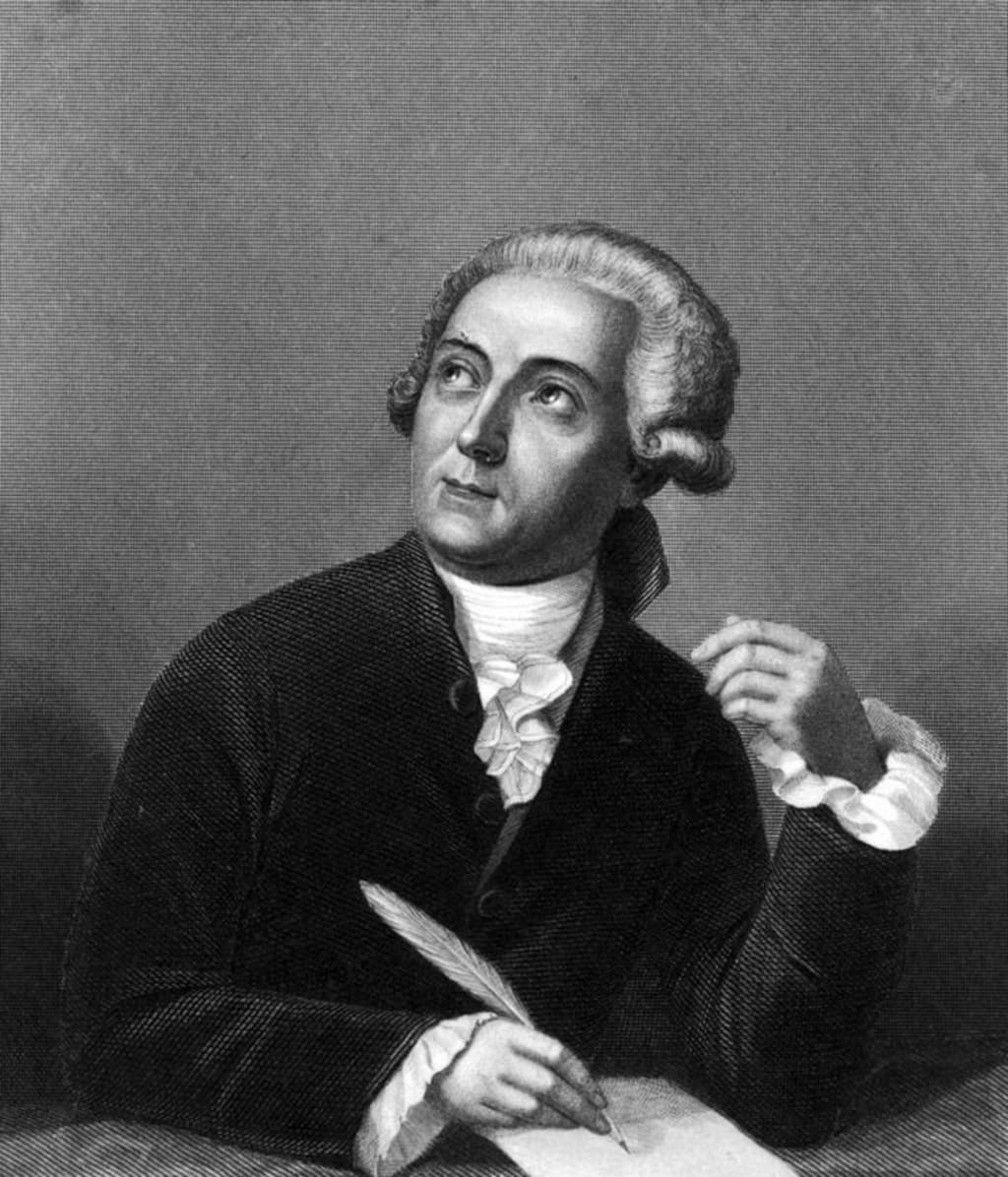
- Despite being the "Father of Chemistry", he originally earned a Law degree because his father wanted him to follow the family profession.
- As head of France's Gunpowder Administration, he improved the quality of gunpowder so much that it became a critical supply for American colonial troops fighting the British.
- He served on the committee that created the Metric System, establishing standard units such as the metre and the kilogram.
- In 1789, he published a list of 33 "simple substances", which is considered the first modern attempt at a periodic table.
- He shattered the ancient belief that water was a single element by proving it is actually a compound of Hydrogen and Oxygen.
- He was the first to show that breathing is like a slow fire (combustion), in which our bodies burn food with oxygen to produce energy and heat.
- He conducted a famous experiment using a giant magnifying glass to burn a diamond, proving it was a crystalline form of Carbon.
- His name is one of the 72 eminent French scientists engraved on the Eiffel Tower in Paris.
- He used his wealth and scientific expertise to improve public health, designing better street lighting and methods to provide clean drinking water for Paris.
- He worked as a tax collector (Ferme Générale) primarily to earn the money needed to build one of the world's most advanced private laboratories.
- Before his significant work in chemistry, he won a gold medal from the King of France for a paper on improving urban street lighting.
- He initially named nitrogen "Azote" (from the Greek for "no life") because he noticed that animals could not survive on it alone.
- Nearly 40 years before it was isolated, Lavoisier correctly predicted the existence of silicon, suggesting it was hidden inside silica.
- He used science to design cleaner prison ventilation and studied how to purify the water of the Seine River to give Parisians safe drinking water.
- Before revolutionising chemistry, he was a famous geologist who helped create the first geological map of France.
Key Discoveries and Inventions
Lavoisier was a busy inventor and thinker. Here are some of his biggest hits:
- Law of Conservation of Mass: Lavoisier established that matter is neither created nor destroyed during a chemical reaction, only transformed.
- Oxygen Theory of Combustion: He disproved the "phlogiston theory" and demonstrated that oxygen is essential for combustion and respiration.
- Chemical Nomenclature: He co-authored the first modern system for naming chemical substances, many of which are still used today.
- Naming Elements: He identified and named oxygen (1778) and hydrogen (1783).
- First Modern Textbook: In 1789, he published Traité Élémentaire de Chimie (Elementary Treatise on Chemistry), which contained the first extensive list of known elements.
Other Historical "Fathers" of Chemistry

While Lavoisier is the primary figure, other scientists are often credited for specific contributions to the field:
- Robert Boyle: Frequently cited as the "Father of Chemistry" for his 1661 work The Sceptical Chymist, which helped separate chemistry from alchemy.
- Jābir ibn Hayyān (Geber): Often referred to as the father of early chemistry/alchemy for introducing systematic experimental methods in the 8th century.
- John Dalton: Known as the father of modern chemistry for proposing the first modern atomic theory.
- Jöns Jacob Berzelius: Credited for developing modern chemical symbols (e.g., H for hydrogen, O for oxygen).

- Prafulla Chandra Ray: Recognised as the Father of Indian Chemistry for his foundational role in chemical research and the pharmaceutical industry in India.
What Does "Chemistry" Mean?
The word "chemistry" comes from the word alchemy. Alchemy was an ancient practice of trying to turn lead into gold. By removing the "al-" (which means "the" in Arabic), Lavoisier and his peers helped turn a mystical art into a rigorous "chemistry" based on facts.
Why is Antoine Lavoisier known as the "Father of Modern Chemistry"?
Antoine‑Laurent de Lavoisier (1743–1794) is celebrated as the Father of Modern Chemistry because he led a "Chemical Revolution" that transitioned the field from a qualitative, philosophical discipline into a rigorous, quantitative science. The most critical contributions that earned him this title include:
1. Establishing Precise Quantitative Methods
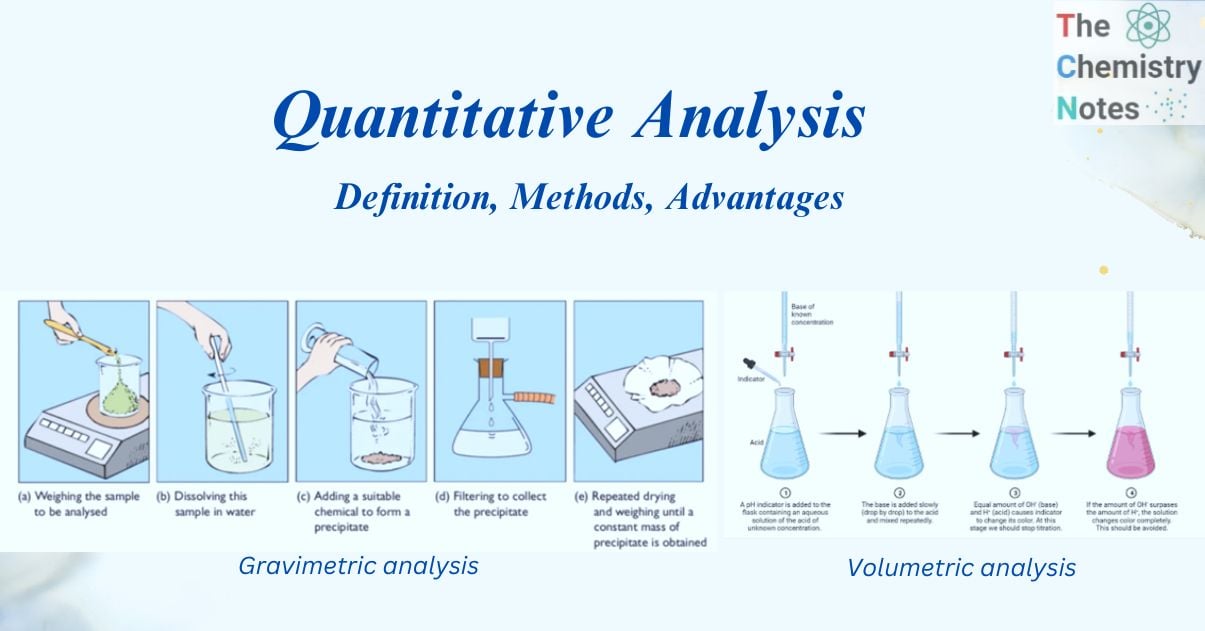
- Scientific Rigour: Unlike his predecessors, who often relied on observation alone, Lavoisier insisted on precise weighing and measurement for all chemical experiments.
- The Balance: He utilised high-precision balances to measure reactants and products, effectively separating chemistry from the speculative practices of alchemy.
2. Law of Conservation of Mass

- Fundamental Principle: Lavoisier formulated the Law of Conservation of Mass, proving that matter is neither created nor destroyed in a chemical reaction—it only changes form.
- Experimental Proof: He demonstrated this by carefully weighing substances in a closed system, showing that the total mass before and after a reaction remained constant.
3. Overturning the Phlogiston Theory
- Oxygen Theory of Combustion: He disproved the long-held "phlogiston theory", which wrongly suggested that a substance called phlogiston was released during burning.
- Role of Oxygen: Through his experiments, he proved that combustion is actually a chemical reaction between a substance and oxygen, a gas he identified and named in 1778.
4. Modern Chemical Nomenclature
- Standardised Naming: Lavoisier co-authored the first systematic method for naming chemical substances (Méthode de nomenclature chimique, 1787), creating a logical system based on an element's composition rather than arbitrary names.
- Modern Elements: He defined an element as a substance that could not be further broken down by any known chemical analysis and published the first comprehensive list of elements, many of which remain in use today.
5. First Modern Chemistry Textbook

- Traité Élémentaire de Chimie (1789): This work is regarded as the first modern chemistry textbook. It synthesised his new theories, detailed his experimental methods, and provided the foundational framework for future generations of chemists.

-1766744887032.jpg "Word of the Day: Sobriety")


-1766740338339.jpg)

Comments
All Comments (0)
Join the conversation