Show Key Points
The Kurds are one of the most prominent ethnic groups in the Middle East, yet they do not have an independent nation-state of their own. It is often described as the "world’s largest stateless nation," spread across several countries including Turkey, Iraq, Iran, and Syria, the Kurdish people have maintained a strong cultural identity and political presence for centuries.
Their Origin traces back to ancient Mesopotamian tribes, and today, they continue to be a decisive force in regional stability, notably in the ongoing 2026 political shifts in Iran and the transitioning landscape of Syria.
Who Are the Kurds?
The Kurds are an ethnic group native to the mountainous region known as Kurdistan, which stretches across parts of modern-day Turkey, Iraq, Iran, and Syria. The Kurds do not have a unified independent state. However, they share a strong collective identity based on language, traditions, and historical heritage.
Most Kurds are Sunni Muslims, although there are also Kurdish communities that follow other religious traditions such as Yazidism, Christianity, and Shiite Islam.
The Kurdish language belongs to the Indo-European language family, closely related to Persian. Several dialects are spoken, including Kurmanji and Sorani, the two most widely used forms.
Origin and History:
Historians believe the Kurdish people are descendants of ancient Indo-Iranian tribes that settled in the mountainous regions of the Middle East thousands of years ago.
Most historians and linguists classify them as an Iranian (Indo-European) people.
-
Ancient Roots: Many scholars link them to the Kardouchoi mentioned by Greek historian Xenophon in 401 BCE. Another popular historical narrative identifies them as descendants of the Medes, who established a powerful empire in the 7th century BCE.
-
The Islamic Era and Saladin: After the Arab conquests, the Kurds became predominantly Sunni Muslim. The most famous figure in Kurdish history is Saladin (Salah ad-Din), the founder of the Ayyubid Dynasty, who led the Muslim opposition to the Crusaders in the 12th century.
-
The Modern "Stateless" Struggle: Following World War I, the 1920 Treaty of Sèvres initially promised a Kurdish state. However, this was superseded by the 1923 Treaty of Lausanne, which partitioned Kurdish lands among the modern borders of Turkey, Iraq, Iran, and Syria, sparking a century of struggle for self-determination.
History of the Kurdish People:
The history of the Kurds is shaped by shifting empires and political borders. Throughout history, Kurdish regions were ruled by several powerful empires, including The Persian Empire, The Ottoman Empire and The Arab Caliphates.
Despite living under different rulers, Kurdish communities often maintained a degree of autonomy through local tribal leadership after the First World War, the collapse of the Ottoman Empire briefly raised hopes for an independent Kurdish state.
However, the 1923 Treaty of Lausanne divided Kurdish territories among modern states such as Turkey, Iraq, Syria, and Iran; since then, Kurdish groups have pursued varying degrees of political autonomy, recognition, and independence.
Geography and Population:
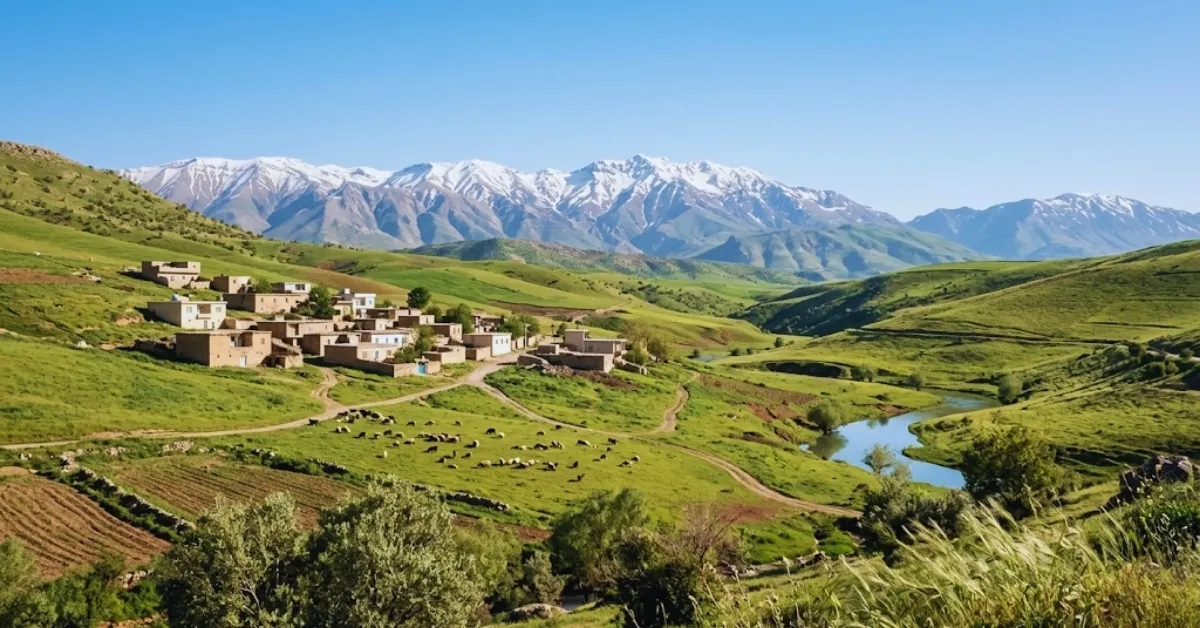
The Kurdish homeland, referred to as Kurdistan, is a non-sovereign geographical region characterized by rugged mountains such as Zagros and Taurus regions and fertile plateaus.
Geography of Kurdistan: Kurdistan is not an officially recognized country but rather a historical and cultural region inhabited by Kurdish people. This region stretches across mountainous areas of:
-
Southeastern Turkey
-
Northern Iraq
-
Northwestern Iran
-
Northern Syria
Kurdish Population:
The Kurdish population is estimated to be between 30 and 40 million people worldwide, making them one of the largest ethnic groups without a sovereign state.
| Country | Estimated Population (2026) | Status |
| Turkey | 14.5 – 15.5 Million | Significant minority; ongoing push for cultural rights. |
| Iran | 8 – 9 Million | Facing a 2026 rebellion; concentrated in the west. |
| Iraq | 5.5 – 6.5 Million | Governed by the autonomous Kurdistan Regional Government (KRG). |
| Syria | 2.5 – 3 Million | Transitioning from de-facto autonomy to integration. |
| Diaspora | 2 Million | Primarily in Germany, France, and Sweden. |
Culture and Language
Kurdish culture is rich and diverse, shaped by centuries of tradition and regional influences. Kurdish Culture is renowned for its vibrant folklore:
-
Traditional dance (Govend)
-
The celebration of Newroz (Kurdish New Year) on March 21st. It symbolizes renewal, freedom, and cultural pride.
-
Language: Kurdish belongs to the Indo-European family which use different scripts (Latin and Arabic-based, respectively). Languages are primarily divided into Kurmanji, Sorani, and Pehlewani dialect groups
-
Traditional Music Music and dance are central to Kurdish culture, traditional dances, often performed in groups, symbolize unity and community.
-
Societal Structure: While modern Kurds are highly urbanized, tribal and family loyalties remain culturally significant. They are also known for the prominent role of women in both social and military spheres, notably the YPJ in Syria.
Latest Update:
The Role of the Kurds in the Middle East has entered a critical new phase in early 2026:
-
Iran Rebellion: Since January 2026, a major Kurdish rebellion has intensified in western Iran. A newly formed Coalition of Political Forces of Iranian Kurdistan (CPFIK) has united various factions to seek self-determination amidst broader national unrest.
-
Syria Transition: In Syria, the Kurdish-led Syrian Democratic Forces (SDF) recently signed a landmark (though controversial) agreement with the Damascus government. This deal aims to integrate Kurdish military and administrative units into the state while theoretically protecting Kurdish linguistic and cultural rights under a new transitional framework.
-
Iraq’s Stability: The Kurdistan Region of Iraq (KRI) remains the most stable Kurdish entity, though it faces increasing pressure to prevent its territory from being used as a launchpad for Iranian Kurdish insurgent
The Kurds remain a resilient and influential force whose pursuit of cultural and political recognition continues to shape the geopolitical landscape of the Middle East in 2026, while they face diverse challenges across Turkey, Iran, Iraq, and Syria, their unified sense of identity and history as a stateless nation ensures their central role in regional stability.
Moving forward, the balance between Kurdish aspirations for autonomy and the sovereign interests of neighboring states will likely remain a defining factor in the pursuit of long-term peace.



-1772866790571_t.webp)
Comments
All Comments (0)
Join the conversation