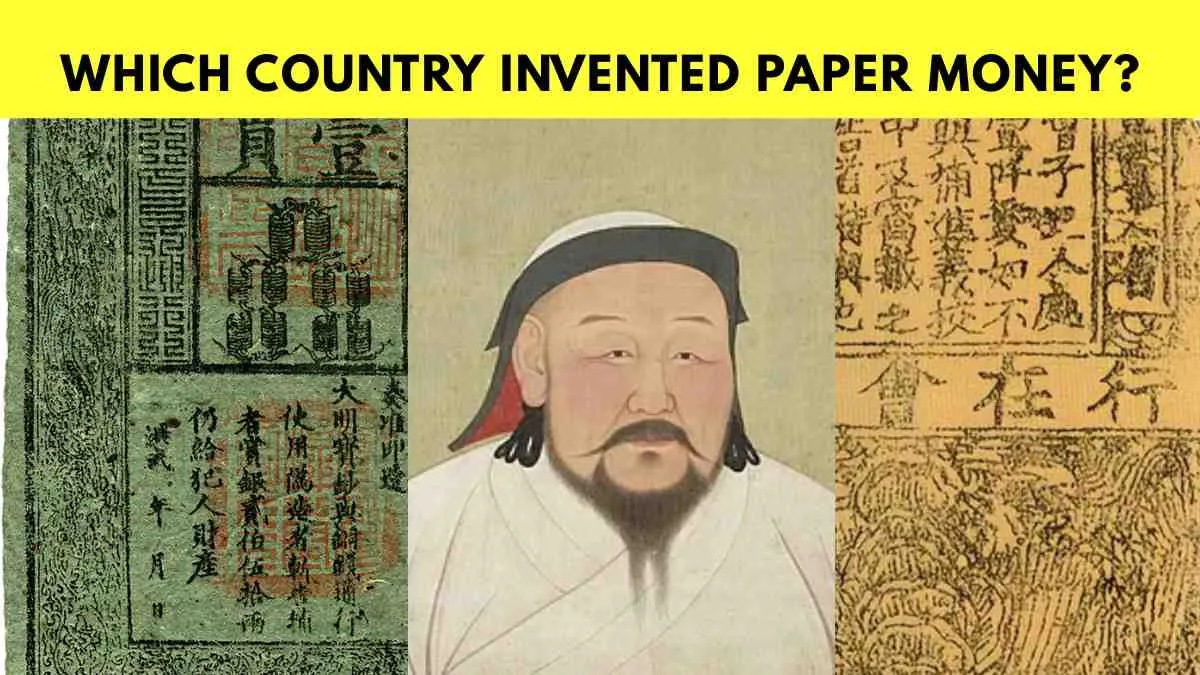
In the modern world, it would be almost impossible to function without having some sort of paper currency. Paper money originated as a new form of economy and was first developed by a Chinese emperor during the Medieval Period, a time when various civilizations traded goods amongst each other through the use of silver, gold or other metals, which often had high weight.
The development of paper currency marks a significant milestone for mankind as paper currency has provides for an easier way to trade goods than using methods that required large amounts of physical weight.
By understanding the first monarch who introduced this new monetary system to the world, we may have insight into how the present-day fiat currency systems around the world continue to operate.
Check Out: Who Was the First King to Unite North and South India?
Which Country Introduced Paper Money to the World?

Initially introduced by China in the early 11th century CE, the first paper currency in the world was created during the Song Dynasty.
Due to shortages of metallic coins and the inconvenience of carrying heavy coins over long distances, the government began creating government backed paper notes known as jiaozi.
Thus began the documented use of paper currency as an official method of exchange. Eventually, Kublai Khan of the Yuan Dynasty expanded and standardized the use of paper currency, making it mandatory for all citizens to use across their empire.
China's innovation in paper currency would eventually provide the model for the modern use of paper currency worldwide.
What was the first paper money called?
The earliest form of paper currency is the Jiaozi, first developed in China in the early 11th century by merchants in Szechwan as a substitute for heavy metal coins.
Around 1023, the Chinese government began producing its own version of paper money which was the world's first national banknotes.
Jiaozi notes were issued directly by the Chinese government and were regulated through deposits and a specific date for use.
This represents an extremely important moment in the development of economic history and the eventual establishment of a system of worldwide use of printed currency.
How Did Paper Money Spread Worldwide?
The origin of Paper Money can be traced to China, which spread to Europe's region as European countries formed alliances through trade routes, travels, and cultural interactions.
In fact, the first written accounts of European travels to China that referenced Paper Money were those of travelers like Marco Polo (13th Century).
To many of the European nations who were first introduced to the idea of using paper as currency in the mid-16th century, it was initially looked upon with some skepticism and disapproval; however, paper money began to achieve increased levels of public acceptance as a direct result of the limited number of metallic coins available at that time and the vast increases to their respective size of economies within Europe as a whole.
Sweden was the first country within Europe to produce and issue a form of paper money in the 17th Century.
The issuance of paper money continued to grow rapidly as more and more European nations began producing their own forms of paper currency, and with this additional amount of paper currency available and the expansion of the European banking system.




-1767525188888.jpg)

Comments
All Comments (0)
Join the conversation