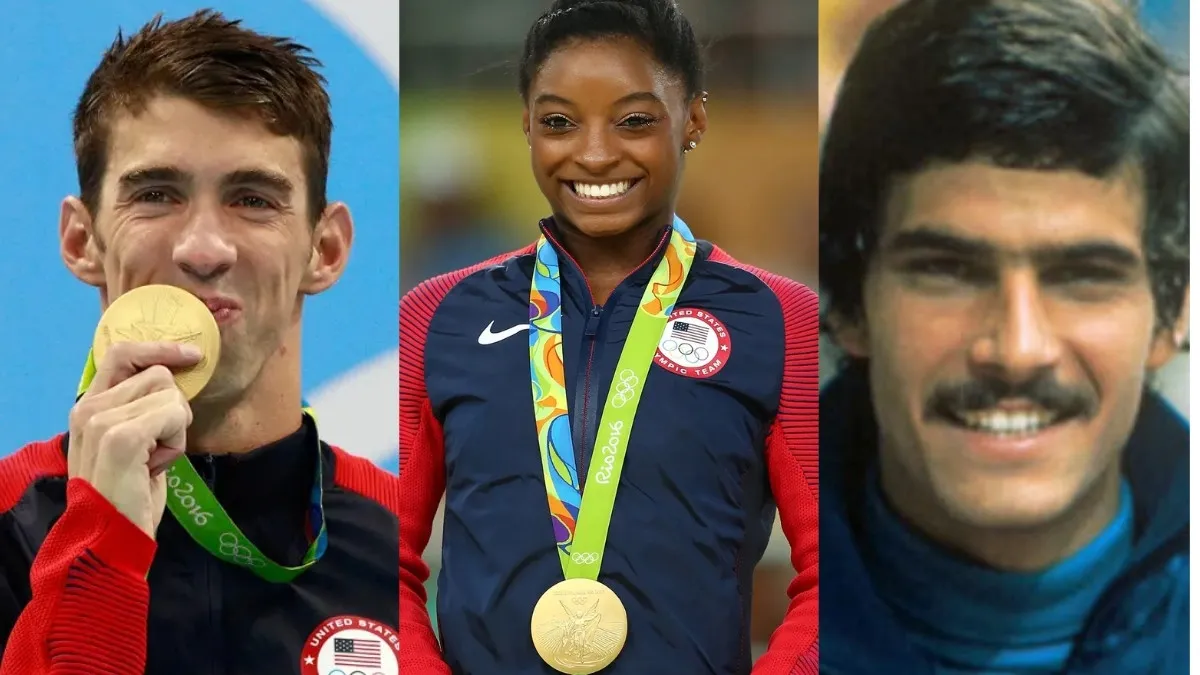
As the 2026 Olympics are set to begin in February, it’s the ideal time to remember the greatest Olympians of all time. Often, people compare the greatness with the medal counts alone; true greatness lies in dominance, longevity, and historical impact. Michael Phelps redefined swimming, Usain Bolt electrified sprinting, and Larisa Latynina set gymnastics standards that inspired generations.
Some have more medals, while others transformed their sports with fewer opportunities. Therefore, through this article, get to know the 11 Greatest Olympians of All Time. Learn about balances between achievement and legacy, and not just statistics.
What Does “Greatest Olympians of All Time” Mean?
Greatness in the Olympic context is defined by a combination of factors that extend beyond medals won. These factors include:
-
Olympic Dominance: Athletes who consistently outperformed their peers on the world’s biggest sporting stage, often remaining unbeaten across multiple Olympic Games.
-
Historical & Cultural Impact: How significantly an athlete shaped their sport, inspired generations, or influenced the global Olympic movement.
-
Longevity at the Elite Level: Sustained excellence across several Olympic cycles rather than a single standout Games.
-
Quality of Competition: Success achieved against deep, competitive international fields, not limited to participation eras.
-
Defining Olympic Moments: Performances that became part of Olympic history — record-breaking feats, perfect routines, or culturally symbolic victories.
List of 11 Greatest Olympians of All Time
Beyond medals and records, these Olympians created significant moments that shaped the history of sport and captured the world’s imagination.
| Rank | Olympian Name | Country | Sport | Olympic Medals (Gold) |
| 1 | Michael Phelps | United States | Swimming | 28 (23 Gold) |
| 2 | Usain Bolt | Jamaica | Athletics (Sprinting) | 8 (8 Gold) |
| 3 | Larisa Latynina | Soviet Union | Gymnastics | 18 (9 Gold) |
| 4 | Simone Biles | United States | Gymnastics | 7 (4 Gold) |
| 5 | Carl Lewis | United States | Athletics | 9 (9 Gold) |
| 6 | Paavo Nurmi | Finland | Athletics (Distance) | 9 (5 Gold) |
| 7 | Mark Spitz | United States | Swimming | 11 (9 Gold) |
| 8 | Nadia Comăneci | Romania | Gymnastics | 9 (5 Gold) |
| 9 | Jesse Owens | United States | Athletics | 4 (4 Gold) |
| 10 | Birgit Fischer | Germany | Canoe Sprint | 12 (8 Gold) |
| 11 | Dhyan Chand | India | Field Hockey | 3 (3 Gold) |
(Sources: Official Olympic records and verified historical sources, including Olympics.com, IOC, BBC Sport, and History.com.)
1. Michael Phelps
Michael Phelps is regarded as one of the greatest swimmer of all time. He dominated multiple Olympic Games from 2004 to 2016. Moroever, he is known for his versatility across strokes and distances, and holds the record for the most Olympic medals ever won by an athlete with a medal tally of total 28 medals.
2. Usain Bolt
usain Bolt is called by the name of “Fastest Man Alive”. He not only electrified the track with his record-breaking speed in the 100m and 200m sprints but his Olympic clean sweep and global impact on sprinting is still celebrated.
Check Out: Which was the first Country to Host Olympics?
3. Larisa Latynina
A gymnastics legend of the 1950s and 1960s, Larisa Latynina held the record for the most Olympic medals for decades. Her skill and consistency across multiple apparatuses helped the Soviet Union dominate gymnastics during her era.
Why Medal Count Alone Isn’t Enough?
While medals matter, they do not capture the full picture. Some sports offer limited medal opportunities, while others feature numerous events. For instance, Dhyan Chand’s three Olympic gold medals came with overwhelming dominance in field hockey, just as Jesse Owens’ four gold medals carried immense historical significance at the 1936 Berlin Games. Therefore, context and representation matters as much as numbers.
You may also like to read: What was Earth's First Artificial Satellite? Check Here!

-1765888138727.png "Cameron Green: Biography, Early Life, Career, and Full Stats of Australia's Rising All-Round Star")

![Largest Economies in the World [Updated December 2025]](https://img.jagranjosh.com/images/2025/07/09/article/image/world's-largest-economies-1752059293045.jpg)


Comments
All Comments (0)
Join the conversation