CJP Protest: What Is a Breach Of Peace? Abhijeet Dipke, Saurav Das And Ashutosh Rana's Furnished Rs 50,000 Surety Bond And Section 126 BNSS Explained
-1791799220944.webp)
CJP Protest: India, as a democratic country, has seen many protests, some historic, some chaotic. Recently, a new trend in India has started growing, the protest culture. In the past few months, the Cockroach Janta Party’s protest has gained a lot of traction, both positive and negative.
Last time, the Cockroach Janta Party protested against the government and its Education Minister, Dharmendra Pradhan. The protest had its own chaos, and the minister had to resign from his position to wrap it up. A lot of violence and violations were reported amid the protest by both sides, police and protesters.
On 10th October, 2026, a planned protest took place in New Delhi against Chief Election Commissioner Gyanesh Kumar. This particular protest turned into a security scare in the heart of the nation at Jantar Mantar.
The Cockroach Janta Party, led by founder Abhijeet Dipke, was planning to demonstrate at Jantar Mantar. This protest was over the alleged irregularities in the Special Intensive Revision (SIR) of electoral rolls.
Although this protest turned out to be a total failure due to the heavy security and tight police arrangements by the Delhi Police. For security reasons, 45 metros were shut, and the internet remained suspended for the day. Barricading and police personnel turned Delhi's Jantar Mantar into a high-security area.
Delhi Police detained Dipke and two other party leaders, Saurav Das and Ashutosh Ranka, immediately after their flight landed in the capital.
This particular move has triggered a massive open-table debate over protest rights and police orders. Also, the CJP leaders were released the next day under a major condition: a one-year peace bond.
The leaders now find themselves at the centre of a legal question: What exactly constitutes a breach of peace?
Let’s decode it together…
Also Read Latest Update: Delhi's Jantar Mantar Off Limits for Demonstrations: Which 3 New Protest Sites Has Delhi Police Designated Now?
What Is A Breach of Peace, and What Is Its Role in the CJP Protest?
It is very simple to understand the breach of peace order. It generally refers to any conduct that threatens public order, disturbs public tranquillity or creates a risk of violence. And seeing the history of the CJP protest, it was likely to be a heated matter. While violent clashes, threats and actions likely to trigger public disorder may fall under this category, not every protest or political disagreement qualifies.
Indian Supreme Court law empowers all the authorities to take preventive measures when sufficient grounds exist to anticipate a disturbance.
In the CJP protest, this concept became central after Delhi Police detained Abhijeet Dipke and two other party leaders ahead of their planned demonstration. Their release under a one-year peace bond highlighted the balance between preventing disturbances and protecting the right to peaceful protest.
🚨 ABHIJEET DIPKE, SAURAV DAS AND ASHUTOSH RANKA DETAINED FROM INSIDE THEIR FLIGHT 🚨 Shame on you @narendramodi @AmitShah https://t.co/hXl6bzh53i
— Cockroach Janta Party - CJP (@Cockroachisback) October 10, 2026
What Does Section 126 Of The BNSS Say, And What Does It Mean for CJP Leaders?
You can think of a peace bond as a legal reminder to maintain public order in India. The nation has an act and law for every perspective, crime and problem.
So, Under Section 126 of the Bharatiya Nagarik Suraksha Sanhita (BNSS), 2023, an Executive Magistrate can require a person to furnish a bond for keeping the peace if sufficient grounds suggest a possible disturbance. The bond can remain in force for up to one year.
Were CJP Leaders Released Under a Peace Bond?
Now, in the CJP case, founder Abhijeet Dipke, Saurav Das and Ashutosh Ranka were released after 24 hours under conditions, following their detention ahead of the planned protest.
They were released after signing a one-year peace bond under Delhi Police surveillance. Reports also stated that each leader had to furnish a surety bond of ₹50,000. They were also released only after agreeing to maintain peace and good behaviour for one year, according to reports.
If they violate the bond, legal consequences may follow. However, the condition does not establish guilt, and peaceful protest does not automatically amount to a breach of peace. Any alleged violation would need to be assessed on its facts rather than assumed in advance.
What Happened On October 10, 2026 Ahead Of CJP Protest? Timeline
- Protest Announcement: The Cockroach Janta Party (CJP) planned a demonstration at Jantar Mantar, demanding Chief Election Commissioner Gyanesh Kumar’s resignation over alleged irregularities in the Special Intensive Revision (SIR) of electoral rolls.
- Police Deny Permission: Delhi Police denied permission for the planned demonstration, citing security concerns and the timing of the application.
- Airport Detentions: On October 10, Delhi Police detained CJP founder Abhijeet Dipke and party leaders Saurav Das and Ashutosh Ranka aboard their aircraft after it landed at Indira Gandhi International Airport.
- Wider Preventive Action: According to Reuters, more than 2,000 people were detained as authorities attempted to prevent the protest from taking place.
- Security Restrictions: Traffic restrictions and access controls affected several parts of the capital amid heightened security arrangements.
- Political Backlash: Protesters and opposition voices criticised the police action, raising concerns about the right to peaceful assembly. Police maintained that the measures were necessary to safeguard public order.
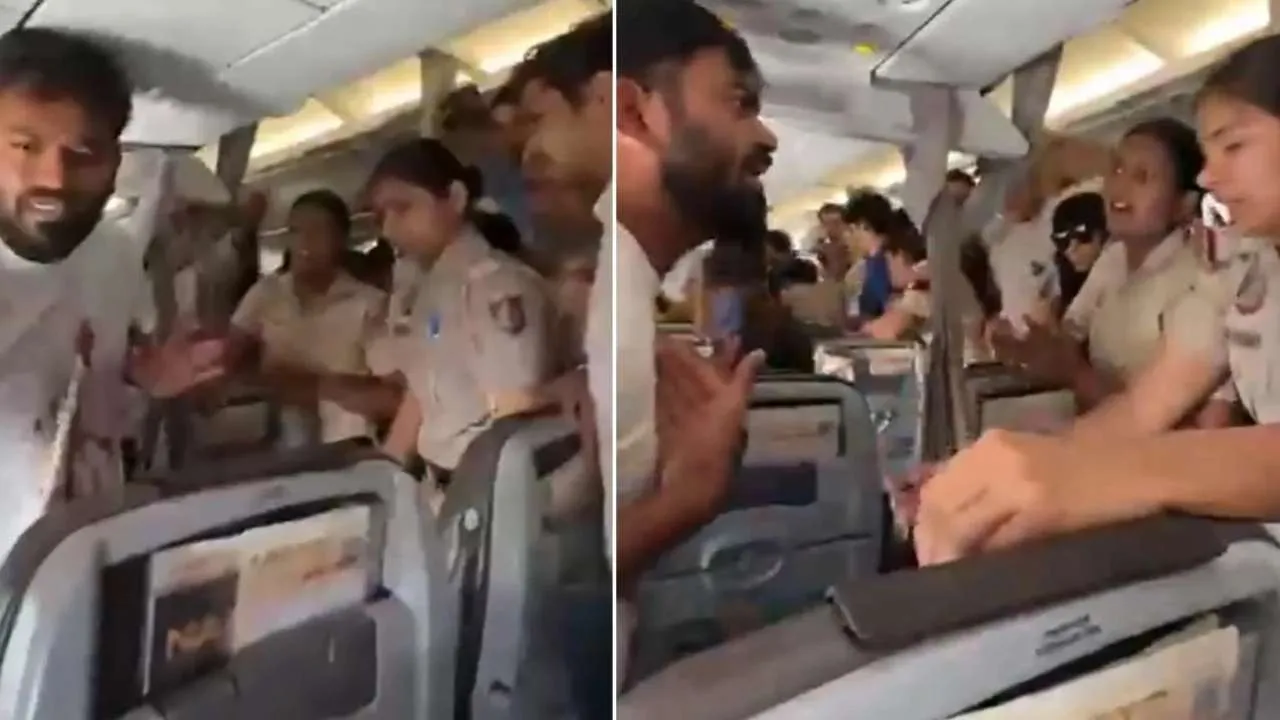
(Dipke Being Detained From Flight, Image: Instagram)
The Bigger Picture: What Do We Mean By Protest Rights and Public Order
This Cockroach Janta Party protest episode has brought important aspects of democracy into focus: the right to peaceful protest and the basic human responsibility to maintain public order.
While it automatically becomes the authorities' responsibility to maintain public law and order, sometimes they take extreme actions. While preventive measures can help authorities avert potential disturbances, their use must follow the applicable legal procedures.
The major question that a lot of people have is whether sufficient legal grounds existed for the action taken against Abhijeet Dipke and the other CJP leaders. So, their one-year peace bond serves as a reminder of the conditions imposed to maintain public tranquillity.
These preventive measures have been taken to maintain peace in the national capital and make things less difficult for others. When the protest happened last time, it highlighted how a slight mistake can mishandle the whole situation and affect the nation's mindset and promote indiscipline on both the authorities' and the public's sides.

Aishwarya Samant is a journalist with over 4 years of experience navigating the fast-paced corporate media landscape. She specializes in decoding business news, world economy, personal finance, and stock market trends, often adding a subtle touch of political perspective to keep things interesting.
Having worked with reputed organizations like ZEE, TV9, News24, and NewsX, she is no stranger to the newsroom hustle and the demands of real-time storytelling. Her writing style is fast-paced, engaging, and crafted to connect seamlessly with diverse audiences across platforms. She approaches every story from the reader’s point of view, breaking down complex topics into clear, relatable narratives backed by solid facts and credible sources. While she’s confident in expressing strong viewpoints, she ensures balance with insights. Sharp, fact-driven content that informs, engages, and keeps readers coming back for more.


-1791791935521_t.webp)




![[OUT] GDS 1st Merit List 2026: इंडिया पोस्ट जीडीएस पहली मेरिट लिस्ट जारी, ये रहा Direct Link](https://img.jagranjosh.com/images/2026/October/11102026/GDS-Merit-List-2026.jpg)
.jpg)

