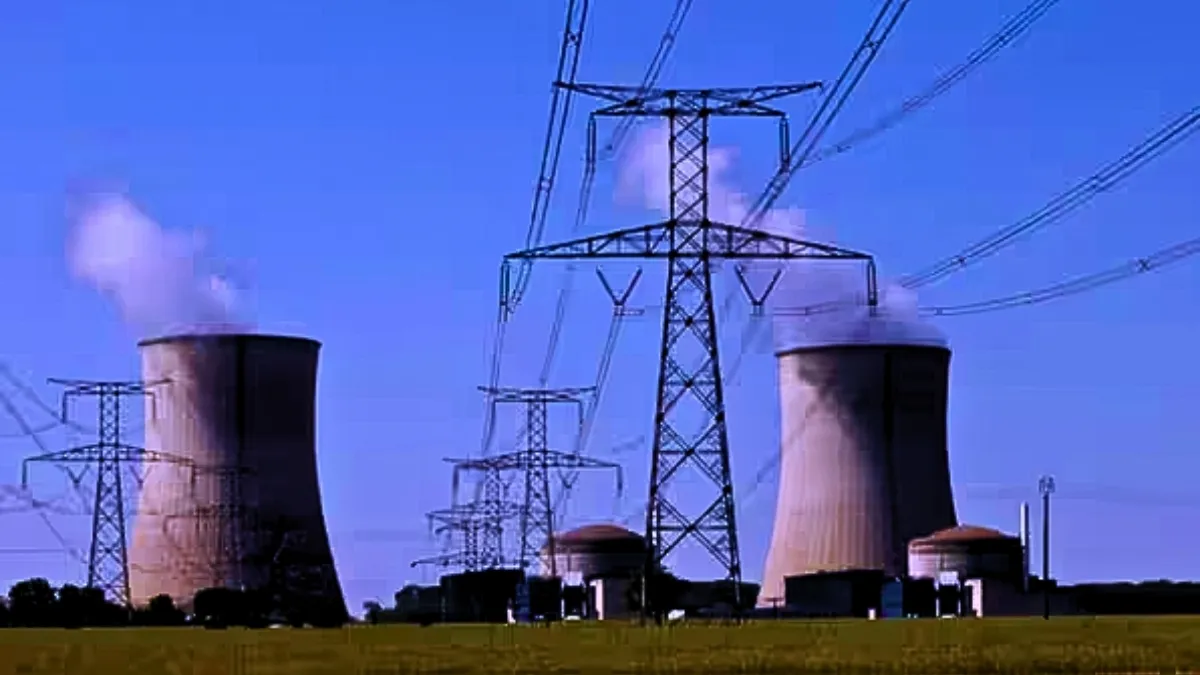
The Government of India approved the Sustainable Harnessing and Advancement of Nuclear Energy for Transforming India (SHATI) bill, 2025, marking a watershed moment in India’s clean energy policy. For the first time the government has proposed regulating private sector participation in nuclear power generation and opening the nuclear energy sector to private participation.
Why was reform needed?
India's nuclear energy sector has been governed by the Atomic Energy Act, 1962, under which the Department of Atomic Energy (DAE) exercised nearly total control over nuclear energy, and private participation was limited to ensure strategic autonomy and safety in a sensitive nuclear sector. It resulted in slow capacity addition, a high capital burden on the government and limited technology diversification.
Nuclear energy is important for India's transition into clean energy and the government target of 100 GW of nuclear power capacity by 2047 and India's climate change commitment of a net zero target by 2070. Currently, India has 25 nuclear reactors with a total installed capacity of about 8.88 GW, while 17 reactors are under construction. Currently, India's installed capacity of nuclear capacity is under 8 GWe. Globally, the United States (US) has the highest nuclear capacity of 100 GWe, followed by France (65 GWe) and China (58 GWe).
What is the SHANTI/Atomic Energy Bill 2025?
The Sustainable Harnessing and Advancement of Nuclear Energy for Transforming India (SHATI) bill, 2025, is a comprehensive legislative reform brought to restructure India's nuclear governance. The bill makes a milestone shift from a state-exclusive model to a mixed public-private framework, which talks about consolidating existing nuclear laws into a single unified statute, enabling private participation under strict government supervision and replacing outdated regulatory provisions.
Key Features of the SHANTI Bill 2025:
-
Private Sector Participation: the Bill opens the nuclear sector to private companies across the value chain and includes nuclear power generation and allied activities under the government supervision in strategic areas.
-
The private payers could take an equity share of up to 49% in upcoming nuclear energy projects and also allow foreign investment (FDI/FPI) of up to 49 per cent.
-
Legal Framework: by simplifying the complexity of the multiple laws into a single one, it enhances the regulatory framework, reduces legal ambiguity, brings more transparency and builds investor confidence.
-
Technological Advancement: The Bill focuses on the adoption of advanced nuclear technology such as modular designs, exploration of atomic mineral equipment manufacturing and Small Modular Reactors (SMRs).
-
Security Advancement: The bill aims to align India’s nuclear safety standards and compliance mechanisms with global practices to bring transparency and accountability.
Why does private sector participation matter in the nuclear sector?
The private sector entry into the nuclear energy sector is important for India's transition to the clean energy transition and for reducing India's dependency on fossil fuels and its imports, meeting the India climate commitment of becoming a carbon-neutral country by 2070, and becoming a developed country by 2047. Here, the private sector's role in the nuclear energy sector becomes crucial for the following reasons:
-
Resource Mobilisation: Nuclear projects are capital intensive and time-consuming, which requires a constant flow of funds. Private participation expands access to domestic and global capital, reducing fiscal dependency on the government.
-
Technology Innovation: Private participation can bring cutting-edge technologies, reactor designs, new construction techniques and operational efficiencies, and help in industrial decarbonisation.
-
Energy Security: A wide range of nuclear ecosystems strengthens supply chains and manufacturing capacity and reduces dependence on fossil fuels, which will provide long-term low-carbon energy security.
What are the challenges related to the SHANTI Bill?
The SHANTI Bill have transformative potential but faces significant challenges such as
-
Safety and liability: The Civil Liability for Nuclear Damage Act, 2010, places substantial liability on operators and suppliers, which has deterred private and foreign investment.
-
Security Risks: The nuclear energy sector involves sensitive technology and material which requires strong safeguards, surveillance and traceability to ensure the security of the country.
-
Prolonged implementation cycles: Nuclear energy projects have 8-10 year construction timelines, which makes them less attractive without risk sharing or viability-gap funding mechanisms.
-
Public Trust: Transparent governance and robust safety mechanisms in the nuclear field remain crucial for building public trust.
-
Governance Implications: The new bill shifts India's governance approach from exclusive state control to market participation in strategic sectors, which raises challenges related to the regulatory framework and accountability of private players and coordination between the civilian and security agencies.
The SHANTI Bill 2025 is a groundbreaking reform in the nuclear sector, which marks a clear break from India's traditional nuclear policy framework by inviting private sector participation in the sector, which combines private innovation with public oversight. It aims to accelerate India's nuclear capacity, strengthen energy security and support Indias clean energy transition and will significantly reduce India's fossil fuel dependency.



-1765545139847.jpg)

Comments
All Comments (0)
Join the conversation