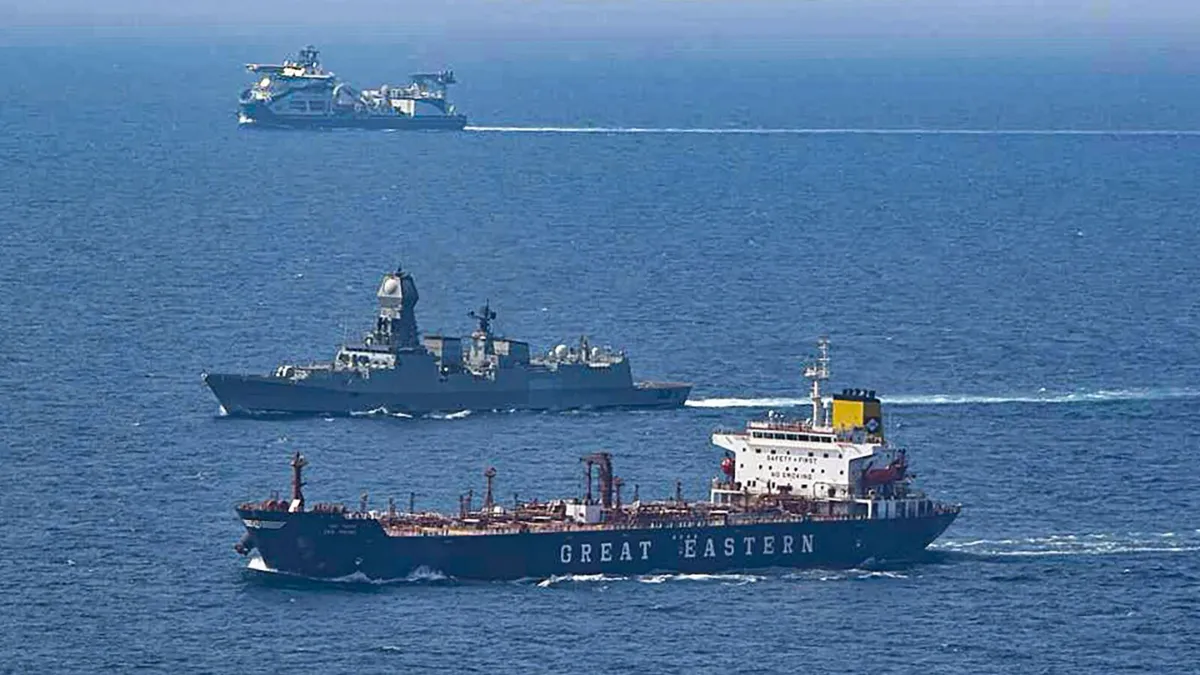
The government of India has set up an organized plan to evacuate 18 ships trapped in the Persian Gulf area as the situation has improved in West Asia since the signing of a recent ceasefire agreement.
This initiative aims at high-risk areas in the vicinity of the Strait of Hormuz and adjacent seas, where vessels and their crew members had been stuck amid partial blockades on the marine route.
Which Ships Are Being Evacuated?
Out of the 18 ships in the evacuation plan, there are four LPG carriers, three LNG carriers, and 11 crude oil tankers, several of which are vital for India's energy needs and international commerce.
Among these, five ships fly the Indian flag, while others are leased by Indian companies. According to the latest estimate in early April 2026, roughly 15 Indian-associated vessels were located west of the Strait of Hormuz, three in the Gulf of Oman, three in the Gulf of Aden, and two in the Red Sea.
What is the Role of the Indian Navy and Multi‑Ministry Coordination?
As per the Maritime Evacuation Plan, the Indian Navy is supporting the evacuation with escorting vessels along the Strait of Hormuz and other vulnerable zones. DNO is coordinating with MoPSW, MoPNG, and IFC-IOR for de-conflicting routes and ensuring smooth transit.
Instructions have been issued to ports to accord priority berthing to LPG-carrying ships returning home. As part of the Maritime Evacuation Plan, the LPG ship Green Asha has passed through the Strait of Hormuz in the northern direction and will reach JNPT at Mumbai.
Status of Indian Seafarers and Humanitarian Concerns
Approximately 20,000 Indian seafarers are believed to be stranded in the Persian Gulf and adjoining areas, out of which 475 are employed on Indian-flagged ships.
Till now, 1,754 seafarers have been evacuated from the region, but the government is making efforts to evacuate the rest as soon as possible.
The IMO has asked flag states and coastal nations to institutionalize evacuation corridors and utilize the ceasefire opportunity to clear the high-risk shipping lanes.
Impact on Indian Ports, Trade, and Energy Security
This disruption in the Gulf has led to bottlenecks at the Indian ports, where nearly 106,890 TEUs worth of containers and thousands of tonnes of perishable cargo have been stranded, compelling port managers to cease shipments to the Gulf region until they resume normalcy.
These port managers have suggested that relief be granted to shipping lines in terms of docking fees in order to minimize demurrage and docking charges. The removal of these 18 tankers carrying energy products will assist in securing India's fuel supply chain.



-1775816359055_t.webp)

Comments
All Comments (0)
Join the conversation