Key Points
- SAVE Act aims to secure US elections via voter ID and citizenship verification.
- It proposes national voting standards to ensure only eligible citizens can vote.
- Senate hurdles & filibuster rules affect the bill’s passage in Congress.
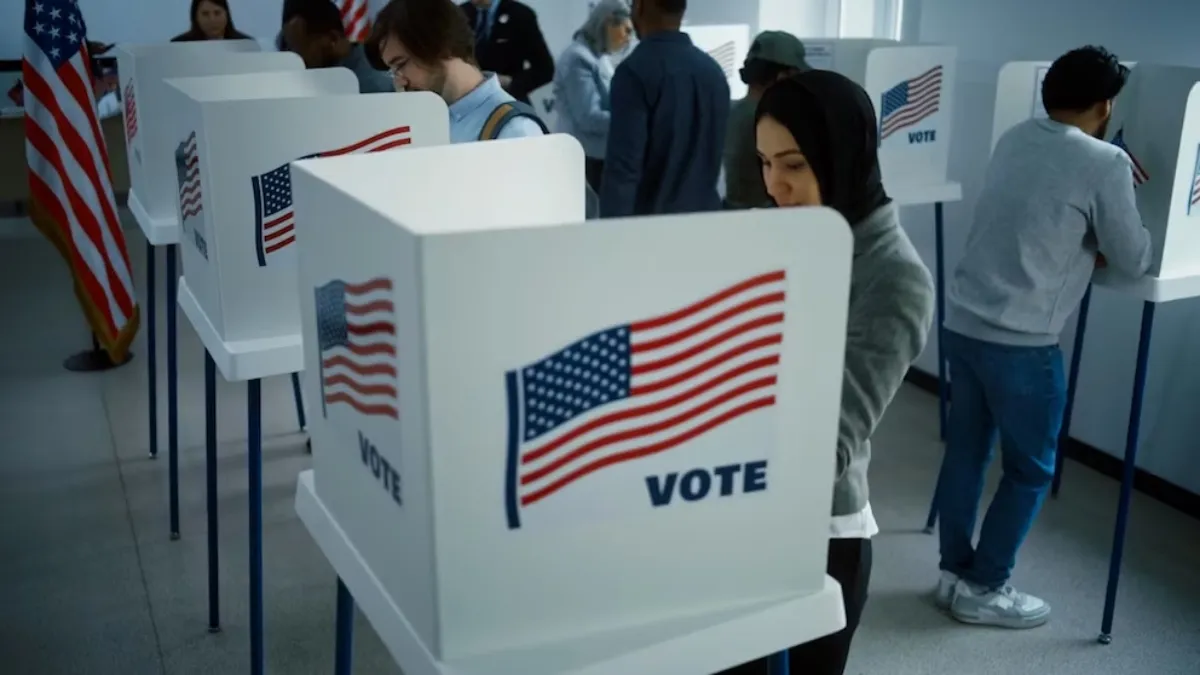
The SAVE Act is currently making headlines in the United States. Through this article, learn what it actually stands for, and what it means.
According to official records from the Library of Congress, the SAVE Act would amend the National Voter Registration Act of 1993. We have covered the complete details of how the states would be prohibited from processing a federal voter registration application. It is unless the applicant presents acceptable proof of citizenship.
What is the SAVE Act?
The Safeguard American Voter Eligibility Act is widely known as the SAVE Act. It is a piece of proposed United States federal legislation that would change how people register to vote in federal elections.
The bill aims to ensure that only U.S. citizens are registered to vote by requiring documentary proof of citizenship at the time of registration.
Under current federal law, a person can register by signing a form attesting they are a citizen. This means the SAVE Act would replace that with in‑person verification of documents such as a passport, birth certificate or other official proof.
When Was the SAVE Act Introduced and What Is Its Status?
The SAVE Act (H.R. 22 in the House and S. 128 in the Senate) was introduced in the 119th U.S. Congress in 2025 and later passed the House of Representatives. The bill is now before the Senate, but as of early 2026, it has not yet become law.
This matters because legislation like this must be approved by both chambers of Congress and then signed by the President before it changes federal election law. Until it clears these steps, the SAVE Act remains a proposal under debate.
How Does the SAVE Act Relate to National Voting Standards?
There are debates about the SAVE Act that are closely linked to broader discussions over national voting standards.
It is a phrase that refers to the idea of setting uniform rules for federal elections across all U.S. states. In the U.S. system, elections are normally administered by individual states, and there is no single federal voter ID law that applies to all elections.
Check Out: What is the Nationalized Voting?
Supporters of the SAVE Act argue that requiring proof of citizenship will strengthen public confidence in elections. Not only this, but this would bring consistency in how federal voter registration works.
They say uniform requirements could help ensure that only eligible citizens participate in national elections.
Why is the SAVE Act Being Debated Now?
The SAVE Act’s resurgence in 2026 comes amid broader conversations in Congress about election integrity, voter identification and how elections should be run ahead of midterm elections later this year.
Legislative focus on federal voting laws has grown alongside proposals that would limit mail‑in registrations, mandate photo ID and push for more centralised election oversight.
Some political figures have also called for a more active federal role in election policy, which they frame as a push for nationalised voting standards.
What Would the SAVE Act Change in Practice?
If passed, the SAVE Act would mean:
-
States must require documentary proof of U.S. citizenship before a person can register to vote in federal elections.
-
States would need a process for applicants without standard documents to provide alternative evidence.
-
Non‑citizens would be removed from federal voter rolls.
Check Out: What are the Separation of Powers in the U.S. Constitution?
What Comes Next After the SAVE Act?
As of early 2026, debate continues. The Senate’s consideration of federal voting requirements faces procedural hurdles, including the filibuster. It is a rule that typically requires 60 votes to advance significant legislation.
Whether the SAVE Act will be brought to a floor vote or amended further remains central to upcoming discussions about election law reform in the United States.
To conclude, these changes would represent a significant shift from the current system, where citizens attest to their eligibility without presenting physical proof at registration.




Comments
All Comments (0)
Join the conversation