Key Points
- NOAA detected an S4 solar radiation storm, the first in over two decades, in early 2026.
- The storm may cause GPS errors, radio blackouts, and satellite interference.
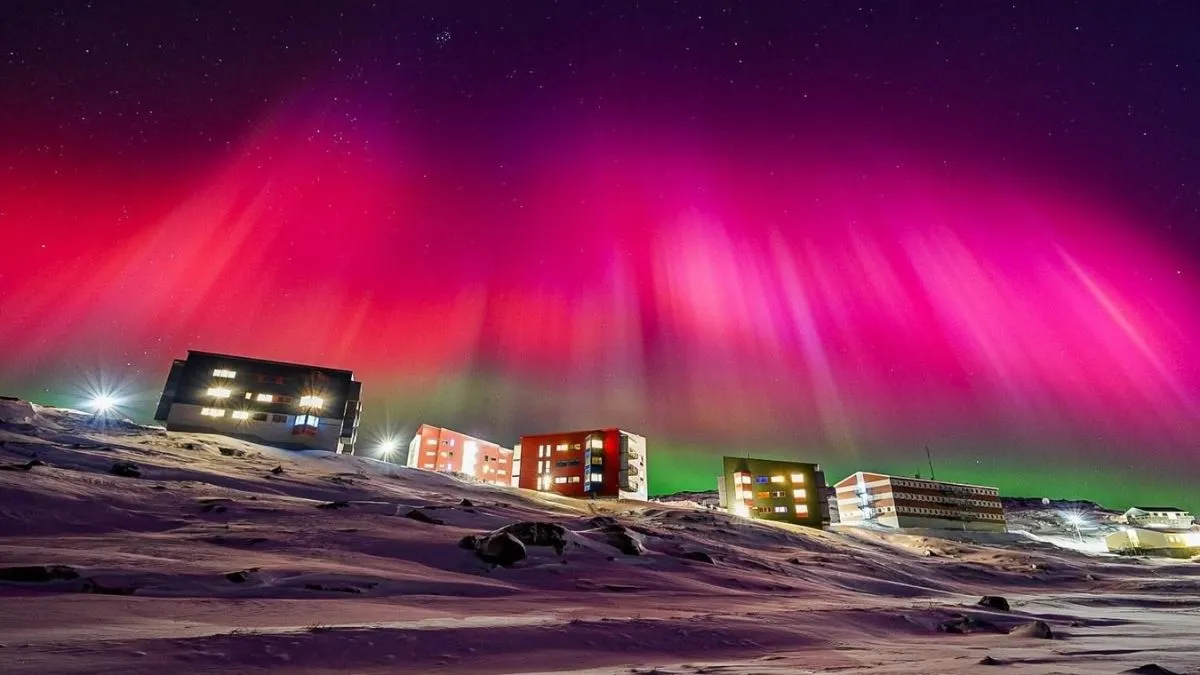
- Intense geomagnetic activity may make Northern Lights visible further south.
The Sun just threw a massive cosmic punch, and Earth is feeling the impact. For the first time in over two decades, the NOAA Space Weather Prediction Center has detected an S4 (Severe) Solar Radiation Storm.
This isn’t just a fancy Northern Light show as usual; it’s a high-energy event where solar protons are screaming toward us at nearly the speed of light. While scientists monitor the technological blackout risks for satellites and GPS, skywatchers are gearing up for something else.
If you have been waiting to tick the northern lights off your bucket list, tonight might be your best shot in years as this solar radiation storm prepares the way for intense geomagnetic activity.
What is a Solar Radiation Storm and how does it work?
A solar radiation storm occurs when a large-scale magnetic eruption on the Sun, often a solar flare or a Coronal Mass Ejection (CME), accelerates charged particles (mostly protons) to incredibly high speeds.
According to NASA, these particles follow the magnetic field lines from the Sun to Earth. While our atmosphere protects us on the ground, these Solar Energetic Particles (SEPs) can:
-
Interfere with satellite electronics.
-
Cause Single Event Upsets in computer systems.
-
Create radio blackouts near the polar regions.
-
Think of it as a cosmic rain of protons hitting the Earth’s outer magnetic shield. When this rain is Severe (S4 level), it indicates one of the most powerful eruptions of the current solar cycle.
Why did NOAA issue an S4 Solar Radiation Storm warning?
The NOAA Space Weather Prediction Center issued the S4 alert following a series of intense X-class solar flares in early 2026. This is the highest level recorded since 2005.
The S4 rating is significant because:
-
Planes that fly at high altitudes near the poles may be at higher risk of radiation, which could cause them to change their flight paths.
-
High-frequency (HF) radio propagation is currently being blocked in the polar regions.
-
GPS errors are more likely as the ionosphere becomes noisy from the particle bombardment.
This level of activity suggests the Sun is approaching its Solar Maximum, a period of peak activity that happens roughly every 11 years.
An S4 severe solar radiation storm is now in progress - this is the largest solar radiation storm in over 20 years. The last time S4 levels were observed was in October, 2003. Potential effects are mainly limited to space launch, aviation, and satellite operations. pic.twitter.com/kCjHj4XYzB
— NOAA Space Weather Prediction Center (@NWSSWPC) January 19, 2026
Also Read - Northern Lights vs Southern Lights: What’re the Key Differences?
Can a Solar Radiation Storm trigger the Northern Lights Tonight?
While a radiation storm involves protons, the Northern Lights (Aurora Borealis) are usually triggered by electrons during a geomagnetic storm. However, they often go hand-in-hand.
When a massive solar flare causes a radiation storm, it is usually followed by a Coronal Mass Ejection (CME), a giant cloud of plasma. When this cloud hits Earth's magnetic field, it creates a G4 or G5 Geomagnetic Storm.
The current S4 radiation storm is a precursor. It means that the Sun's magnetic gate is wide open, which means that the solar wind coming in is very strong. This makes it more likely that the Aurora will move further south than usual, making it possible to see it in places like the northern US, UK, and parts of Europe.
How to Watch the Aurora Borealis from Your Location?
To catch the northern lights tonight, you need to keep an eye on the KP Index, which measures geomagnetic activity on a scale of 0 to 9. For an S4-related event, we expect a KP index of 7 or higher.
Follow these tips for the best view:
-
Check the Forecast: Use the NOAA 30-minute aurora forecast map.
-
Escape City Lights: Light pollution is the enemy. Head to a dark sky park.
-
Look North: Even if the lights aren't overhead, you might see a green or red glow on the northern horizon.
-
Timing: The best viewing window is usually between 10:00 PM and 2:00 AM local time.
Also Read - What is a Bomb Cyclone? Massive Winter Storm Ezra Unleashes Blizzard Warnings Across U.S.
As the Sun reaches its most volatile state in 20 years, the current S4 solar radiation storm serves as a reminder of our planet's place in a restless solar system. While tech industries remain on high alert for GPS glitches, the rest of us can look forward to a potential masterclass in celestial beauty. Stay tuned to NOAA's real-time trackers as the storm peaks over the next 24 hours.


-1769856074923.jpg)


Comments
All Comments (0)
Join the conversation