Show Key Points
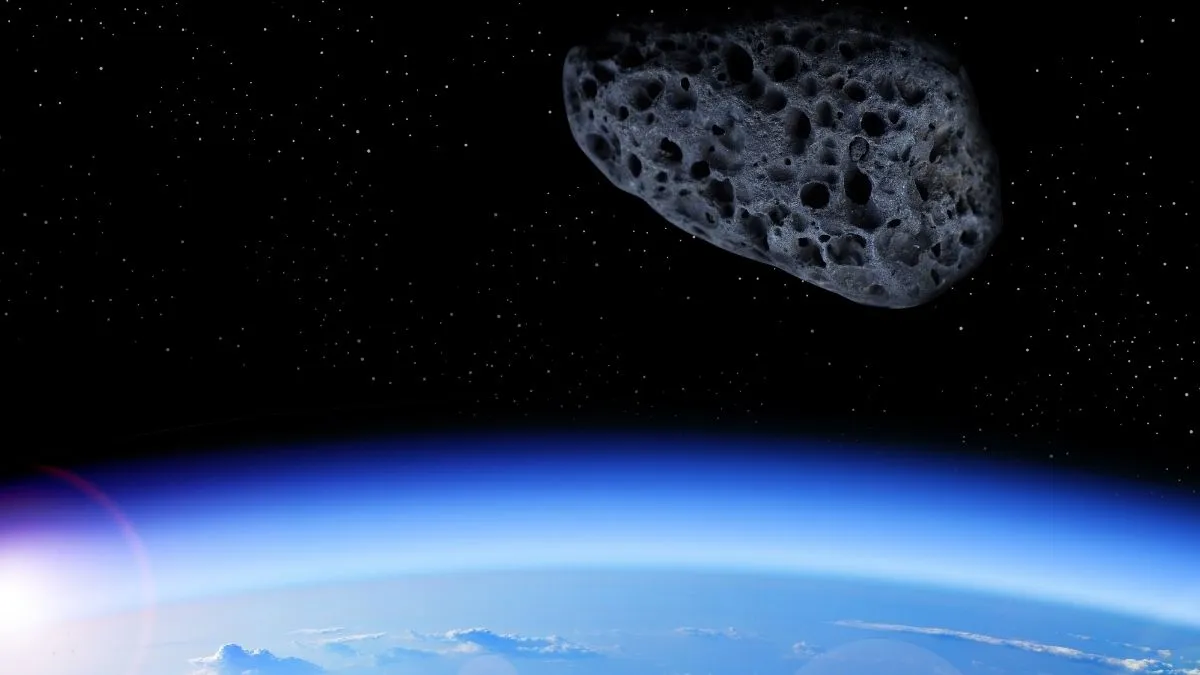
Asteroid 2026 EG1, a newly discovered celestial visitor, is making headlines this week as the most recent asteroid to get close to Earth. NASA-funded surveys first found this space rock on March 8, 2026. It is about the size of a city bus, about 32 to 72 feet wide.
According to the latest tracking data from the NASA Jet Propulsion Laboratory (JPL), the asteroid will make its closest approach at 11:27 p.m. EDT tonight. Traveling at a blistering speed of 21,513 miles per hour, 2026 EG1 is projected to pass at a distance of just 197,466 miles.
This puts the object significantly closer to us than our own Moon, offering a rare "once-in-a-decade" data-gathering opportunity for the global planetary defense community.
How close will the bus-sized asteroid get to Earth?
NASA’s Center for Near-Earth Object Studies (CNEOS) has confirmed that while the proximity of 2026 EG1 is notable, it remains a safe distance from our atmosphere. To put its path into perspective, the average distance between Earth and the Moon is about 238,855 miles; this asteroid will dip well within that lunar boundary.
-
Designation: 2026 EG1
-
Closest Approach: March 13, 2026, at 03:27 UTC (11:27 p.m. EDT, March 12)
-
Distance: ~197,466 miles (approx. 0.83 Lunar Distances)
-
Velocity: 9.62 km/s (over 21,500 mph)
-
Relative Size: 10–22 meters (comparable to a standard transit bus)
Astronomers emphasize that although the asteroid is zipping silently beneath the southern hemisphere, there is zero risk of impact. Objects of this size typically burn up in the atmosphere if they enter, appearing as brilliant fireballs rather than causing ground-level damage.
Is NASA’s Asteroid Tracker Monitoring Other Threats?
The discovery of 2026 EG1 highlights the efficiency of the Vera Rubin Observatory and the NEO Surveyor, which are currently identifying thousands of previously unknown solar system bodies. NASA currently tracks over 41,000 Near-Earth Objects (NEOs). While most are harmless, the agency maintains a Risk List for objects with a non-zero impact probability.
Recently, scientists have used these flybys to refine planetary defense strategies, such as the DART mission (Double Asteroid Redirection Test). By studying the rotation and composition of rocks like 2026 EG1, experts can better prepare for City-Killer class asteroids that might pose a future hazard. "Every close pass is a laboratory in the sky," notes one NASA official, as these events allow for the testing of radar imaging and trajectory prediction software without the need for a deep-space launch.
Check Out - Heavy Snow Warning Issued: 4 Feet of Snow and 55 MPH Winds to Slam Washington, Alaska
Tonight’s encounter serves as a vivid reminder of the dynamic nature of our solar system. The phrase "asteroid approaching Earth" may sound scary, but international space agencies keep a close eye on things, so we are never caught off guard.
As 2026 EG1 moves in an elliptical orbit around the Sun for 655 days, it sends back important data that helps protect our planet for future generations. For now, Americans can relax because this bus-sized traveler is just passing through our part of the universe.
Asteroid 2026 EG1, a newly discovered celestial visitor, is making headlines this week as the most recent asteroid to get close to Earth. NASA-funded surveys first found this space rock on March 8, 2026. It is about the size of a city bus, about 32 to 72 feet wide.
According to the latest tracking data from the NASA Jet Propulsion Laboratory (JPL), the asteroid will make its closest approach at 11:27 p.m. EDT tonight. Traveling at a blistering speed of 21,513 miles per hour, 2026 EG1 is projected to pass at a distance of just 197,466 miles.
This puts the object significantly closer to us than our own Moon, offering a rare "once-in-a-decade" data-gathering opportunity for the global planetary defense community.
How close will the bus-sized asteroid get to Earth?
NASA’s Center for Near-Earth Object Studies (CNEOS) has confirmed that while the proximity of 2026 EG1 is notable, it remains a safe distance from our atmosphere. To put its path into perspective, the average distance between Earth and the Moon is about 238,855 miles; this asteroid will dip well within that lunar boundary.
-
Designation: 2026 EG1
-
Closest Approach: March 13, 2026, at 03:27 UTC (11:27 p.m. EDT, March 12)
-
Distance: ~197,466 miles (approx. 0.83 Lunar Distances)
-
Velocity: 9.62 km/s (over 21,500 mph)
-
Relative Size: 10–22 meters (comparable to a standard transit bus)
Astronomers emphasize that although the asteroid is zipping silently beneath the southern hemisphere, there is zero risk of impact. Objects of this size typically burn up in the atmosphere if they enter, appearing as brilliant fireballs rather than causing ground-level damage.
Is NASA’s Asteroid Tracker Monitoring Other Threats?
The discovery of 2026 EG1 highlights the efficiency of the Vera Rubin Observatory and the NEO Surveyor, which are currently identifying thousands of previously unknown solar system bodies. NASA currently tracks over 41,000 Near-Earth Objects (NEOs). While most are harmless, the agency maintains a Risk List for objects with a non-zero impact probability.
Recently, scientists have used these flybys to refine planetary defense strategies, such as the DART mission (Double Asteroid Redirection Test). By studying the rotation and composition of rocks like 2026 EG1, experts can better prepare for City-Killer class asteroids that might pose a future hazard. "Every close pass is a laboratory in the sky," notes one NASA official, as these events allow for the testing of radar imaging and trajectory prediction software without the need for a deep-space launch.
Check Out - Heavy Snow Warning Issued: 4 Feet of Snow and 55 MPH Winds to Slam Washington, Alaska
Tonight’s encounter serves as a vivid reminder of the dynamic nature of our solar system. The phrase "asteroid approaching Earth" may sound scary, but international space agencies keep a close eye on things so we are never caught off guard. As 2026 EG1 moves in an elliptical orbit around the Sun for 655 days, it sends back important data that helps protect our planet for future generations. For now, Americans can relax because this bus-sized traveler is just passing through our part of the universe.



Comments
All Comments (0)
Join the conversation